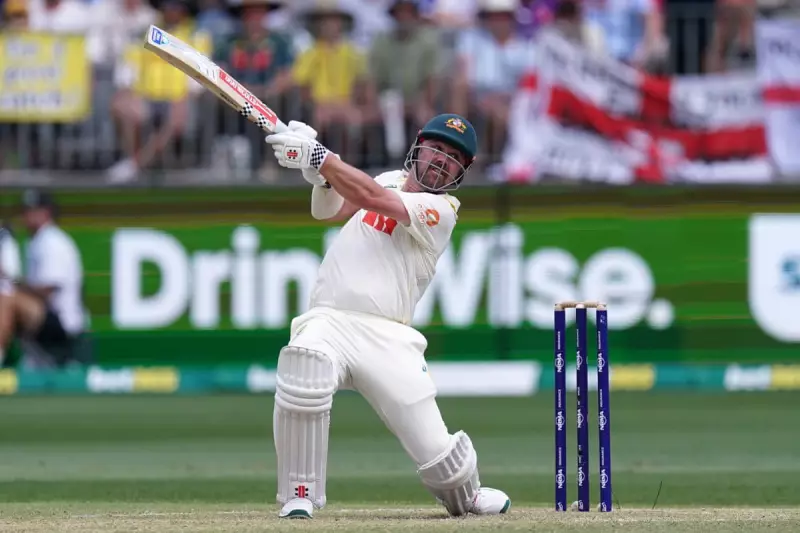
Head's Blistering Innings Rewrites Ashes History
Travis Head produced one of the greatest Test innings in Ashes history to smash Australia to victory in the first Test at Perth, leaving selectors with a significant dilemma ahead of the second match. The stand-in opener's devastating knock of 123 runs from just 83 balls on a bouncy pitch completely dismantled England's bowling attack and secured a commanding win for the hosts.
Injury Crisis Creates Unexpected Opportunity
The opportunity arose unexpectedly when regular opener Usman Khawaja developed a back problem during the match. While initially concerning for Australia, Khawaja's misfortune created the space for Head to deliver what many are calling a career-defining performance. Marnus Labuschagne had opened in the first innings, but it was Head who took centre stage in the second, finishing off England with what observers described as the certainty of a video game finishing move.
Head's extraordinary innings came on a pitch where only two other players managed to reach fifty, making his achievement even more remarkable. The victory hasn't just given Australia a 1-0 series lead but has sent the England team into what appears to be a demoralising tailspin ahead of the crucial second Test.

Historical Context Reveals True Magnitude
The statistical analysis of Head's performance reveals its true historical significance. Despite Australia chasing a relatively modest target, there have been only eight bigger Ashes scores made in successful fourth innings chases throughout history. These include legendary performances from Don Bradman and Arthur Morris chasing what was then a world record 404, along with centuries from Herbert Sutcliffe, Jack Hobbs, and Ben Stokes' Headingley miracle in 2019.
What truly sets Head's innings apart is his staggering strike rate of 148, which dwarfs even the most aggressive historical Ashes performances. Only nine Ashes centuries have been scored at faster than a run-a-ball pace, and the only one quicker than Head's was Adam Gilchrist's famous declaration smash at the Waca. In the broader context of Test cricket history, only five centuries have been scored faster, and none of those occurred in the fourth innings of a match.
Selection Dilemma Looms for Second Test
Australia's selectors now face a complex decision ahead of the pink-ball Test in Brisbane. If Khawaja is passed fit, should that automatically guarantee his return to the opening position? Or does Head's spectacular performance demand that he retains the role he filled so brilliantly?
Head has been regularly suggested as a potential opener during Australia's two-year search for a permanent solution at the top of the order. The arguments in his favour include his success in seaming conditions and his existing experience opening in both white-ball formats for Australia. His Perth performance has transformed what was previously background discussion into a roaring debate.
However, selectors must consider whether expecting a repeat performance is realistic. As one analyst noted, "We have already seen the innings that would define most careers." There are also concerns about whether moving Head from his successful number five position exposes his talents to the greater risk of the new ball, particularly in day-night Test conditions.
The contrasting approaches of Head and Khawaja present selectors with a classic dilemma between explosive power and patient accumulation. Khawaja demonstrated his value in pink-ball cricket with his marathon 145 against South Africa at Adelaide in 2016, batting for over seven hours to set up a victory.
Yet the sheer momentum generated by Head's unforgettable performance may prove irresistible. As one commentator observed, "Anyone who saw that innings in Perth will want to know what happens if Head mashes another set of buttons." The sensible approach might suggest retaining the status quo, but the impulsive one says: that was fun, let's do it again.