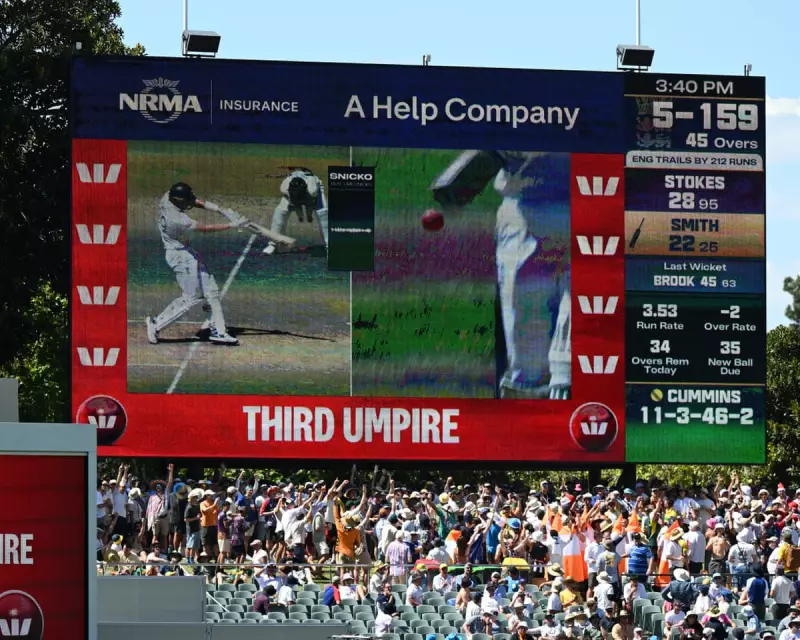
English cricket officials are locked in urgent discussions with their Australian counterparts about replacing the controversial Snicko technology for the remainder of the Ashes series. The move follows a litany of contentious decisions during the first two days of the third Test in Adelaide, which have left players from both sides deeply frustrated.
Adelaide Controversies Spark Crisis Talks
The pressure for change intensified dramatically on day two at the Adelaide Oval. Australia's fast bowler, Mitchell Starc, was heard on the stump microphone demanding Snicko be "sacked" after his team believed England's Jamie Smith had gloved a catch to slip. Replays later showed the ball had not carried.
The very next dismissal plunged the system into further disrepute. Smith was eventually given out on review, caught behind off Pat Cummins, despite the audio spike displayed by Snicko failing to align with the visual footage seen by the third umpire. This incident came just 24 hours after a major admitted error on day one.

Australia's wicketkeeper, Alex Carey, survived on 72 after nicking Josh Tongue to Smith. The Snicko operator later conceded a mistake, stating an unreliable sound wave had been generated, incorrectly showing a gap between the noise and the ball passing the bat. England's lost review was subsequently reinstated by the match referee, Jeff Crowe.
The Technology Tangle and a Potential Solution
In bilateral series, the host board is responsible for the Decision Review System technology. Cricket Australia has delegated this to its primary broadcast rights holder, Fox Sports, which appointed the tech company BBG Sports to operate DRS using Snicko.
However, a potential alternative is readily available. Cricket Australia's free-to-air broadcaster, Channel Seven, holds a separate DRS contract with Hawk-Eye Innovations, the company behind the UltraEdge system favoured in England by Sky Sports. Furthermore, UltraEdge is already used in Australia's domestic Big Bash League.
This existing infrastructure has opened the door for high-level talks about a mid-series swap to UltraEdge for the crucial fourth Test in Melbourne, starting on Boxing Day. Any change would require a financial settlement between Cricket Australia, Fox, and BBG Sports. While the England and Wales Cricket Board is involved in discussions, the final decision rests with the Australian authorities.
Mounting Pressure and Official Discontent
The dissatisfaction has reached the highest levels of the game in Australia. Before play on the second day, Cricket Australia's chief executive, Todd Greenberg, publicly criticised BBG's handling of the Carey incident on SEN radio.
"There's supposed to be a fail-safe with the technology and it didn't happen. In my view that's not good enough," Greenberg stated. "We're asking a lot of questions of the providers through the broadcasters and hoping to get some answers so we can be assured it won't happen again."
BBG Sports issued a statement accepting responsibility for the initial Carey error but remained silent on the subsequent controversies from day two. Neither Cricket Australia nor the ECB provided further comment at the close of play, as behind-the-scenes negotiations continued.
The coming days will determine whether the historic Ashes series will witness an unprecedented mid-tournament change in officiating technology, as the quest for accuracy threatens to overturn established broadcasting arrangements.