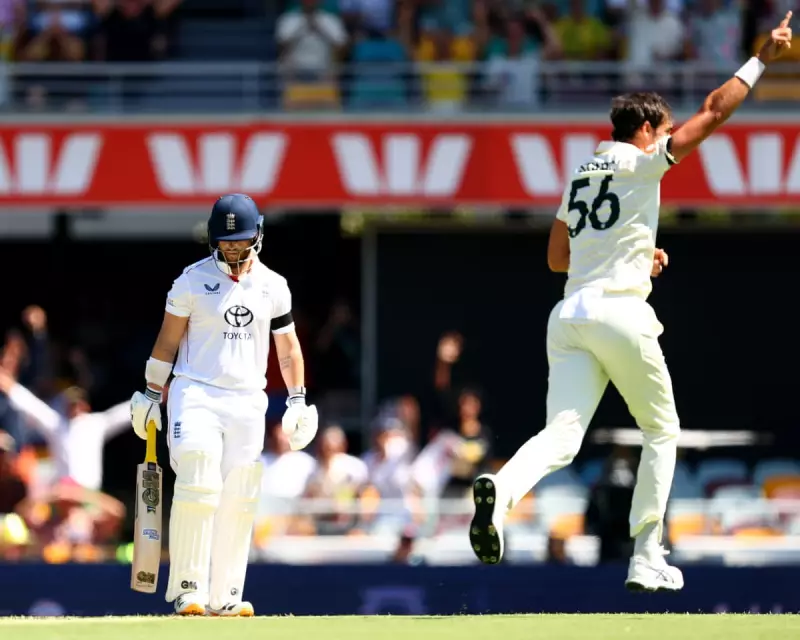
The tension that defines an Ashes series in Australia was palpable from the very first ball at the Gabba, as Mitchell Starc once again proved England's early tormentor, dismissing Ben Duckett for a golden duck in the second Test.
A Nervous Start for England's Top Order
After winning the toss and choosing to bat, England's innings began under intense scrutiny. All eyes were on opener Zak Crawley, whose technique was under the microscope. The first hour in Brisbane was a rollercoaster for fans, with Crawley surviving a testing opening spell from Starc, even managing to strike a confident early boundary.
However, the relief was short-lived. With the score at 2/1, Ben Duckett faced his first delivery from the formidable left-armer. In a cruel twist for the tourists, Duckett edged a good-length ball straight to first slip, falling for a golden duck. The dismissal shifted the pressure squarely back onto England, highlighting Starc's relentless threat with the new ball.

The Gabba Atmosphere and a Fan's Agonising Watch
For England supporters, the experience was one of distant agony. Watching from afar, the early play unfolded with a mix of hope and dread. The narrative had focused on Crawley's vulnerabilities, leaving Duckett's arrival at the crease as a moment of sudden, devastating reality.
Starc, embodying a rugged Australian attack, was immediately on the money. His early breakthrough brought Ollie Pope to the wicket, followed soon after by captain Joe Root, who was required at the crease far earlier than desired. Root survived a sharp chance to Steve Smith, underscoring the precarious nature of England's position at 2/11.
Flickers of Resistance Amidst the Chaos
Despite the early wickets, Crawley began to find some rhythm, playing several attractive shots to move into the 20s. Alongside a watchful Root, he helped rebuild the innings, bringing up a fifty partnership that offered a glimmer of stability. The pair navigated the pace of Starc and the swing of Michael Neser and Scott Boland, demonstrating the fight required in Australian conditions.
Yet, the terror for England fans never fully subsided. Every play-and-miss, every ball that beat the bat, was a reminder of the fine margin for error. The temporary respite offered by television advertisements only emphasised the constant pressure when play resumed. At the close of a gripping first hour, England had reached a tentative 50-plus, the foundation of their innings resting on the shoulders of Crawley and Root, with the ever-present threat of Starc's return looming large.
The opening session in Brisbane perfectly encapsulated the Ashes challenge for England: moments of promise quickly tempered by clinical Australian bowling, setting the stage for another compelling day of Test cricket.