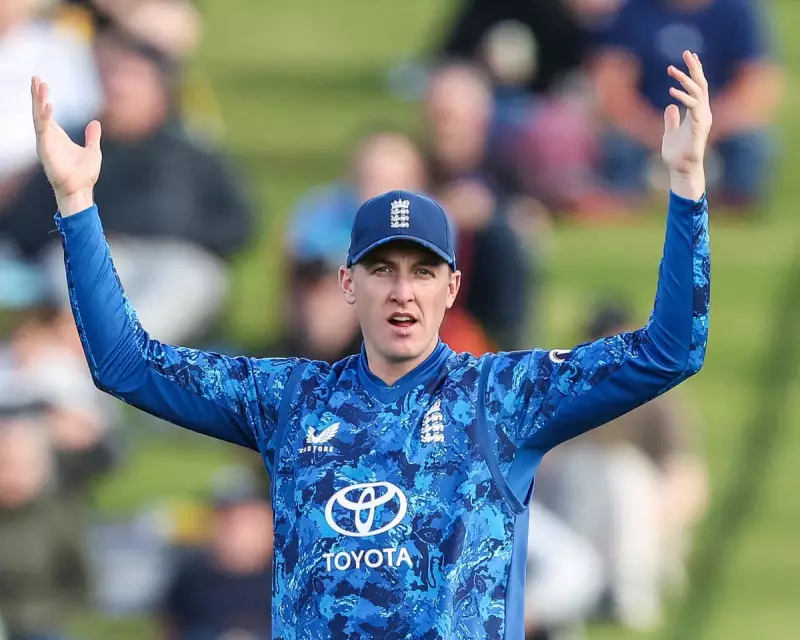
England's white-ball cricket captain Harry Brook has openly admitted he considers himself fortunate to still hold his leadership position following a controversial altercation with a nightclub bouncer on the eve of a crucial one-day international match against New Zealand. The incident, which occurred in October just before England's third ODI during their tour, has prompted significant reflection from the cricketer as he works to rebuild trust within the squad.
Formal Disciplinary Process and Substantial Fine
As first reported by the Telegraph earlier this month, Brook found himself in a confrontation with security personnel outside a nightclub the night before England's third ODI in Wellington. Overseeing his inaugural away series as limited-overs captain, Brook promptly reported the incident to team management upon reflection. The England and Wales Cricket Board subsequently addressed the matter through their formal disciplinary procedures, resulting in a substantial fine believed to approach £30,000 for the player.
In an official statement regarding the disciplinary outcome, the ECB confirmed they had handled the situation through "a formal and confidential ECB disciplinary process. The player involved has apologised and acknowledged their conduct fell below expectations on this occasion." Brook himself issued a public apology, stating his "behaviour was wrong and brought embarrassment to both myself and the England team."

Captain's Candid Admission and Regaining Trust
Speaking candidly in Colombo ahead of England's upcoming ODI series against Sri Lanka commencing this Thursday, Brook revealed that while he never considered resigning his captaincy, the possibility of being removed from leadership "was definitely playing through my mind." When directly questioned about whether he felt lucky to retain the captaincy, Brook responded with remarkable honesty: "Probably slightly, yeah."
The Yorkshire-born cricketer elaborated on his mindset, explaining: "I left that decision to the hierarchy and look, if they'd have sacked me from being captain, then I'd have been perfectly fine with it as long as I was still playing cricket for England. Even if I had been sacked, I'd have held my hands up and said, 'Look, I've made the mistake,' and I'd have been perfectly fine with getting sacked from the job as captain."
Brook acknowledged the significant work required to mend relationships within the squad, stating: "I think I've got a little bit of work to do to try and regain the trust of the players. I said sorry to them yesterday. I felt like I needed to say sorry for my actions. It's not acceptable as a player, but as a captain it's really not acceptable to do what I did in New Zealand. I'll be the first person to say that. I hold my hands up."
Incident Details and Team Culture Questions
Providing context about the nightclub confrontation, Brook clarified he was not accompanied by any teammates during the incident. He described the situation simply: "I was just trying to get into a club and the bouncer just clocked me, unfortunately. Like I said, I shouldn't have been in that situation from the start. I just shouldn't have been there. I'd had one too many drinks and I shouldn't have been there."
The captain reported what transpired midway through the third ODI in Wellington, which England ultimately lost by two wickets, completing a disappointing 3-0 series defeat against New Zealand. This incident has inevitably raised questions about professionalism within the England setup and their approach to alcohol consumption during tours. Recent scrutiny intensified following criticism of the team's mid-series break to Noosa during the Ashes, which some observers suggested resembled a stag party atmosphere.
In response to these concerns, ECB chief executive Richard Gould confirmed a comprehensive review of the Ashes tour would examine "planning and preparation, individual performance and behaviours." Brook himself firmly rejected suggestions of problematic drinking culture within the squad, asserting: "I don't think there's a drinking culture at all [in the team]. We're all old enough and grown up enough to say no if we don't want a drink, and grown up enough to say yes if we do want a drink."

New Measures and Looking Forward
Nevertheless, Brook confirmed that new disciplinary measures have been implemented for the current Sri Lanka tour, including a midnight curfew for players. The captain also revealed he had consulted with Test captain Ben Stokes, who experienced his own highly publicised nightclub incident in Bristol back in 2017. "He obviously wasn't best pleased at what I'd done," Brook acknowledged, "but he tried to help me through it and he knows exactly what it feels like to be in this situation. We had a few conversations, but we quickly moved on from that and tried to look forward."
With the white-ball captaincy still in his possession, Brook now focuses on England's upcoming challenges as they attempt to break a concerning 10-match losing streak in away ODIs. The team will field a familiar opening partnership, with Ben Duckett and Zak Crawley reuniting at the top of the order despite averaging just 19.1 as a pair during the recent Ashes defeat. Brook expressed confidence in the duo, noting: "We've seen how good Ducky and Creeps can be up at the top in Test cricket. We know they're a dominant duo – the height difference, the left-right hand difference is something we like at the top there. They get the best out of each other."
As England prepares for their Sri Lanka series beginning this Thursday, all eyes will be on Brook's leadership both on and off the field as he works to demonstrate the professionalism expected of an international cricket captain while guiding his team through a challenging period of results and scrutiny.