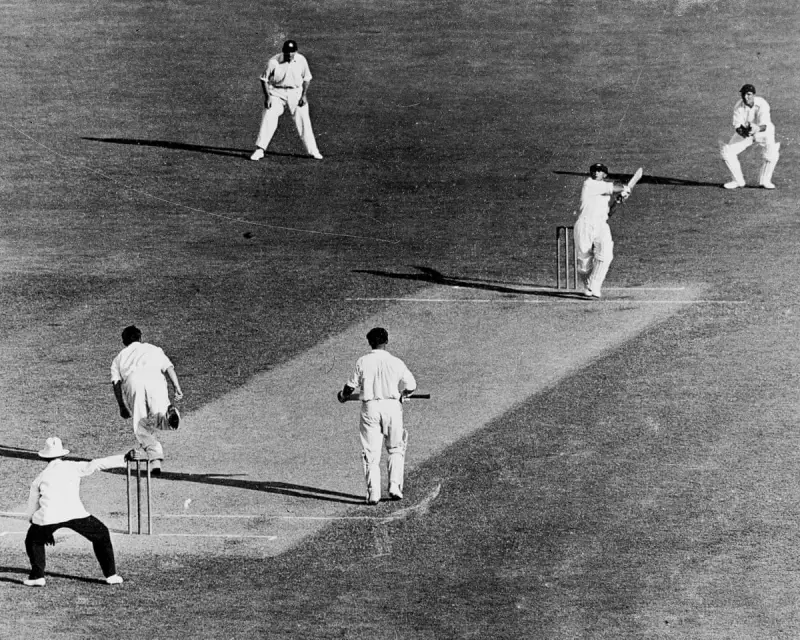
As England stare down a 2-0 deficit in the current Ashes series, history serves a stark reminder: only one side has ever clawed back from such a position to win the urn. That monumental feat was achieved by Don Bradman's Australia in the 1936-37 series, a comeback orchestrated by one of the game's greatest minds.
The Stage is Set: A 'Tour of Peace' After Bodyline
The 1936-37 Ashes tour was England's first visit to Australia since the infamous Bodyline series. Sent on a mission of reconciliation, Gubby Allen's squad of 17, including stars like Wally Hammond and Hedley Verity, sailed from Southampton. Notably absent were Bodyline architect Douglas Jardine and fast bowler Harold Larwood, who refused to apologise. The atmosphere remained tense, a 'tour of peace' with underlying sensitivities.
England started superbly, winning the first two Tests. Bradman, under immense pressure as captain, had managed scores of 38, 0, 0 and 82. His poor form was tragically contextual; his first-born son had died just six weeks before the series began. Neville Cardus, the famed journalist, even told Allen to "clinch the rubber at once" as Bradman "cannot go on like this much longer." How wrong he was.

The Melbourne Masterstroke: Tactics on a 'Sticky Dog'
The pivotal shift came in the third Test at the Melbourne Cricket Ground. Rain created a treacherous 'sticky dog' pitch. Bradman declared Australia's first innings at 200 for 9, gambling on the conditions. He then employed cunning tactics, instructing his bowlers to deliver wide and scattering his fielders to the boundary to waste time, desperate to avoid batting again on the ruined surface.
Allen, refusing to declare and force a result, batted England to 76 for 9. Bradman then executed a time-wasting masterclass, feigning confusion over Allen's eventual declaration and sending in nightwatchmen. Only 18 balls were faced before bad light ended play, preserving Bradman and his top order for the next day. It was a brutal out-thinking of the England captain.
Bradman's Immortal 270 and Series Turnaround
When play resumed, over 87,000 spectators witnessed history. With Australia's lead at 221, Bradman walked to the crease. He departed seven hours and 38 minutes later with 270 runs, having shared a world-record sixth-wicket stand of 346 with Jack Fingleton. England, set 689 to win, were demolished. Allen's confidence shattered, his letters home lamenting a "rotten" team.
The Don's magic was unstoppable. He scored a majestic 212 in Adelaide to level the series, and a commanding 169 in the final Test to seal an innings-and-200-run victory. Australia had completed the impossible, winning the Ashes 3-2. In 2001, Wisden declared Bradman's 270 the greatest innings of all time.
Cardus later summarised England's failure as one "of character as much as technique." Bradman never lost a series as captain. His 1936-37 campaign remains the ultimate blueprint for Ashes resurrection, a standard so high it casts a long shadow over any team attempting to emulate it today.