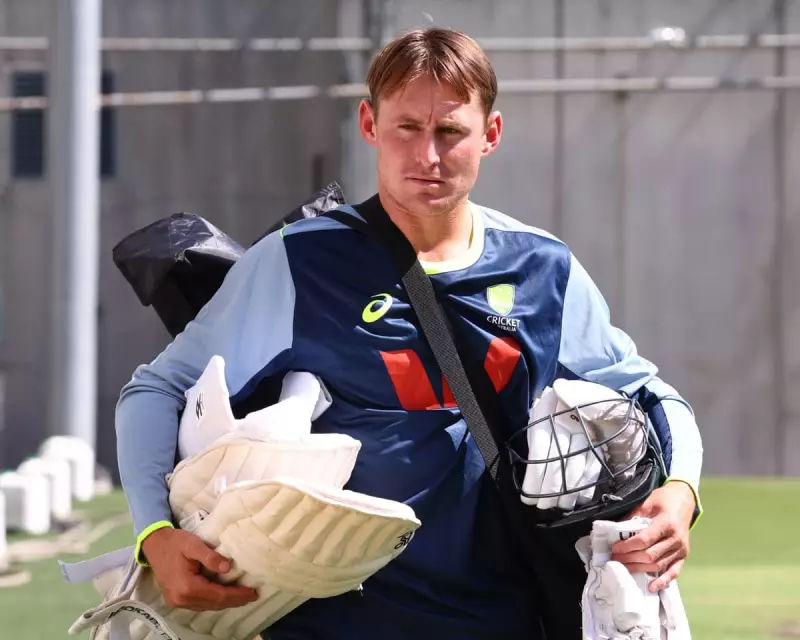
Australian batsman Marnus Labuschagne has pinpointed his side's extensive familiarity with the pink ball as a decisive factor heading into the second Ashes Test, a day-night encounter beginning this Thursday at Brisbane's Gabba.
Australia's Built-In Advantage Under Lights
Labuschagne conceded that England, who have not played with the pink ball in nearly three years, face a steep learning curve. In stark contrast, Australia has hosted more day-night Tests than the rest of the world combined and regularly schedules domestic Sheffield Shield matches under lights to prepare players for the international arena.
"Would I prefer to play [with a] red ball over a pink ball? Probably, just because you play with it more," Labuschagne stated. "It's become something that Australia have been very good at. We've learned over time the different moments of the game and how to play them. Hopefully that can be an advantage for us."

Starc's Swing and Batting Adaptability
Australia's edge is further sharpened by the presence of Mitchell Starc, whom Labuschagne hailed as the world's premier pink-ball bowler. "I think the stats probably say that," he said, attributing Starc's success to his high pace and the ball's tendency to swing late and inconsistently under lights.
Labuschagne's own statistics underscore his proficiency in the unique format. His batting average in day-night Tests is an impressive 63.86, which is significantly higher than his career average of 46.34. He explained that success hinges on adapting to the changing conditions. "You have to change your game, you have to adapt," he noted, citing specific sessions where the game can rapidly accelerate or slow down.
Winning the Key Moments
The batsman illustrated this by recalling a partnership with Nathan McSweeney against India in Adelaide last year, where surviving a tough night session set up victory. "There's moments where, if you play well in that moment, it really sets you up," Labuschagne emphasised. He suggested that winning the toss and batting first could be particularly beneficial, allowing a team to control the crucial evening sessions.
Finally, Labuschagne offered a nuanced view on the modern debate around flexible batting orders, diverging from teammates Pat Cummins and Travis Head. "I think where you bat in the order just pushes back the time that you come to the crease... certain times suit certain players," he argued, while maintaining that scoring runs remains the ultimate priority regardless of position.