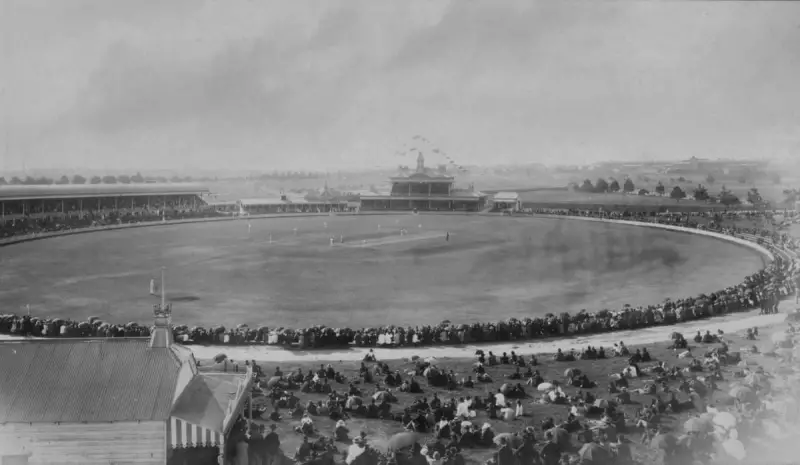
The Powder Keg at the SCG
Long before it became a symbol of sporting excellence, the Sydney Cricket Ground was the stage for one of cricket's most infamous riots in 1879. This remarkable event, occurring just a year before the famous Ashes series began, revealed the raw passion and colonial tensions that would define cricket's greatest rivalry for the next 150 years.
The trouble began during England's tour of Australia, led by the aristocratic Lord Harris. After a convincing victory in Melbourne where Australian bowler Fred 'The Demon' Spofforth had taken 13 wickets, the teams moved to Sydney for two matches against New South Wales. The second match at the Association Ground (later to become the SCG) attracted 10,000 spectators, many of whom had placed significant bets on the home team.
The Umpire at the Centre of the Storm
The controversy centred around George Coulthard, a remarkable 25-year-old sportsman who was already a Test cricketer, Australian rules football champion, rugby sensation, and part-time crime fighter. As England's appointed umpire, his Victorian origins immediately made him suspect to the New South Wales supporters, who harboured intense inter-colonial rivalries.

The situation reached boiling point when New South Wales, forced to follow-on 90 runs behind, found their star batsman Billy Murdoch at the crease. With the score at 19 and Murdoch on 10, he attempted a quick single. Wicketkeeper Alexander Webbe removed the bails, and Coulthard gave him out from square leg.
What happened next was unprecedented. The crowd, including gambling 'larrikins' who had heavily backed the home team, erupted. They suspected Coulthard of match-fixing and stormed the pitch. Among the 2,000 invaders was a teenage Banjo Paterson, just before his fifteenth birthday.
Prime Ministers, Pugilists and Pitch Invasions
As the mob targeted Coulthard, Lord Harris attempted to protect his umpire and was struck with a stick. English all-rounder Monkey Hornby, an amateur boxer, tackled the assailant and performed a citizen's arrest, dragging him to the pavilion while his shirt was torn off in the struggle.
The negotiations that followed involved an extraordinary cast of characters. New South Wales captain Dave Gregory demanded Coulthard's removal, which Harris refused. The other umpire, provided by the home team, was none other than Edmund Barton, who twenty-two years later would become Australia's first prime minister.
Barton defended Coulthard's decision and appealed for calm, demonstrating the diplomatic skills that would later help federate Australia's colonies. Despite his efforts, the crowd invaded twice more when they realised Coulthard remained as umpire. Play was abandoned for the day.
When the match resumed after Sunday's rain, New South Wales collapsed, losing 9 wickets for 30 runs to lose by an innings. The scandal was so significant that it pushed news of the Kelly Gang's raid on Jerilderie off front pages.
The Lasting Legacy
The repercussions were immediate and far-reaching. England refused to stay in Sydney for what would have been the fourth Test, instead returning to Melbourne. Bad blood continued during Australia's 1880 tour of England until influential figures including WG Grace persuaded Harris to make peace.
Coulthard's story ended tragically when he contracted tuberculosis while sailing from Sydney for a match in Newcastle. He died at just 27, possibly having caught the infection on board. Remarkably, when Ivo Bligh led the English team to Australia in 1882 for the series that created the Ashes legend, he promptly selected George Coulthard as umpire once more.
This explosive incident at the SCG demonstrated that Test cricket was never truly a gentleman's game, but rather one born from intense rivalry, colonial tensions, and the raw passion that has sustained the Ashes competition for generations.