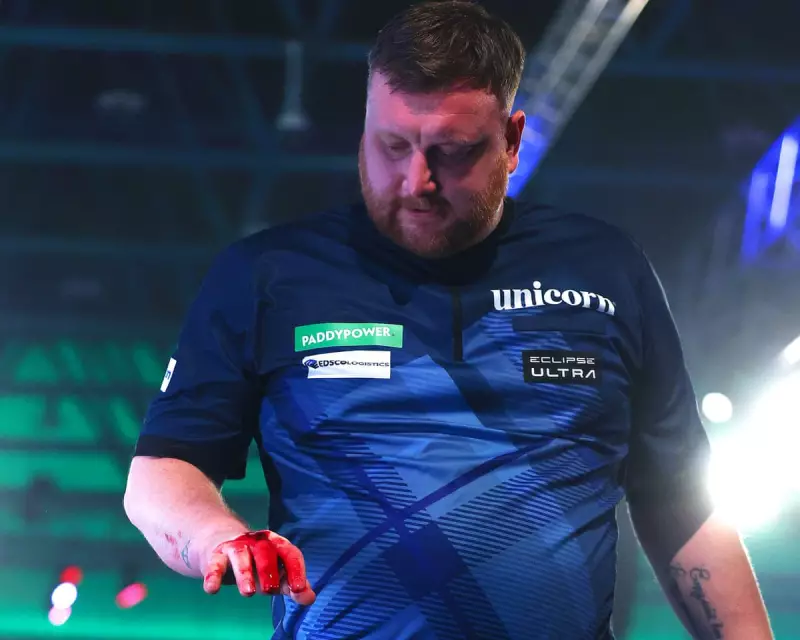
The dramatic image of Cameron Menzies walking off the Alexandra Palace stage, his right hand smeared with blood, has become an indelible snapshot of this year's PDC World Darts Championship. The Scotsman's raw reaction to a gut-wrenching 3-2 defeat to debutant Charlie Manby was visceral, leaving a trail of crimson from hand to forearm and sparking immediate controversy.
The Incident: From Defeat to a Bloody Aftermath
Following his narrow loss to the 20-year-old sensation Charlie Manby, Cameron Menzies' frustration boiled over. In a moment of pure anguish, he punched a drinks table backstage, inflicting a significant gash on his hand. The wound was severe enough for blood to trickle down his wrist and forearm, with some even smearing his face as he made a sheepish exit.
He was pursued from the arena by Matt Porter, the chief executive of the Professional Darts Corporation (PDC), foreshadowing the likely disciplinary action and fine to come. While the physical scars will heal, the psychological ones for Menzies, a player known for his emotional volatility, may linger far longer.
More Than a Meltdown: A History of Ally Pally Torment
This incident was not an isolated outburst but the latest chapter in a fraught relationship between Menzies and the Alexandra Palace crowd. Twelve months prior, his first-round exit against American Leonard Gates was marred by relentless jeering from spectators. Every missed double was met with derision, escalating until Menzies left the stage in tears to the sound of anti-Scottish chants.
Unbeknownst to the baying crowd at the time, Menzies' father was in hospital recovering from a triple heart bypass. The player would later describe that period as one of the darkest of his life. Unlike traditional pantomime villains like Gerwyn Price, Menzies is not a confrontational heel. He is a former plumber, described as wry, funny, and emotionally transparent—a quality the Ally Pally crowd seems to exploit, knowing he is uniquely susceptible to their barbs.
A Game Unraveled and a Victor Emerges
The match itself was a classic tale of momentum swings. Menzies appeared in control, leading 2-1 in sets and sealing the third with a brilliant 11-dart leg. However, as Manby, a Modus Super Series star who once averaged a record 130.7 on the Development Tour, fought back to level, the crowd's volume swelled. The pressure visibly told on Menzies.
His collapse was comprehensive. He fatally miscounted, throwing at treble-20 when he needed 66. After Manby missed a match dart, Menzies failed to capitalise on a finish of six. In a final moment of confused despair, he hurled a dart at the bull after inadvertently stepping over the oche, rendering the throw invalid. Manby, showcasing impressive composure for his debut, eventually clinched victory on double-1.
The young victor's attempt to offer commiserations was met with the shocking sight of Menzies' blood-drenched hand. In a subsequent statement, Menzies apologised, citing the recent passing of his uncle as a factor on his mind but insisting he was not making excuses.
The Unwritten Pact of Darts' Golden Age
The episode holds up a mirror to modern professional darts. It highlights the intense, often cruel, pressure cooker the Alexandra Palace stage has become. The sport's incredible popularity and raucous atmosphere have a dark flipside: a player with known mental health struggles can become a target for a crowd fuelled by morning pints and casual nationalism.
Menzies, currently ranked world number 26, is talented enough to return and eventually conquer this stage. The sobering reality, however, is that he will have to. The crowds will be waiting, their memories long, and the spectacle, for better or worse, will continue. The story of Cameron Menzies is more than a report of a lost match; it's a parable about the brutal psychological theatre that now underpins darts' glittering prime.