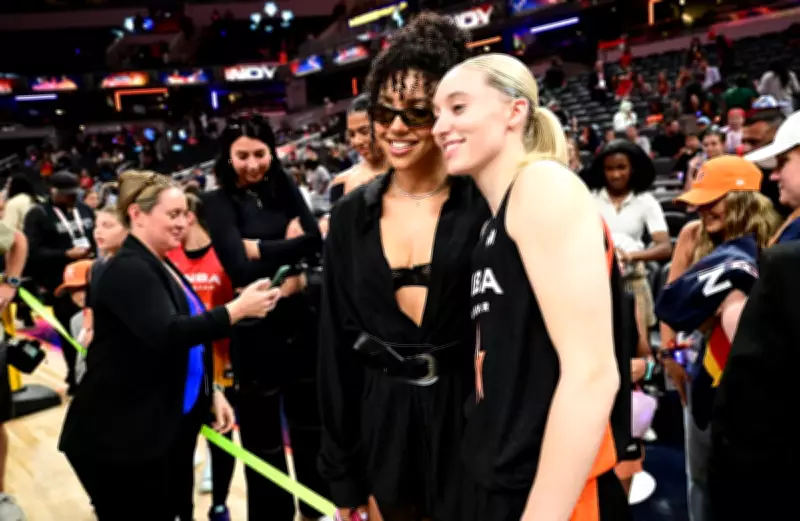
Dallas Wings Select Azzi Fudd First Overall in WNBA Draft
The Dallas Wings made their selection for the first overall pick in this year's WNBA draft, choosing University of Connecticut standout Azzi Fudd. The moment represented a significant achievement for the 23-year-old guard, who distinguished herself under legendary coach Geno Auriemma at UConn, including helping secure a national championship in 2025.
Fudd's draft night should have been a celebration of her basketball credentials. She was widely considered one of the best shooters in college basketball, earning Associated Press All-American honors and securing a spot on the All-Big East first team during her final collegiate season. Her on-court performance suggested she would make an immediate impact in the professional league.
Relationship Speculation Overshadows Athletic Achievement
Instead of focusing on Fudd's basketball talent and potential contributions to the Dallas Wings, much of the draft night discourse centered on her relationship with former UConn teammate Paige Bueckers. Bueckers, who was the Wings' No. 1 pick in 2025, attended the draft to support her former teammate, but their personal connection became the dominant narrative.
The pair confirmed they were dating last year but have offered few public details about their relationship since. It remains unclear whether they are still together, and both athletes have maintained their right to privacy regarding personal matters.
This focus on personal relationships rather than professional achievement reflects broader issues in how women athletes are perceived compared to their male counterparts. While NBA stars like LeBron James and Steph Curry have their relationships acknowledged as secondary facts about their lives, WNBA players often find their romantic lives becoming primary talking points.
Historical Context of LGBTQ+ Relationships in the WNBA
The WNBA is entering its 30th season, and romantic relationships among players have existed since the league's inception. Women dating women is not new to the WNBA, where approximately a quarter of players are openly LGBTQ+.
Frankie de la Cretaz, author of the Out of Your League newsletter, notes that while the league's foundational audience was largely queer, mainstream culture is now imposing different narratives on these spaces. "The WNBA and its locker rooms are culturally lesbian spaces, and those spaces come with different social norms than straight ones do," De la Cretaz explains.
These norms include complex social dynamics where players regularly interact with current partners, ex-partners, and their exes' new partners. "For every couple that we know about, there are dozens that we never will," De la Cretaz adds. "These insular, overlapping social dynamics are not just common in women's sports locker rooms – they're a core aspect of how lesbian communities operate."
Sociological Perspectives on Women in Sports
Dr. Alicia Smith-Tran, an associate professor of sociology and comparative American studies at Oberlin College who played college basketball, observes that despite growing popularity, women athletes continue to be marginalized. "The focus on the romantic lives of players is kind of a manifestation of how women athletes continue to be marginalized, and the focus is taken off their skills and contributions in the workplace," Smith-Tran says.
She notes that culturally, athleticism is often viewed as a masculine trait, creating additional challenges for women in sports like basketball that require height and strength. This cultural bias contributes to women athletes being "painted as less worthy, or less talented, when compared to men" and becoming subjects of gossip columns rather than sports analysis.
Social Media Amplifies Speculation
The surge of interest in WNBA players' personal lives is significantly fueled by social media platforms. Instagram and TikTok, which are popular among WNBA players, make it easier than ever for fans to form parasocial relationships and speculate about athletes' personal lives.
This digital environment creates what De la Cretaz describes as a problematic dynamic where "queer relationships are fetishized and dehumanized, becoming fodder for people to project their own desires on to." The fantasy of two sports superstars in a relationship plays into romantic tropes, but as De la Cretaz emphasizes, "Paige and Azzi are not characters in a novel; they are real people and these are their actual lives."
Looking Forward to the WNBA's 30th Season
As the WNBA prepares for its milestone 30th season, the league faces ongoing challenges in how its athletes are perceived and covered. While interest in women's basketball continues to grow, the persistent focus on players' personal relationships rather than their professional achievements suggests that cultural attitudes toward women athletes still require significant evolution.
For Azzi Fudd and the Dallas Wings, the coming season represents an opportunity to shift the narrative back to basketball. Fudd's shooting ability and basketball IQ could make her one of the most impactful rookies in recent WNBA history, potentially redirecting attention to what happens on the court rather than speculation about what happens off it.