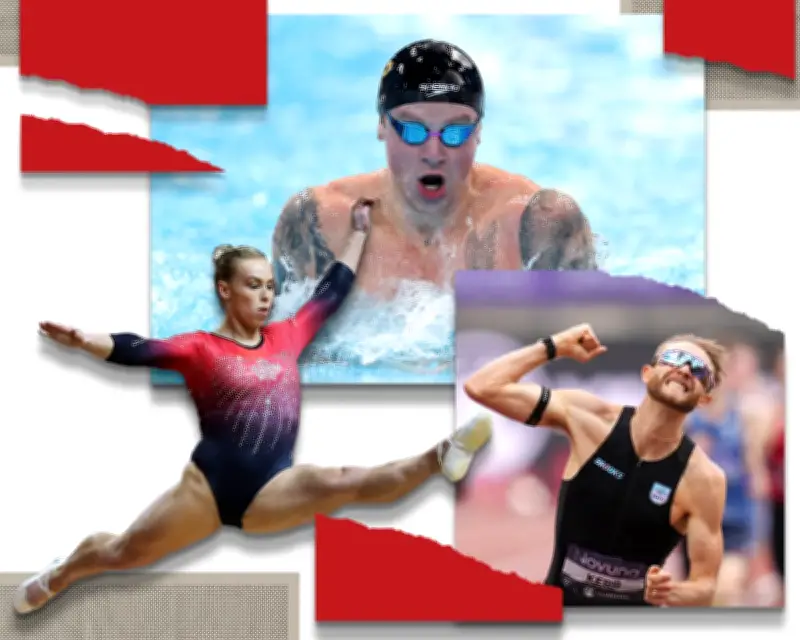
Adam Peaty Returns to Glasgow
Twelve years after winning his first major international title in the 100m breaststroke at Glasgow 2014, Adam Peaty, now 31, heads back to Scotland hoping to remind everyone why he is one of Britain's greatest swimmers. Peaty has won three Olympic gold medals and dominated the event for much of the past decade, but his aura of invincibility has faded since losing his unbeaten streak in 2022 and dealing with injuries and time away from the sport. Glasgow offers an opportunity to complete the circle.
Return of the Commonwealth Mile
For the first time in 60 years, the mile will replace the traditional 1500m on the programme, reviving an event synonymous with the Games' early history. Branded the Commonwealth Mile, the race's return was championed by the World Athletics president, Sebastian Coe, who said it was a "quintessential Commonwealth athletics event". The mile featured at every Games from 1930 until metric distances took over after 1966, but remains the only non‑metric event recognised officially for world records and rankings. Scotland's Josh Kerr, the new world record-holder, will be favourite for the men's event and with women contesting the Commonwealth Mile for the first time organisers hope one of athletics' most romantic distances will once again become one of the Games' showpiece events.
Can the Low-Cost Model Save the Games?
Behind every event sits a much bigger question: can this become the blueprint for the Games' future? Rather than chasing scale, the Games have embraced simplicity, using only existing venues, reducing travel between sites and dramatically cutting costs after Victoria's withdrawal. Commonwealth Sport describes the event as "a bridge to a new era", arguing that a smaller, financially responsible Games will encourage more cities to bid in future after declining interest from hosts and broadcasters. Sustainability is central to that vision, with reduced carbon emissions, less waste and a place‑based model designed to leave a lasting legacy without burdening taxpayers. Failure of these Games would only intensify the questions over whether they still have a place in an increasingly crowded sporting calendar.
Biggest Para Programme in History
While the overall Games have shrunk, the Para programme has never been bigger. Glasgow 2026 will stage a record 47 Para medal events in six sports, making it the most extensive Para programme in Commonwealth Games history. Para athletics, swimming, track cycling, bowls, powerlifting and wheelchair 3x3 basketball feature, with the expanded programme demonstrating that cutting costs does not have to come at the expense of representation. Unlike at the Olympics, athletes from dozens of nations will compete alongside their non‑disabled counterparts at the same time rather than after in a standalone event.
Shericka Jackson on the Comeback Trail
Jamaica's Shericka Jackson arrives as one of the world's most decorated sprinters, with five Olympic medals and four world titles, but her appearance comes at a different stage of her career. The 32-year-old is continuing her comeback after the injury problems that disrupted her buildup to Paris 2024 and has made it clear her priority is staying healthy, opting out of the individual 100m and 200m, instead competing only in the women's 4x100m relay. Having returned to form by reclaiming the Jamaican 100m title and helping her country to win relay gold at the World Athletics Relays, Glasgow offers another opportunity for her to sharpen up.
New Broadcast Era
For the first time in more than 70 years, the Games will not be shown live on the BBC. Since 1954, the broadcaster has been synonymous with the event, but Glasgow 2026 marks the beginning of a new era after TNT Sports outbid the corporation for the television rights in the UK. TNT will show more than 600 hours of live coverage across its platforms, while Channel 5 has secured a daily highlights package after the BBC declined to sublicense the rights. The move will be a significant test of whether the Games can thrive behind a paywall.
Bowls Gets Top Billing
Usually overshadowed by athletics and swimming, bowls will take centre stage as the first sport to begin in Glasgow. Competition starts on a newly introduced Day Zero, hours before the opening ceremony, after an extra day was added in response to demand from Commonwealth nations. A new indoor format promises four matches taking place simultaneously, music inside the venue and a faster-paced competition aimed at attracting new audiences. Scotland's Alex "Tattie" Marshall and Paul Foster headline a strong home team, while England boast the world champions including Nick Brett.
Gymnastics' Star-Studded Return
Artistic gymnastics may feature for only five days, but it boasts one of the strongest fields of the Games. The reigning Olympic champion, Rhys McClenaghan, headlines the competition as the Northern Irishman hopes to reclaim the pommel horse title he won in 2018 after taking silver in Birmingham four years ago. He returns from injury alongside a host of established names, including Australia's Georgia Godwin and Canada's four-time Olympian Ellie Black, both also making welcome comebacks after injury. Scotland's young squad, led by Reuben Ward, will hope home support can inspire an upset.
India's Changing Challenge
No nation has more to lose from Glasgow's slimmed‑down programme than India. The country has long relied on wrestling, badminton, table tennis and hockey to fuel its rise up the medal table and 30 of India's 61 medals from Birmingham 2022 came in events that will not feature this summer, leaving a 125-strong squad with far fewer opportunities than the 215 athletes who travelled four years ago. India will host the centenary Games in Ahmedabad in 2030 and organisers hope that event will strengthen the country's bid to stage the 2036 Olympic Games. A successful showing in Glasgow would provide further momentum, giving India's athletes the chance to build confidence before back-to-back home Games.
Next Generation Hope to Impress
Unlike the Olympics, there is more room for breakthrough stars to shine at the Commonwealth Games and Glasgow looks no different. The 20-year-old distance runner Innes FitzGerald arrives as one of England's brightest prospects after finishing second at the UK Athletics Championships, while the Welsh sprinter Charlotte Henrich has enjoyed a remarkable first senior season, twice breaking the national 400m record. In the pool, the 19-year-old Eva Okaro and 17-year-old Amelie Blocksidge headline England's next generation, while Jersey's European junior champion, Filip Nowacki, has already been tipped as the next great British breaststroker.