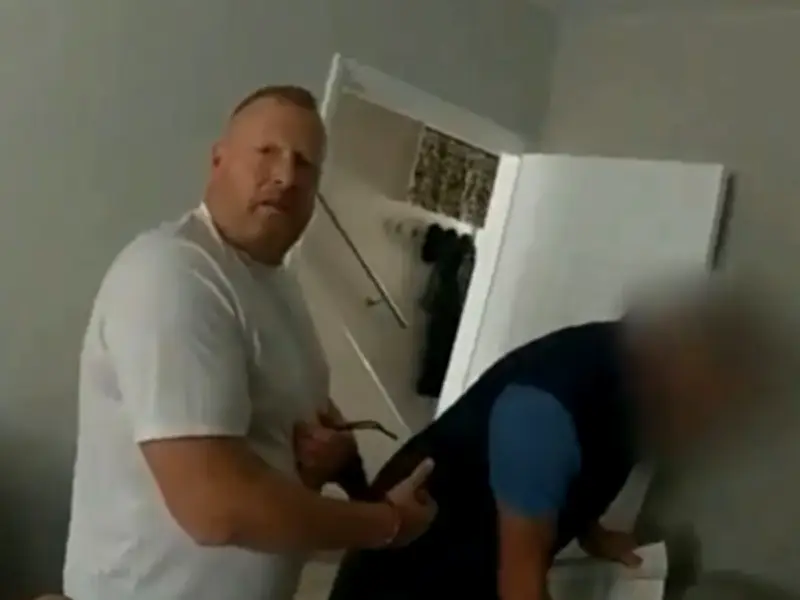
Police have released footage showing the moment officers raided the East London home of Billingsgate Market trader Scott Unwin, arresting him as part of a gang that plotted to import cocaine worth more than £20 million hidden in frozen fish shipments. Unwin, 52, of Reede Road, Dagenham, who ran a legitimate business at the famous London fish market, was jailed for 13 years at Snaresbrook Crown Court on Friday (September 25).
The Metropolitan Police said the four men were sentenced for conspiracy to import Class A drugs. Samuel Tokeley, 57, of Alicante, Spain, and Nicholas Shilling, 63, of Dubai, United Arab Emirates, were each jailed for 22 years. Scott Richards, 51, of Browning Drive, Wickford in Essex, was sentenced to 14-and-a-half years.
Plot to Import 600kg of Cocaine
The drugs operation, dubbed the “Fish Conspiracy” by detectives, had an estimated UK value of more than £20 million. It involved Tokeley, Unwin and Shilling plotting to import approximately 600kg of cocaine hidden within frozen fish shipments from South America, using Unwin’s legitimate fish business at Billingsgate Market to receive the load.
The scheme was uncovered when encrypted conversations were spotted on the now-dismantled EncroChat platform. Although encrypted messages showed the group discussing payments, shipping documentation, logistics and contacts in Ecuador responsible for sourcing the cocaine, the importation never happened, the Met said.
Encrypted Messages Reveal Wider Conspiracies
Recovered messages included conversations about the movement of cocaine, ketamine, large sums of cash and cryptocurrency, plus plans to use legitimate businesses and transport routes to try to hide their actions. The investigation also uncovered separate conspiracies to import industrial quantities of ketamine, with phone messages revealing plans for hundreds of kilograms of the drug to be sourced, processed on the continent and imported into the UK for wholesale distribution, the police said.
Detective Chief Inspector Dean Grafton, from the Met’s specialist crime unit, said the gang was “operating on an industrial scale”. He said: “The defendants believed that encrypted communication platforms would protect them as they discussed vast quantities of drugs, laundering criminal profits and exploiting legitimate businesses to facilitate their offending.” The Met worked with the National Crime Agency and international law enforcement, he added.