
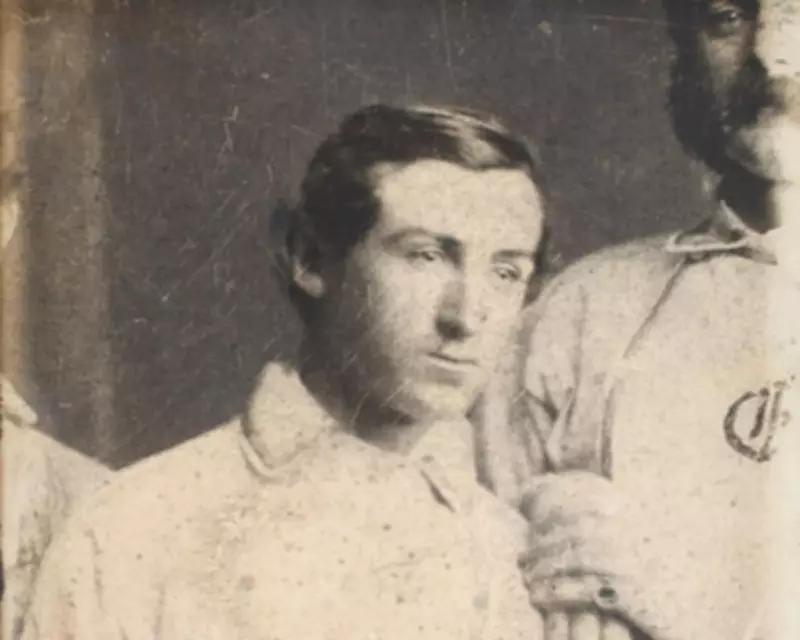
A new book delves into the enigmatic career and untimely death of James Creighton, a pioneering baseball player who many historians believe invented the curveball, yet remains excluded from the Hall of Fame. Death in the Strike Zone: The Mystery of America's First Baseball Hero by baseball historian Thomas Gilbert presents a compelling case for Creighton's recognition, exploring his revolutionary impact on the sport and the mysteries surrounding his legacy.
The Unrecognized Pioneer
By the time of his death at age 21 in 1862, James Creighton had already compiled an impressive ledger of accomplishments while starring for the Brooklyn Excelsiors, one of America's top teams during that era. His grave became a shrine to both the player and the sport he dominated. However, clouds soon gathered over the circumstances of his death and the achievements of his brief career. Despite his profound influence, Creighton has never been inducted into the Baseball Hall of Fame.
"One hundred years ago, his impact was clear," Gilbert asserts. "Until the turn of the 20th century, he was remembered and talked about extensively. When Albert Spalding wrote his seminal baseball book in 1911, he declared: 'Obviously Creighton was the greatest, fastest pitcher ever.'"
The Curveball Controversy
Gilbert's research challenges long-held beliefs about baseball history, particularly regarding the invention of the curveball. The historian firmly believes Creighton threw the first curveball a full decade before William Arthur "Candy" Cummings, who has traditionally been credited with this milestone achievement.
"There's a longstanding debate over who threw the first curveball," Gilbert explains. "All other candidates accomplished this feat ten years after Creighton did. Through extensive research into his techniques and game accounts, I've become convinced that Creighton was the true pioneer."
Gilbert turned detective for his book, analyzing rare photographs of Creighton and meticulously parsing newspaper accounts of Excelsiors games. He consulted with the late MLB pitcher Tom Browning to assess Creighton's pitching velocity and examined the crucial role of Brooklyn Excelsiors catcher Joe Leggett in developing Creighton's revolutionary techniques.
Transcending the Rules
In mid-19th century baseball, pitchers lobbed balls underhand in a softball-style delivery. They ran up to a line 45 feet from home plate rather than toeing a rubber, throwing with a straight-arm motion as the term "pitching" derived from pitching horseshoes. Multiple factors inhibited faster velocities: whipping motions were illegal, fielders wore no gloves, and catchers had no protective equipment.
Creighton introduced unprecedented power and developed a method to deliver the ball to the plate in a curving motion that worked within the existing rulebook constraints. "In July 1859, there were murmurings that Creighton took just one stride to his pitching position—not running," Gilbert notes. "This is a crucial clue because you cannot throw a curveball while running forward. You must break off and stop your forward momentum."
The historian explains that Creighton's technique represented a conceptual breakthrough involving closing hips and shoulders to generate more power than running forward could provide. "Not only did this create more speed, but it allowed him to break off a curve," Gilbert says. "Creighton didn't exactly find a loophole in the rules; he transcended them. The rules never specified that pitchers had to run up to the line."
The Evidence Mounts
Gilbert discovered further evidence supporting his theory through historical and contemporary analysis. He tracked down one of only three known photographs of Creighton, which showed the pitching ace positioned as if about to spin clockwise and unleash a speedy curve. Additionally, Gilbert connected with a veteran softball player who competed under rules requiring curveballs to be thrown without snapping the wrist.
"It's really, really difficult," Gilbert emphasizes. "Creighton achieved something akin to a 12-6 curveball from modern pitchers like Sandy Koufax or Roger Clemens, but inverted to break upward."
Creighton's revolutionary pitching proved remarkably effective. In a best-of-three championship series against the elite Brooklyn Atlantics, Creighton pitched the Excelsiors to victory in game one. Though the Excelsiors ultimately lost the series due to questionable decisions by catcher Joe Leggett, Creighton's power pitching demonstrated a new paradigm for the sport.
Transforming the Game
Gilbert identifies a direct connection between Creighton's unprecedented power pitching and the eventual development of the strike zone. "He pounded nearly unhittable balls in the strike zone," Gilbert explains. "This approach was so transformative that it completely upset the existing balance of the game."
During that era, batters could opt not to swing at fast but hittable deliveries, accumulating pitch counts and testing everyone's patience. This led umpires to begin calling balls and strikes systematically. "Step by step over time, this contributed to the development of the formal strike zone," Gilbert states.
The Legal Controversy
Gilbert investigates whether Creighton was denied recognition for throwing the first curveball due to accusations that the pitch was illegal during his playing days. His research reveals that no such accusations surfaced during Creighton's career; they only began emerging a decade after his death.
Notably, prominent baseball figures changed their views during this period. Henry Chadwick, future chair of the sport's Rules Committee, witnessed Creighton's curveball in 1860 and pronounced it legal. Pete O'Brien, captain of the Atlantics, similarly declared Creighton's pitch unhittable but legal.
"Ten years later, both men were literally saying the opposite," Gilbert observes. "They acted as though they had never declared it legal in 1860. What Creighton accomplished was completely legal, but it was exceptionally difficult to execute. Most pitchers simply couldn't replicate his technique."
The Mysterious Death
As Gilbert researched Creighton's story, he questioned various accounts of the pitcher's death in October 1862, including the tall tale that he died while hitting a home run. Creighton excelled in both baseball and cricket during a period when the two sports vied for popularity in the United States. Some claimed he suffered fatal injuries during either a baseball game or cricket match.
Gilbert doubts both claims, instead identifying a pre-existing medical condition as the true culprit: an inguinal hernia. "Twisting of the body can worsen this condition," Gilbert explains. "Such twisting wouldn't typically occur in cricket but would be common in baseball, particularly given Creighton's powerful pitching style."
The historian believes the Excelsiors, who had several doctors among their ranks, knew about Creighton's condition yet continued to overwork him. "You cannot escape the conclusion that the people running the team intentionally overworked him," Gilbert states. "Eventually, part of the intestine became trapped in the gap in the muscle wall. He developed gangrene. It was not a pleasant death."
Gilbert notes that at the time, "there was significant attention paid to his death and martyrdom, resulting in a beautiful monument. But one can't help thinking this memorial was partially inspired by guilt."
A Hall of Fame Case
Despite the mysteries surrounding his brief but brilliant career, Gilbert makes a compelling argument for Creighton's inclusion in the Baseball Hall of Fame. "The individual who originally called for a proper Hall of Fame, Alexander Cleland, began by acknowledging greats of the early game—the pioneers," Gilbert points out. "In his very first sentence, he wrote about 'people like Creighton.' Obviously, he should be recognized alongside baseball's other foundational figures."
Through meticulous research and compelling analysis, Gilbert's book resurrects the legacy of a forgotten pioneer whose innovations fundamentally transformed America's pastime, making a powerful case for finally granting James Creighton his rightful place in baseball history.