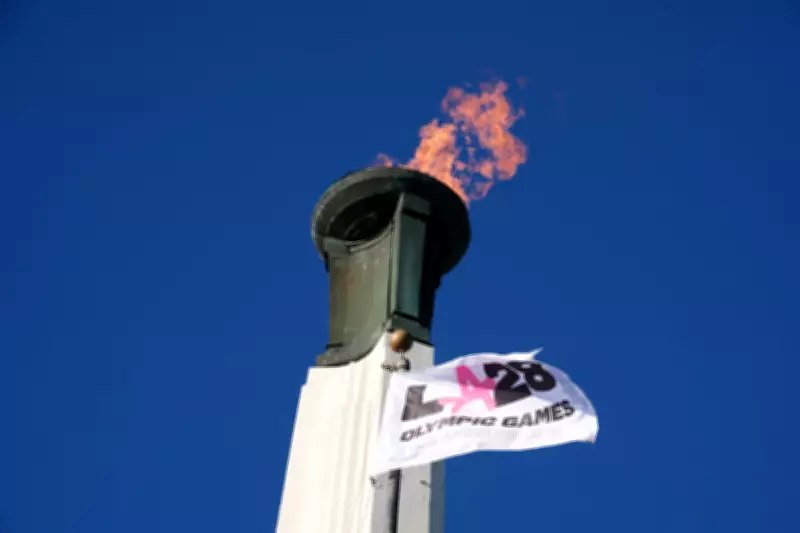
The iconic Olympic cauldron was ceremoniously lit at the historic Los Angeles Memorial Coliseum on January 13, 2026, marking a symbolic prelude to the official launch of ticket registration for the highly anticipated 2028 Summer Games. This grand gesture, however, has been swiftly overshadowed by a wave of discontent among local residents, who are now grappling with what they describe as severe sticker shock following the recent presale ticket release.
Presale Ticket Lottery Sparks Widespread Frustration
Since tickets for the 2028 Olympics in Los Angeles became available to local residents on April 2, initial excitement has dramatically shifted to widespread alarm. Many Angelenos report encountering unexpectedly exorbitant prices coupled with a substantial service fee, casting a shadow over the accessibility of the Games for the host community. LA28 had specifically allocated a significant portion of presale ticket lottery slots for residents across southern California, where most events will be held, and for Oklahoma City, which will host canoe slalom and softball competitions. While ticket prices were advertised as starting from a modest $28 and climbing into the thousands, the reality for many has been far less affordable.
Affordable Tickets Vanish Quickly, Leaving High Costs
Numerous residents discovered that the much-touted $28 tickets were either rapidly sold out or completely unavailable for premier sports such as gymnastics and track and field. Instead, they were presented with options that were exponentially more expensive. Compounding the financial burden, customers were also met with a hefty 24% service fee, which LA28 officials stated is intended to cover essential operational costs like customer service during the Games. Los Angeles resident Kathy Dorn shared her experience with the Guardian, explaining that she registered for the lottery on the morning of April 3 and was immediately taken aback by the pricing structure.
"Most gymnastics tickets sold out during my time slot; I didn't expect them to be gone that quickly," Dorn remarked. "Overall, I found the prices quite high, and it didn't seem like they released additional inventory for people with later time slots, which made it even more frustrating." Ultimately, Dorn spent approximately $1,200 on tickets for rhythmic and artistic gymnastics preliminaries and the sailing finals. She had considered attending a swimming event but decided against it upon seeing the price. "I didn't want to spend $558 per ticket for a two-hour event," she added.
Substantial Expenditures and Service Fees Highlighted
Another Los Angeles resident revealed to the local NBC affiliate that he spent a staggering $11,000 on eight tickets for track and field events, with nearly $400 of that total attributed solely to the service fee. Ticket-buyer Tony Anthony expressed his disappointment to NBC Los Angeles, noting, "It's a choice. We didn't go top-tier, but we were in the $1,000 range per ticket. You hear things like: 'Tickets as low as $28' and there were none available."
Official Responses and Justifications from LA28
In response to the growing frustration over ticket prices being perceived as out of reach for many locals, Reynold Hoover, Chief Executive Officer of the LA Olympics, emphasized that the majority of the $28 tickets were purchased by residents in southern California and Oklahoma City. "The success of the Locals Presale speaks for itself: Hundreds of thousands of $28 tickets – the lowest priced Olympic tickets in modern history – were sold to LA and OKC Locals," he stated in an official release.
Gigi Gutierrez, a spokesperson for LA28, further explained to NBC Los Angeles that tickets for the Games' most popular events, such as swimming and soccer, are priced comparably to other premier sporting events like the Super Bowl and the forthcoming World Cup, scheduled from June 11 to July 19 across several cities in the US, Mexico, and Canada. "We tried to overweight those [$28 tickets] into this locals drop because we wanted to make sure local Angelenos had the greatest access to our $28 tickets," Gutierrez said. "We do have a really affordable group of tickets to try to balance that for the best seats in the house being more expensive."
Financial Strategy and Community Concerns
LA28 has consistently asserted that the ticket pricing strategy is crucial to ensuring the organization, which operates on a budget exceeding $7.1 billion, can break even without requiring taxpayer dollars to cover any deficits. This approach represents a deliberate departure from recent Olympic Games in Greece and Brazil, which left host cities burdened with significant debt and deteriorating facilities. However, concerns about the economic impact and accessibility of the Olympics are particularly acute for residents of Inglewood, a majority Black and Latino community within Los Angeles where the opening ceremony, swimming, and basketball events are set to occur.
In recent years, Inglewood has undergone substantial development, including the construction of an entertainment zone featuring SoFi Stadium, home to the Los Angeles Rams and a venue for major artists like Beyoncé, and the Intuit Dome, where the Los Angeles Clippers play. Despite these advancements, not all local businesses have benefited economically, with some establishments in the city's downtown area struggling to remain viable and attract consistent customers. The impending Olympics has heightened anxieties among community members, who fear they will endure the worst of the traffic congestion, noise, and disruptions during the Games while being financially excluded from participation.
"We shouldn't just have to bear all of the burden of the Olympics, we should be able to participate," Inglewood native Yolanda Davidson told CBS LA, encapsulating the sentiment of many who feel marginalized by the current ticket pricing model.