From Quiet Pastime to Competitive Sport: Inside the 2026 USA Jigsaw Nationals
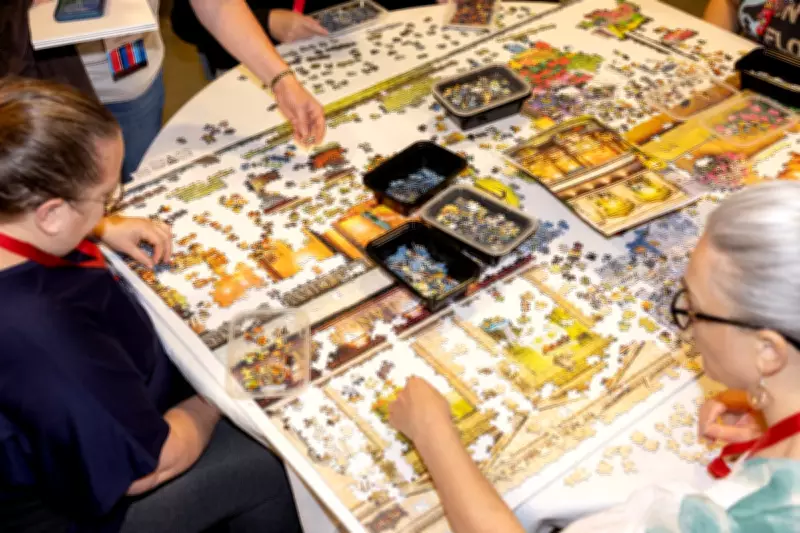
A remarkable scene unfolded at the 2026 USA Jigsaw Nationals and Convention in Atlanta, Georgia, on March 29, 2026. A dedicated group tackled an enormous 18,240-piece Ravensburger puzzle purely for enjoyment, capturing the spirit of an event that has transformed a traditional leisure activity into a legitimate competitive sport. What began as a simple way to pass time has evolved into a national championship attracting passionate participants from across the country.
The Evolution of Competitive Puzzling
The competitive aspect of jigsaw puzzling traces its roots back to the 1980s in the United States, when Hallmark organized national competitions for several years. After a period of dormancy, the volunteer-run USA Jigsaw Puzzle Association (USAJPA) partnered with Ravensburger, one of the world's leading puzzle manufacturers, to revive the national championship in 2022. The inaugural event drew 300 attendees, but by 2026, that number had skyrocketed to over 1,600 people gathering at AmericasMart Atlanta. This included more than 1,000 competitors alongside supporters and hundreds of dedicated volunteers.
Thomas Kaeppler, president of Ravensburger North America, reflected on the puzzle community's explosive growth during the COVID-19 lockdowns. "We didn't have enough [puzzles], the demand was infinite," he observed, highlighting how pandemic restrictions fueled interest in home-based activities. With in-person events halted, online puzzle competitions gained momentum through platforms like speedpuzzling.com, created in 2020 by Jonathan Cluff. Social media played a crucial role in spreading awareness, with content creators like Karen Kavett, a former HGTV employee, seeing her speed puzzling videos go viral.
"Suddenly this audience that had no idea that speed puzzling was a thing sees that it's a thing, and they tag all their friends and they're like, 'Oh my gosh, you would be so good at this,'" Kavett explained, describing how digital platforms helped build the community.
A Diverse and Passionate Community
The convention floor buzzed with energy as competitors prepared for the first qualifying round. Attendees showcased their passion through colorful skirts and earrings adorned with puzzle piece designs. Teams coordinated outfits with customized T-shirts, velvet tracksuits, and hand-knit vests, bearing creative names like "Puzzycat Dolls" and "Jigsaw Jamm." Beyond the main competition, ancillary activities included puzzle chess matches using chess clocks, panels on topics like "Decoding Data: Speed Stats 101," and vendor areas selling puzzle accessories and merchandise. A long line formed for autographs from popular puzzle image artists, demonstrating the event's broad appeal.
The competition structure was rigorous. The first day featured four preliminary individual rounds with 200 puzzlers each, with the top 50 from each session advancing to the finals. Participants ranged from a PhD student in Berkeley focusing on vision and color perception to a 12-year-old prodigy from Texas known for his fast placement and memorization skills. Hannah Doyle, the Berkeley PhD student, noted how the community transformed her solitary practice. "I used to practice puzzles in a very solitary way," she said. "Now I have people who are cheering me on."
Serious competitors train up to three hours daily, refining techniques and building physical endurance. Yvonne Feucht, a Los Angeles camera operator, emphasized core exercises to combat lower back strain. Defending individual champion Kelly Walter, an Arizona medical student, optimized her strategy by working from one side to the other rather than building haphazardly. "I used to build all over and have my puzzle in the middle and my pieces all around, and I think that slows me down," she explained.
The Spirit of Friendly Competition
Despite the competitive atmosphere, participants consistently described the community as exceptionally friendly. Rob Shields, a Portland-based podcaster with two decades of experience who hosts "Piece Talks," estimated that 80-90% of the community are women aged 20 to 60, though new demographics are emerging. The 12-year-old competitor Conner has become a rising star, recognized even at the Atlanta airport by fellow puzzlers.
Walter shared a touching example of this camaraderie. During protests against ICE raids in Minnesota earlier in the year, local puzzlers at the Winter Carnival brought food to support participants who wanted to join the protests. "[The puzzle community has] genuinely some of the most kind people I've met in my entire life," she said.
Mari Black, a puzzle coach from Boston, humorously captured the community's intensity when she joked about whether journalists normally cover cults. Her partner Jim Eakins, wearing a puzzle-piece-adorned top hat, cheered her on nervously during competition rounds.
The Competition Experience
Speed puzzling competitions offer three categories: individuals, pairs, and teams of four. Individuals and pairs complete 500-piece puzzles, while teams tackle either a 500-piece and a 1,000-piece puzzle or two 1,000-piece puzzles. Before each round, a hush falls over the room as USAJPA president Aly Krasny explains rules and counts down. Participants tear open opaque bags containing unreleased Ravensburger puzzles, filling the space with the sound of cardboard boxes slamming and pieces tumbling into piles.
Spectators engage in quiet commentary, using phrases like "puzzle jail" for pieces that temporarily defy placement. Missing pieces incur a 10-second penalty, prompting careful bag checks. The live stream, commentated by USAJPA board member Valerie Coit and guests, analyzes competitors' strategies in real time.
For first-time competitors, the experience can be both exhilarating and daunting. One participant described facing a particularly challenging puzzle depicting a front porch with intricate foliage and bannisters. Despite starting with determination and employing Walter's side-to-side strategy, they completed the puzzle in one hour and twenty minutes, ranking 122nd out of 200. Though far from the top 50, they felt accomplished, especially when fellow puzzlers offered high-fives and encouragement upon learning it was their first competition.
Crowning the Champions
The final day saw intense competition in the pairs and team finals. The winning pairs completed their 500-piece puzzles in under 30 minutes, with Hannah Doyle and partner Kaitlyn McCluskie placing first in their round. Conner and partner Josh Trauger won the pairs final with an impressive time of 25 minutes and 11 seconds, prompting emotional celebrations with family members.
Alice Rowe, who won the 2024 Nationals as a high schooler, claimed the individual final victory in under 38 minutes, rushing backstage to hug her father while crying tears of joy. Her team, the Jiggernauts, also secured the team final victory, creating what she called "a special moment." At the closing ceremony, winners received glass puzzle-piece trophies before hurrying to catch flights, with Rowe noting she couldn't miss her freshman writing class despite her triumph.
The Future of Speed Puzzling
The sport is clearly evolving, with winners getting younger and faster. Walter recalled being one of the youngest competitors at the 2022 Nationals as a college student, when Feucht won with a time just under 55 minutes. Now, many top puzzlers are in their 20s and routinely complete puzzles within 40 minutes. Jessa Douglas of the Jiggernauts suggested implementing a youth division, while Conner predicted that more young participants would accelerate competitive times.
Thomas Kaeppler expressed ambitious hopes for the sport's future. "If we could make [speed puzzling] an Olympic sport, that would be awesome," he said, envisioning global recognition. Throughout the weekend, the community's growth was evident even in casual moments, such as when four girls completed a 100-piece puzzle in 9 minutes and 22 seconds before moving on to puzzle chess.
The 2026 USA Jigsaw Nationals demonstrated that what many consider a quiet pastime has blossomed into a vibrant competitive community. With passionate participants, rigorous training regimens, and a spirit of camaraderie, speed puzzling has established itself as more than just a hobby—it's a sport with a bright future and an ever-expanding community of dedicated enthusiasts.