Glasgow steps in to save the Commonwealth Games
Glasgow has stepped in at the last minute to host the 2026 Commonwealth Games after the Australian state of Victoria pulled out, citing rising costs. Without Glasgow's offer, the games would not have taken place. However, a day before the competition begins, many locals are unaware the event is happening. A merchandise stall worker in the city centre said: 'A lot of people aren't fully aware it's happening. It's been slow – the first two days we didn't really sell anything but it's picking up now.'
Pared-back offering with fewer sports and tickets
The 2026 games are deliberately stripped back. Only 10 of the 17 sports from 2014 are being staged, and half a million tickets are available, compared with 1.5 million when Glasgow last held the event. The budget is £150 million, less than a third of the £550 million spent in 2014, funded through the Commonwealth Games Federation and commercial partners. Some funding came from compensation paid by Victoria, which had already spent A$589 million (£300 million) according to a 2024 official report.
Fond memories of 2014 fuel optimism
Glaswegians recall the success of the 2014 games. Joshua Lamb, a 21-year-old law student at the University of Glasgow, said: 'I came through last time when I was about nine. I watched the swimming and it was great fun. It's nice when the city gets busy. Edinburgh gets all the credit normally, but it's great here. After the World Cup, people are looking at Scotland for good fun.'
No BBC coverage for the first time since 1954
For the first time since 1954, the BBC will not show any events. The rights went to Warner Bros Discovery, with the opening ceremony and some highlights on Channel 5. Bobby Monteith, a scaffolder, said: 'It shouldn't be a subscription. If it's for the people they should put it on TV.' Despite this, most events are not sold out. Elisha Massiah, visiting from London, said: 'If we hadn't come here, we wouldn't have known it was on.'
Colonial legacy and inclusivity initiatives
Some critics point to the games' colonial origins. Carolanne Connal, a theatre nurse, said: 'Do they get a fair shot?' referring to the 74 member nations, many of which cannot invest much in athletes. In Candleriggs, national flags fly alongside black mourning ribbons for 28 Commonwealth countries where same-sex relationships are criminalised. Glasgow 2026 chief executive Phil Batty said: 'Glasgow is a city that has never been afraid to stand up and speak out. It campaigns for equality and believes everyone deserves to live openly, safely and with dignity.'
Athletes value the games despite criticisms
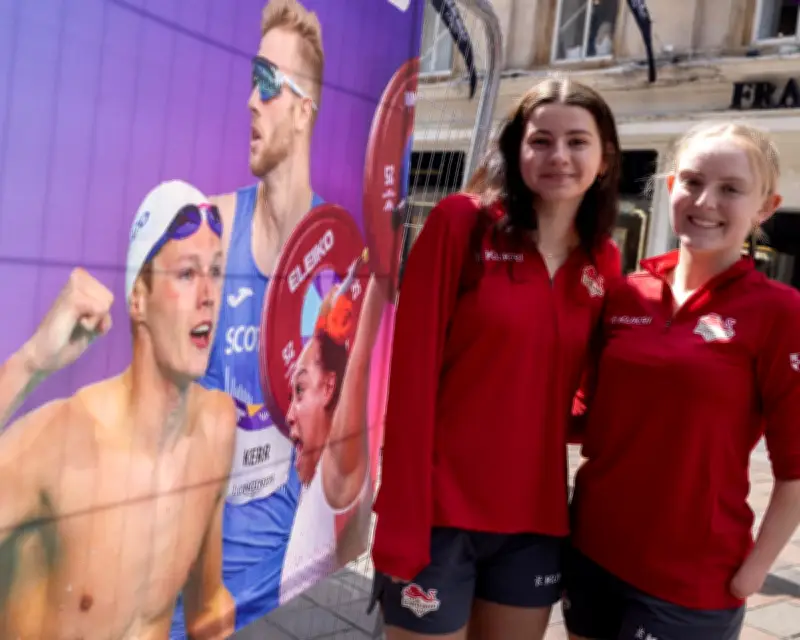
England swimmers Gabrielle Idle-Beavers and Evie Lambert, both 18, are making their debuts in major adult competitions. Lambert said: 'So many people do want to take part.' Idle-Beavers added: 'Obviously the Olympics are the goal, but it's personal preference too, the dynamics are different.' The overwhelming feeling in Glasgow is optimism. One older woman, initially grumpy about crowds, admitted: 'That's a lie, because the last time I thoroughly enjoyed it.'