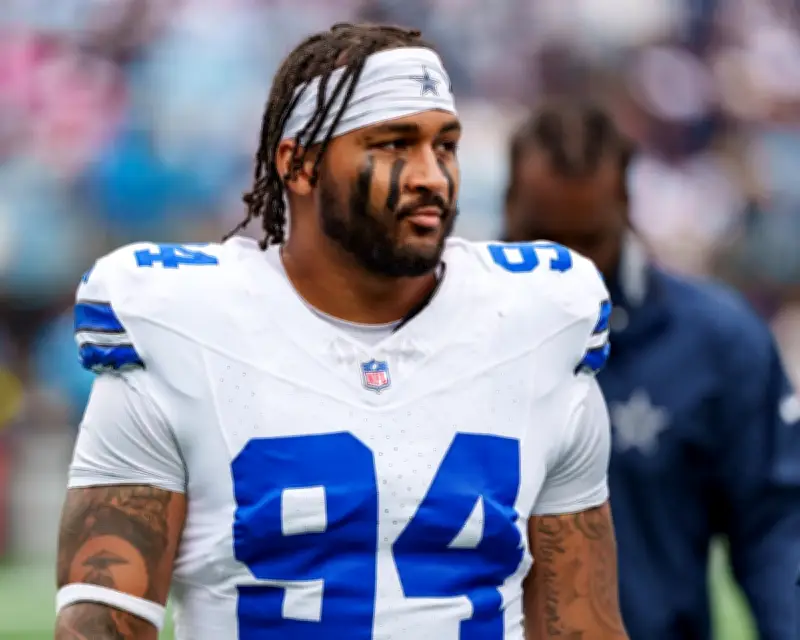
Former Dallas Cowboys defensive end Marshawn Kneeland, who died by suicide in November 2025 after a high-speed police chase, had early stage chronic traumatic encephalopathy (CTE), a brain condition linked to repeated head impacts, his family announced Tuesday.
Diagnosis by Boston University CTE Center
The Boston University CTE Center, which investigates the long-term consequences of repetitive brain trauma, analyzed Kneeland’s brain tissue after his death. Researchers determined Kneeland, 24, was in stage one of four of CTE, a degenerative brain disease that can only be diagnosed postmortem.
CTE has been found in athletes in contact sports, combat veterans, and others with repetitive head trauma. It is known to cause violent mood swings, impulsive behavior, and depression.
Family statement
“While this diagnosis does not change the tragedy of his passing, it provides important context about some of the struggles he may have been facing. We share this information to help people understand what NFL and other high contact sport athletes might be struggling with,” Kneeland’s family, including his girlfriend, Catalina Mancera, said in a statement issued through the Concussion and CTE Foundation.
“Raising awareness is important to us. We continue to remember Marshawn with compassion for the person he was, rather than defining him by the final moments of his life. One Love,” the family said.
Circumstances of death
Kneeland shot himself after evading authorities in his vehicle and fleeing a car crash on foot. The chase began when he did not stop for Texas Department of Public Safety troopers over a traffic violation. Authorities lost sight of the vehicle before finding it crashed minutes later. As officers searched for Kneeland, a dispatcher reported that people who knew him had received a group text from Kneeland “saying goodbye,” indicating he might be suicidal.
CTE risks in modern football
According to a 2021 study by Harvard Medical School and the Boston University CTE Center, NFL players are more than four times more likely to develop ALS than other men. Dr. Chris Nowinski, CEO of the Concussion + CTE Foundation, noted Kneeland’s diagnosis comes despite modern concussion protocols and better safety equipment. Kneeland started playing tackle football at age 7, played at Western Michigan University, and was selected by the Cowboys in the second round of the 2024 NFL draft.
“We have no reason to believe the current generation is at a lower risk of CTE than previous generations. Concussion protocols do not prevent CTE, because CTE is caused by repeated head impacts, not just concussions,” Nowinski said. “If we want to reduce CTE risk, we must implement CTE prevention protocols and aggressively reduce the number and strength of head impacts at every level of the game.”
In the US, you can call or text the National Suicide Prevention Lifeline on 988, chat on 988lifeline.org, or text HOME to 741741 to connect with a crisis counselor. In the UK and Ireland, Samaritans can be contacted on freephone 116 123, or email jo@samaritans.org or jo@samaritans.ie. In Australia, the crisis support service Lifeline is 13 11 14. Other international helplines can be found at befrienders.org.