
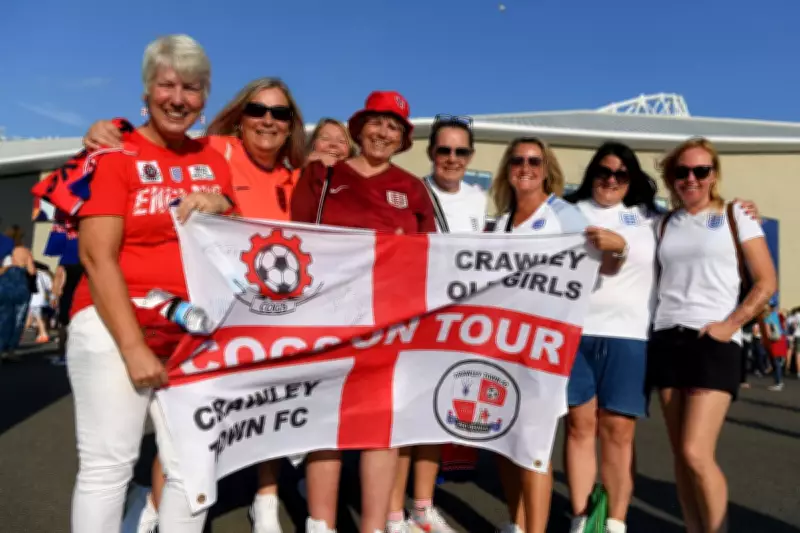
The Crawley Old Girls: A Football Haven for Women Who Missed Their Chance
Founded in 2015 by Carol Bates, the Crawley Old Girls football club was established with a clear mission: to offer a dedicated club for women ranging from 25 to 80 years old. Bates herself represents what she calls "the generation of women football missed"—those who grew up loving the game but faced significant barriers to participation.
A Lost Generation of Female Footballers
Today's landscape reveals a stark contrast between past limitations and current opportunities. According to FIFA's 2023 Member Association survey report, the number of women and girls playing organized football has surged by 24% since 2019, reaching over 16.6 million participants globally, with 3.9 million registered female players. FIFA's Women's Football Strategy 2024-27 ambitiously aims to achieve 60 million registered players by next year.
However, there exists an entire generation of women who missed out on these opportunities during their formative years. This isn't just about the historical 50-year ban on women playing on FA-affiliated pitches between 1921 and 1971, but rather the lingering effects that created a gap for girls growing up in the 1970s, 80s, and 90s. These women loved football passionately but had little to no structured avenues to play.
Personal Journeys of Rediscovery
Many women from this generation have transformed their frustration into positive action. The Crawley Old Girls stands as a prime example, providing a welcoming space for women to engage with football later in life. Similarly, Jo Treharne founded the Canterbury Old Bags for women "who have come to play the beautiful game a little later in life," creating communities where age becomes irrelevant to passion.
Personal stories highlight the emotional weight of this journey. One player described her experience: "When I first got in my kit aged 46 I started crying. I felt so empowered." Another teammate stopped playing at age 11 and didn't return to the sport for 35 years, having never experienced playing with proper goals, boots, or shin pads during her childhood.
Historical Barriers and Modern Breakthroughs
Forty years ago, even casual football with friends represented a battle against societal norms. Girls were often labeled "tom boys" simply for wanting to play, while school systems typically siphoned them into netball and hockey, reserving football and rugby primarily for boys. Local teams for girls were virtually nonexistent, forcing young female enthusiasts to constantly prove their worth in playgrounds, parks, and informal settings dominated by boys.
As these women reached adulthood, their football involvement often diminished to occasional five-a-side tournaments or casual kickabouts with friends. The demands of family life and the challenge of finding women's teams created additional obstacles, leaving many watching with envy as their children and partners played with ease.
Global Growth and Grassroots Movements
The global landscape is changing dramatically. In Victoria, Australia, the grassroots football scene experienced 14% growth in 2024-25 for women and girls, recording 30,928 participants in outdoor, five-a-side, and social games—a surge undoubtedly influenced by the popularity of the Matildas, Australia's national women's team.
This growth enables women in their late 40s and beyond to finally find their football home. Many join teams specifically for women over 35, playing competitively each week and experiencing what one described as "the fragile joy of anticipation" when heading to training.
Coaching as Redemption
For some women, coaching has become a path to redemption. One coach who grew up in the UK explained: "I'm making up for lost time. I love playing and I love coaching girls in an environment tailored for them." Having never felt welcome or properly accommodated in football environments during her youth, she lost confidence in her abilities until discovering coaching as an avenue back to the sport.
As these women share their remarkably similar stories, they reflect on the famous Three Lions chorus—"thirty years of hurt"—and how it takes on new meaning for this generation of female football enthusiasts who refused to abandon their love for the game. They are finally bringing football home, wherever that home may be in the world.