
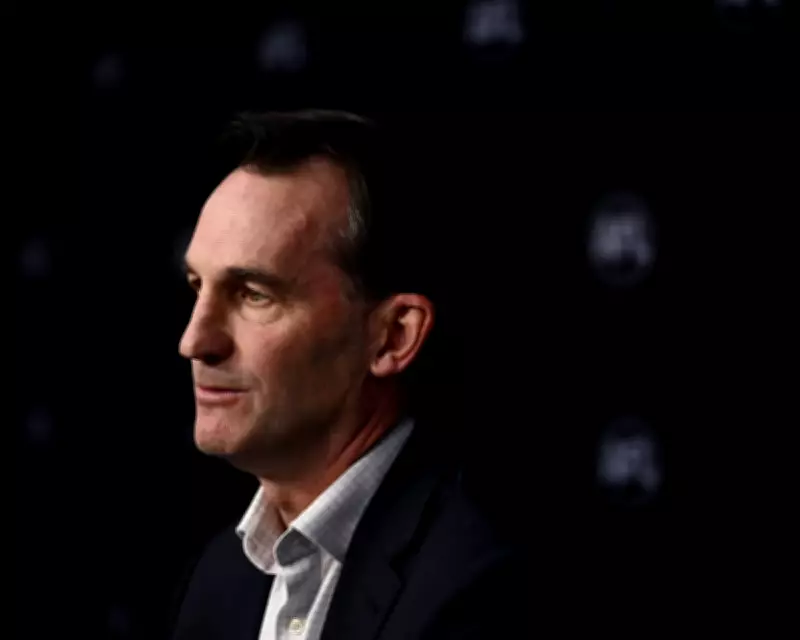
AFL Chief Executive's Communication Approach Draws Criticism
AFL chief executive Andrew Dillon has demonstrated competence in numerous aspects of his leadership role, yet his ability to communicate authentically and persuasively before microphones has become increasingly crucial in today's media landscape. This scrutiny comes as the league navigates complex challenges ranging from competitive balance to societal issues.
From Legal Counsel to League Leadership
Dillon's journey to the AFL's top position began unexpectedly in the early 2000s when former teammate and senior AFL administrator Ben Buckley spotted him driving down Punt Road after an amateur football game. Buckley's shouted inquiry about Dillon's legal qualifications initiated a career that would span more than two decades within the league's administration.
For years, Dillon operated as the organization's go-to problem solver, handling everything from minor disputes to major crises. His behind-the-scenes work on significant sporting controversies could have made him a divisive figure, yet he maintained respect across the industry through his approachable manner and fair judgment.
The Communication Challenge
Recent radio appearances have highlighted Dillon's communication style, which critics describe as wooden, scripted, and often unsatisfactory. When questioned about competition unevenness, he responded, "Look, I think it's something you keep an eye on." Regarding cost-of-living pressures affecting game attendance, he stated, "It's a really good question and it's something we are acutely aware of."
On sensitive matters like homophobic slurs in the sport, Dillon offered, "I would not be expecting that we'd be dealing with that again – sometimes there's mitigating circumstances and sometimes there's aggravating." His comments about Sydney's tribute to Bondi terror attack victims revealed limited engagement: "I don't know the ins and outs of scripts and the like."
Comparisons and Context
Dillon's communication approach inevitably draws comparisons with his predecessor, Gillon McLachlan, who mastered the art of charming deflection and media engagement. North Melbourne coach Alastair Clarkson's recollection of McLachlan directing people to "talk to 'Dills'" during the 2022 Hawthorn racism scandal illustrates Dillon's historical role as the behind-the-scenes resolver.
While Dillon may never possess McLachlan's natural frontman qualities or excel in casual media settings like The Front Bar, this isn't necessarily detrimental. Authenticity should be valued over rehearsed spontaneity in leadership communication.
Broader Implications for AFL Leadership
The AFL faces multifaceted challenges requiring decisive leadership and nuanced conversation. Traditional football issues like grand final scheduling, competitive equalization, and fixture planning intersect with broader societal concerns including terrorism responses, homophobia, and economic pressures affecting fan engagement.
Dillon frequently points to strong crowd numbers, television ratings, membership figures, and financial performance as indicators of the league's health. From a business perspective, these metrics suggest successful management. However, much of the discontent surrounding the sport's administration could be alleviated by a chief executive less constrained by prepared talking points.
The Modern Leadership Imperative
Effective AFL leadership demands commercial acumen, respect from colleagues, delegation skills, and genuine passion for the sport – areas where Dillon faces little criticism. Yet in today's media environment, the capacity to communicate authentically and persuasively has become paramount. This represents a significant challenge for Dillon's leadership approach as he navigates both sporting and societal issues facing Australian rules football.
The scrutiny of Dillon's communication style reflects broader expectations for transparent, engaging leadership in sports administration, particularly as leagues increasingly engage with complex social issues beyond traditional sporting concerns.