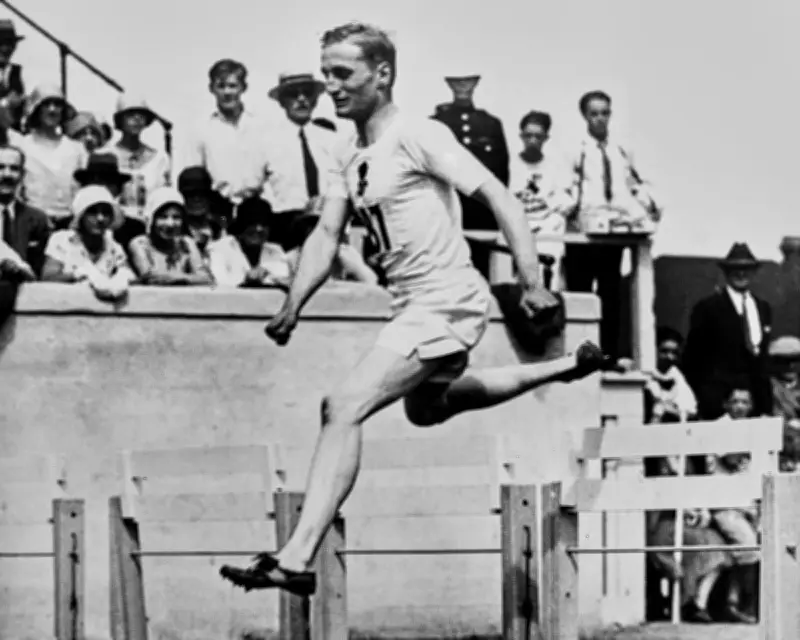
England Dominates Opening Day of the First British Empire Games
The first official British Empire Games, held in Hamilton, Ontario, Canada, on 18 August 1930, saw England's athletes achieve remarkable success on the opening day. Despite a lengthy voyage, the English team performed exceptionally well, winning multiple events and setting records.
The event, originally called the British Empire Games, brought together 400 athletes from 11 countries of the British Commonwealth, competing in six sports. Women participated only in swimming. The aim was to foster a spirit of brotherhood and sportsmanship among the nations.
Lord Burghley's Record-Breaking Win
Lord Burghley, David Cecil, the 6th Marquess of Exeter, representing England, won the 440-yard hurdles with a new record time of 54.4 seconds. According to the Manchester Guardian report from 18 August 1930, Lord Burghley won by ten yards, with Leigh-Wood taking second place and Tatham and Neame following closely, giving England all four places in the event.
England also dominated the 220 yards, with SE Engelhart winning by three yards in 21.8 seconds. In the six-mile race, New Zealander WJ Savidan won in a Canadian record time of 30 minutes 49.6 seconds, while England secured second and third places.
Success in Swimming Events
English women won the 220 yards breaststroke and the 400 yards freestyle, while an Englishman won the 100 yards backstroke. Dominion athletes took the first three places in the men's 400 yards freestyle and the first five places in fancy diving.
In the hop, step, and jump (triple jump), Canadians secured three of the first four places, with Englishman RW Revans finishing second.
Opening Ceremony Highlights
The opening ceremony featured impressive scenes. A fanfare of trumpets announced the arrival of the Viceregal party, led by Lord Willingdon and Canadian Premier. The teams marched into the stadium in order: Newfoundland, Bermuda, British Guiana, Australia, New Zealand, South Africa, Wales, Ireland, Scotland, England, and Canada, each wearing distinctive national uniforms.
Messages from King George V, the Prince of Wales, and the Duke of Connaught were read and relayed via loudspeakers to the crowd and across Canada. Athletes took an oath, a squad of soldiers fired a volley, and carrier pigeons were released in accordance with Athenian tradition.
Legacy of the Games
The British Empire Games underwent several name changes before becoming the Commonwealth Games in 1978, held in Edmonton, Canada. The 1930 Games set the stage for future international sporting events among Commonwealth nations.