Food Bank Crisis Highlights Normalisation of Poverty Across Britain
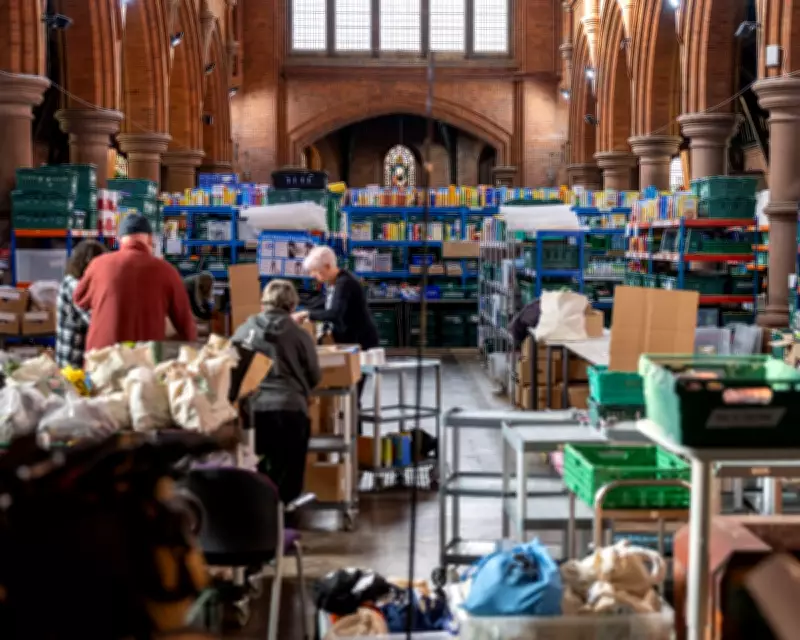
A stark photograph of a London food bank serves as a visual reminder of the deepening poverty crisis affecting communities throughout the United Kingdom. Recent correspondence published in the Guardian has brought renewed attention to what many describe as the normalisation of deprivation across the nation, with urgent calls for both reinvestment in social security systems and innovative approaches to harnessing the wisdom of those who rely on these vital services.
Decade of Austerity Worsens Lives and Erodes Community Spaces
Readers responding to the Guardian's editorial on deepening poverty have strongly condemned what they describe as fifteen years of continuous austerity measures. These policies have knowingly worsened the lives of millions of British citizens while simultaneously eroding the shared neighbourhood spaces that foster community togetherness. As local councils have closed or sold off public facilities, opportunities for communal support have diminished precisely when they are most desperately needed.
The United Kingdom possesses both the political will and financial resources to create a society characterised by genuine opportunity and security for all citizens. Instead, successive governments have permitted poverty to persist and have allowed ultra-individualism to become normalised within British society. This situation reflects not merely ideological differences but also a fundamental ignorance among political leaders, many of whom have never experienced life on a low income and consequently possess limited understanding of what such an existence truly entails.

Local Initiatives Show Promise but Require National Scaling
At regional and city levels across Britain, innovative approaches have demonstrated potential for meaningful change. Poverty truth commissions have fostered new understandings within certain councils and public bodies, while localised participation projects have successfully removed barriers that previously prevented marginalised voices from being heard. These initiatives represent important steps toward more inclusive decision-making processes, yet their impact remains limited by their small scale and localised nature.
As Liam Purcell, CEO of Church Action on Poverty, emphasises: "The UK must reinvest in our social security system, but it must also find new ways to harness the wisdom of people who access that system." This dual approach could potentially transform social security and broader political engagement from antagonistic processes into constructive collaborations that genuinely serve community needs.
Statistical Evidence Reveals Deepening Deprivation
The Joseph Rowntree Foundation's recent study provides sobering statistical evidence of the growing poverty crisis, revealing record numbers of people living in what researchers term 'very deep poverty.' This analysis demonstrates that increasing numbers of British citizens cannot meet basic needs regardless of how wisely they manage their limited resources. In East Kent, food banks and support agencies report relentless increases in demand from destitute families struggling to survive.
Professor Peter Taylor-Gooby, Director of the East Kent poverty study, notes that upcoming policy changes scheduled for April will provide some relief. The removal of the two-child benefits cap, expansion of free school meals, uprating of universal credit and minimum wage, combined with new crisis funding and increased council support, represent what he describes as "the biggest single improvement since Gordon Brown's poverty reduction policies of 2000-05." These measures are projected to lift approximately ten percent of children currently below the poverty line in Thanet, Dover and Canterbury above that threshold.
National Resilience Depends on Social Stability
Dr Simon Nieder from Chesterfield offers a crucial perspective on the relationship between welfare and national security, arguing that debates often mistakenly frame these as a simple choice between "guns and butter." He suggests this overlooks a more fundamental consideration: a nation's resilience during crises depends directly on whether its citizens possess sufficient stability to endure shocks.

In contemporary Britain, millions already exist in what might be termed survival mode, with poverty, food bank dependence and chronic insecurity indicating a society that has quietly depleted its collective resilience. This observation does not constitute an argument against defence spending but rather serves as a warning that normalising precarity during peacetime inevitably weakens a nation's capacity to respond effectively to genuine crises, whether economic, social or military in nature.
The consensus emerging from these letters suggests that while recent policy changes represent steps in the right direction, much more comprehensive action is required to address Britain's deepening poverty crisis. The normalisation of deprivation, evidenced by soaring food bank usage across the country, demands both immediate relief measures and long-term structural reforms to Britain's social security system and political decision-making processes.