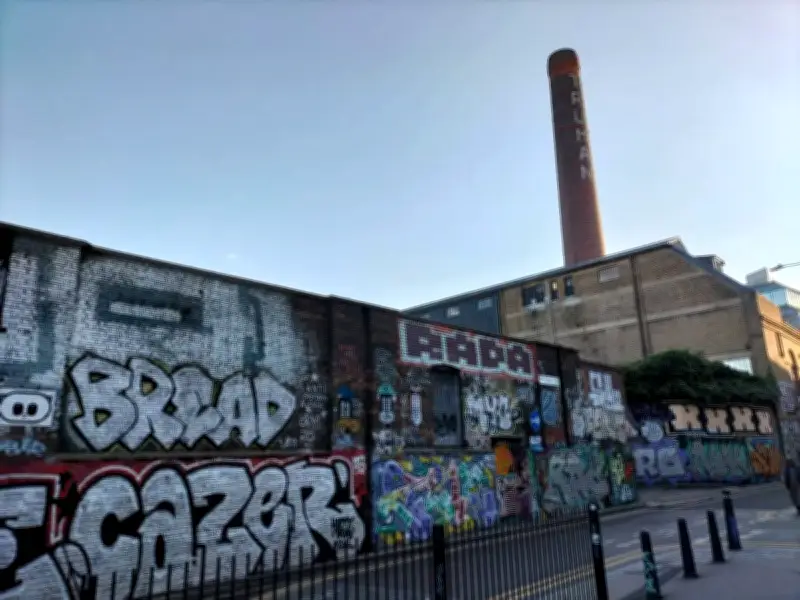
Tower Hamlets Council has confirmed that homes built as part of the Truman Brewery redevelopment in Brick Lane will be allocated based on housing need, not ethnicity, following concerns raised by the local community.
The clarification comes after the Secretary of State, Angela Rayner, approved the controversial scheme through a planning appeal. The decision letter, signed by Minister of State for Housing and Planning Matthew Pennycook on behalf of the Secretary of State, grants permission for a data centre, a large mixed-use residential and commercial complex, a new office building, and restoration work on the Boiler House.
Concerns over design for Bangladeshi families
According to the inspector's report, the development's 'Block J' will contain just 44 homes, of which only 11 will be affordable. The six social rented units are specifically configured as 3-bedroom and 4-bedroom homes, "arranged to accommodate larger families of Bangladeshi heritage," following consultations with the local Bangladeshi community. The homes will also include design features such as separate kitchens and living areas.

These design choices were intended to support larger multigenerational families, but they sparked concern among Tower Hamlets residents who feared that homes might be prioritised for a particular ethnic group. The council has now moved to dispel these fears.
Council statement on allocation policy
In a statement given to MyLondon, a Tower Hamlets Council spokesperson said: "Affordable homes delivered through the Truman Brewery redevelopment will be allocated based on housing need and eligibility. Any suggestion that homes will be prioritised for particular ethnic groups is incorrect.
"The inclusion of separate kitchen and living spaces in family homes is not a bespoke design for any particular community. The council has long sought this approach for homes with three or more bedrooms as good practice for family households, and it is reflected in London-wide housing design guidance."
The spokesperson added: "The decision to approve the scheme was made by the Secretary of State following a planning appeal. The Council opposed the development because it does not provide the level of affordable and social housing local people need.
"Homes will be allocated strictly in accordance with the Council's Housing Allocation Scheme, and the developer has no say in how they are given. Race, ethnicity and nationality are not part of the allocation criteria. At the end of 2024, over 28,000 households were on the waiting list."
Opposition and housing crisis
The council and the Save Brick Lane campaign both opposed the plans, arguing that a housing development would be a better use of the site. Lutfur Rahman, of the borough's ruling Aspire Party, expressed concern about "the impact this development could have on Brick Lane and Banglatown."
He said: "Tower Hamlets is facing an acute housing crisis, with over 30,000 households on the waiting list and thousands of families living in overcrowded conditions. Against that backdrop, a development of this scale delivering only six homes for social rent falls significantly short of addressing local need."
The actual distribution of homes is decided by Tower Hamlets Council under part 6 of the Housing Act 1996, which states that homes are allocated 'strictly on housing need', not ethnicity. The council's clarification aims to reassure residents that the allocation process will remain transparent and needs-based.