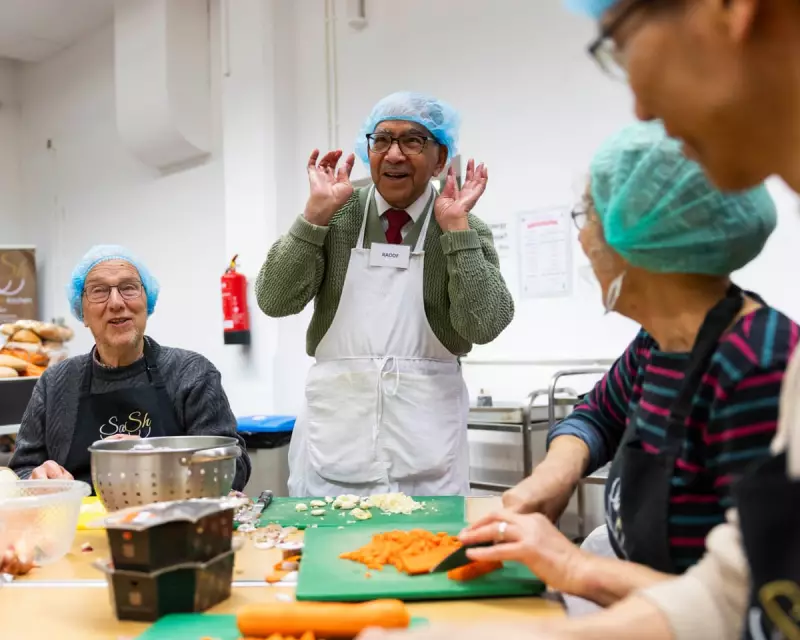
In a bustling community centre in Nottingham, the powerful aromas of cooking food mingle with the sound of friendly chatter and chopping vegetables. This is the Salaam Shalom kitchen, known as SaSh, a unique project where Muslim and Jewish volunteers stand side-by-side, preparing free meals for anyone in need. Founded in 2015, it represents a beacon of unity and practical action against a backdrop of rising hate and hardship.
A Recipe for Unity in Troubled Times
The idea was born from a conversation in 2014 between Sajid Mohammed, director of the Muslim-led social justice initiative Himmah, and Tanya Sakhnovich, the then rabbi of Nottingham Liberal Synagogue. Both were deeply concerned by the frequent marches of the English Defence League (EDL) and a growing climate of fear within their communities. They recognised that while interfaith dialogue existed at a leadership level, ordinary members of the Muslim and Jewish communities in Nottingham were not connected.
"Something deeply unsettling was happening," Mohammed recalls. The pair decided to act. Himmah had already been considering setting up a hot meal service in the Hyson Green area, which is home to Nottingham's largest ethnic minority population and a historic Jewish cemetery. It became the perfect vehicle for collaboration. Their mission was to create a service that "demonstrates our shared values of dignity, justice and service to our communities."
Not everyone shared their optimism. When they applied for a grant from the Church of England’s Church Urban Fund, a local vicar reportedly called it "a disaster idea." Undeterred, Sakhnovich went directly to the Bishop of Nottingham, secured the funding, and the SaSh kitchen opened its doors in June 2015.
More Than a Meal: Tackling Isolation and Division
Every Wednesday afternoon, the Himmah Hub transforms. Volunteers arrive to unpack crates of surplus supermarket food and assemble trestle tables. The 'chop and chat' table is a hive of activity where vegetables are prepared and friendships are forged. The food is always vegetarian, a simple solution that respects both kosher and halal dietary laws without complication.
The volunteers are the heart of the project. They include 91-year-old retired consultant Dr Raoof, hailed as "the best chopper," and Justyna, a GP practice manager who dedicates her weekly day off to the kitchen. While many volunteers come from the Muslim and Jewish faiths, others are from the local Catholic cathedral or have no religious affiliation, united by a common desire to help.
"Jews and Muslims working together on this kind of project in the present climate, is a bloody miracle," says Daniel, a 75-year-old volunteer from the synagogue. The project has navigated challenging times, including the Covid-19 pandemic, when it moved outdoors, and the ongoing tensions following the war in Gaza. Andrea Chipman, a Jewish trustee, admits it has been "stressful at times," but a shared dedication to the community has seen them through.
"We share the pain of antisemitism and Islamophobia together," explains Ferzana Shan, SaSh's co-chair. "Both communities have been used as the scapegoat for any societal issues. So that keeps us together."
Building 'Herd Immunity' Against the Virus of Fascism
SaSh's impact is twofold. It directly addresses food poverty, serving approximately 130 guests each week—a number that has grown from around 50 in its early days. The demographic has diversified from mostly white homeless men to include people of all ages, genders, and backgrounds, including refugees and asylum seekers.
Justyna is passionate about making these guests feel welcome. "Frequently they think 'everyone hates us' because of what they hear on the news," she says. "So it’s nice [for them] to come and feel included."
Critically, the project also battles social isolation. The space is designed for connection: tables are covered with colourful cloths, musicians sometimes play, and during religious festivals, volunteers explain their significance to guests. Many guests, like Danciel, come for the community as much as the food. "I met a lot of people here – it’s a good community," he says, picking up a bunch of flowers to brighten his home.
For Janet, 66, a full-time carer for two family members, the weekly visit provides essential respite and "some normality." "It gives me that time for me," she explains.
Sajid Mohammed sees the project as a vital form of social defence. He believes the combined effects of Brexit, the cost-of-living crisis, and global conflict have created "fertile land" for divisive agendas. Building strong community bonds, he argues, "is the herd immunity that will protect us from the virus of fascism." The kitchen is now supported by Hope Not Hate's charity arm, Hope Unlimited, a recipient of the Guardian's 2025 charity appeal.
For Mohammed, SaSh is his legacy project—"a project of immense hope" in "dark, dark times." His message is clear: "Don’t give up." He urges people to look beyond the division amplified on social media and focus on their immediate community. "The world is your family, your street, your neighbourhood, your city," he says. "We will get through this moment in history, as long as we hold the rope of unity together."