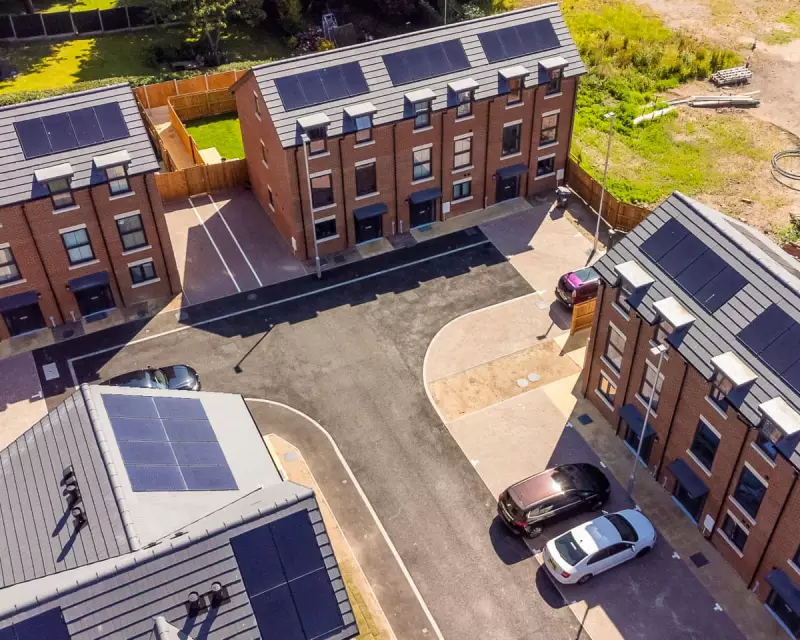
Groundbreaking research from Birmingham has revealed that modern all-electric homes equipped with heat pumps place significantly less strain on the national electricity grid than previously feared.
Lower Peak Demand Defies Expectations
The study focused on Project 80, a social housing development in Handsworth, Birmingham, where researchers monitored electricity consumption across seven properties over a full year. The average peak electricity demand per property was substantially lower than anticipated, challenging previous concerns about grid capacity.
Dr Monica Mateo-Garcia, academic lead at Birmingham City University's Centre for Future Homes, confirmed the surprising findings. The research demonstrated that not only did these homes consume less energy overall, but the timing of peak usage varied between properties, further reducing stress on the electricity network.

Substantial Energy Savings Achieved
The data revealed remarkable efficiency gains, with annual total energy consumption between 40% and 67% lower than the UK average household. Completed in 2022, the Project 80 homes were built to comply with the 2019 draft version of the Future Homes Standard, requiring an 80% reduction in carbon emissions compared to 2013 regulations.
Professor Richard Fitton from the University of Salford, who wasn't involved in the research, praised the study as "a sterling bit of work" that demonstrates current energy predictions for new-build housing may be overstated.
Real-World Performance and Resident Experience
Most properties featured air-source heat pumps for space heating, significant insulation, and solar panel arrays without battery storage. However, researchers noted some residents required better understanding of their heating systems, with some manually switching on immersion heaters unnecessarily or using less efficient electric fan heaters instead of their heat pumps.
Despite these teething problems, residents expressed overwhelming satisfaction with their new homes. Multiple families reported complete elimination of damp and mould issues that had plagued their previous accommodations. One family with a history of asthma found their symptoms disappeared after moving into the development.
Professor Aaron Gillich of London South Bank University noted that "all those reasons not to go ahead with a heat pump are slowly but surely falling away" based on these positive results.
Future Implications and Development
The findings highlight the need for more accurate energy modelling in new home construction, as Energy Performance Certificate (EPC) calculations often overestimate actual energy requirements. Tony Hopkin of Midland Heart, the housing association behind Project 80, confirmed plans to explore energy storage options and expand the successful model to a new development of 95 homes.
With the final Future Homes Standard legislation still pending, experts are urging the government to move forward with regulations that will require all new English homes to feature solar panels and heat pumps from 2027 onwards.