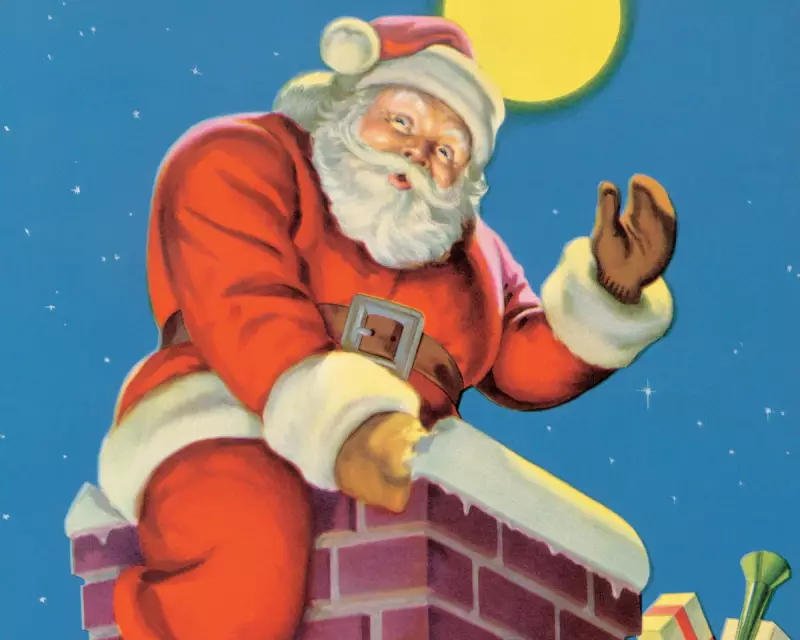
In households across the UK, the magic of Christmas morning often hinges on the myth of a generous, gift-bearing Santa Claus. But for one father, this festive tradition represents a dangerous financial and emotional pitfall he is determined to avoid.
The Fear Behind the Festive Choice
Matt Taylor, a writer and music producer, has made a conscious decision that sets his family apart: his children have never believed in Father Christmas. This isn't about ideological purity or being a festive killjoy. It is, he explains, a choice rooted in a profound fear of financial insecurity and the damaging 'moral economy' the Santa myth creates.
According to a recent YouGov poll for the debt charity StepChange, approximately one in three adults with children in the UK will struggle to afford Christmas this year. For many, the season brings anxiety, overdrafts, and guilt rather than joy. Taylor identifies this not as an accident but as a systemic issue he calls "the Santa debt trap".

"It creates a moral economy in which parents feel judged by their ability to buy," Taylor states. Christmas becomes a test, and for countless families, going into debt is the only way to pass it.
A Personal History of Insecurity
Taylor's perspective is shaped by a childhood spent in care homes, an experience that left an indelible mark. The lingering fear of losing everything at any moment has never fully left him. Even in periods of financial stability, he lives with a quiet dread that a crisis could destroy his family's security.
This background sharpens his view of the Santa narrative. The classic lyric – "He's making a list, checking it twice; gonna find out who's naughty or nice" – is not harmless fun, he argues. It is a form of moral messaging backed by purchasing power. It tells children that good behaviour guarantees lavish gifts, irrespective of cost, and places immense pressure on parents who fear that failing to deliver will shatter their children's self-esteem.
"If money runs out, if a crisis hits, if Christmas isn't affordable one year, what exactly am I supposed to say?" Taylor asks. "Santa judged them naughty because of my lack of disposable income?" He refuses to set his children up for that potential hurt, and does not blame families who incur debt to avoid it.
Honesty Over Exploitation
In the Taylor household, Santa is not presented as a real entity. He is acknowledged as an unavoidable part of the cultural landscape—seen in schools, shops, and discussed by others—but is framed as a character in a story, akin to Halloween or fairy tales.
The children still experience excitement and receive presents, albeit not an excessive number. Crucially, they know the truth: their gifts come from the labour and love of their family, not from a mythical figure with limitless resources.
Taylor, who works long hours in recording studios, wants his children to understand that his absence has value. "If I hand the credit for that work to a fictional man with a white beard, what lesson does that teach? Not wonder, but entitlement. Not gratitude, but detachment from reality," he contends.
His conclusion is stark: Christmas does not need Santa to be joyful. It needs honesty. "If a myth requires families to bankrupt themselves to sustain it, then it isn't magic. It's exploitation wrapped up as tradition," he writes. At a time when millions are struggling, he suggests the most radical act may be to stop pretending poverty is a personal failing—and to cease teaching children that money falls down the chimney.