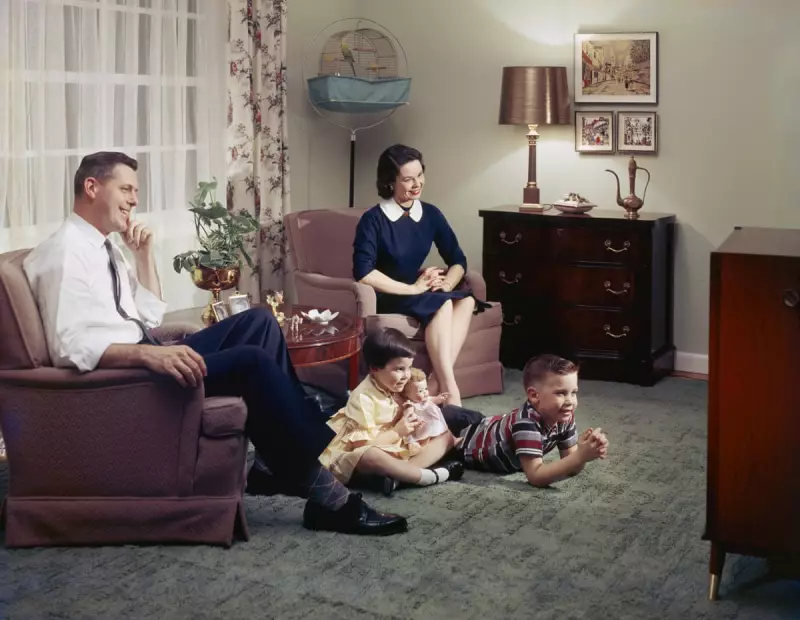
The traditional British living room, once the heart of family life and social gatherings, is disappearing from rental properties at an alarming rate. New data reveals a quiet revolution in how we use our homes - and it's leaving many feeling isolated and confined to their bedrooms.
The Personal Toll of Losing Shared Space
Georgie, a 27-year-old outdoor instructor, discovered the hard way what life without a living room means. When she moved into a Leeds house-share in 2023, she initially thought the lack of communal space wouldn't bother her. The property was significantly cheaper than alternatives, making the compromise seem worthwhile.
However, reality quickly set in. The former lounge had become an inaccessible storage area, while the tiny kitchen offered no proper socialising space. 'By the time you put a table against the wall, you couldn't sit or stand without getting in the way of the sink or the oven,' she recalls.

The consequences were profound. Georgie and her housemates began eating separately in their bedrooms, missing out on shared experiences. Social invitations became one-sided as friends hesitated to visit when the only seating option was bedroom floors. 'I felt really bad because they were always hosting me and I couldn't return the favour,' she says. 'Eating, sleeping, socialising and working in a bedroom can lead you to feel trapped.'
Startling Statistics Reveal National Trend
Recent research from SpareRoom confirms this isn't an isolated problem. Between January and June this year, 29.8% of rooms listed across the UK were in properties without living room access. The situation is particularly acute in London, where the figure jumps to 41.2%.
Even more striking, almost half (49%) of all renters reported that their living room is now being used as a bedroom. This transformation reflects landlords' efforts to maximise rental income in a tight market.
The research reveals divided opinions about this trend. While 44% believe not having a living room has affected their mental health, 36% would willingly sacrifice communal space for cheaper rent amid the ongoing cost of living crisis.
Historical Context and Modern Challenges
Louis Platman, curator at London's Museum of the Home, views the disappearance of living rooms with concern. 'It's really hard to build that sense of community and friendship without a place to gather,' he says.
Platman notes this isn't the first time commentators have predicted the death of shared spaces. In the 1930s and 1940s, as central heating became commonplace, commentators including George Orwell lamented the decline of the hearth as a family hub. Bedrooms became more comfortable, reducing the necessity to gather in one room.
The invention of television temporarily restored communal space, but recent viewing habits have reversed this trend. In 2024, less than half of 16- to 24-year-olds watch traditional TV weekly, compared to 76% just five years earlier. With streaming on personal devices becoming the norm, the need for shared viewing spaces has diminished.
Creative Solutions and Divided Opinions
Some residents have found ways to make living room-free arrangements work. Imogen, who works in the culture sector, lived for five years in a London flat where the sitting room had been converted into a third bedroom. 'We cooked, ate, socialised, gamed, entertained and crafted together in our small kitchen,' she says. 'It was the least comfortable and most social five years of my life.'
Design experts suggest alternatives for those without traditional living spaces. Regan Billingsley of Regan Billingsley Interiors notes that open-plan kitchens and dining areas can be adapted with clever furniture placement and lighting. 'A built-in banquette can double as a lounge area; a large dining table can transition from workspace to dinner party setting,' she explains.

However, architect Peter Markos remains sceptical after his own experience of London living without a lounge. 'Once the living room was converted, there were six of us living there: the only place to talk is the kitchen, the only place to eat is the kitchen, so everyone's on top of each other,' he recalls. The experience ultimately contributed to his decision to move to Birmingham for better quality of life.
The Future of Shared Spaces
As the housing crisis continues, the debate over living rooms shows no signs of abating. Platman argues for greater recognition of shared space as essential to wellbeing. 'It's going to become increasingly difficult without a wider recognition, or potentially legal recognition, of the right to shared leisure space,' he warns.
For those like Georgie, who has since purchased her own home with a living room, the difference is transformative. 'I love it,' she says, 'and I'm way happier.' Her experience underscores what many fear we're losing in the pursuit of affordable housing: not just square footage, but the very spaces that foster connection and community.