A West London teacher and grandmother finds herself locked in an increasingly bitter property dispute with a neighbour she accuses of unlawfully seizing over a metre of her garden land, including part of her newly constructed hot tub area. The conflict, centred in Hayes, has escalated over months, involving alleged property damage, conflicting legal claims, and a profound sense of personal violation.
A Dream Garden Transformed into a Nightmare
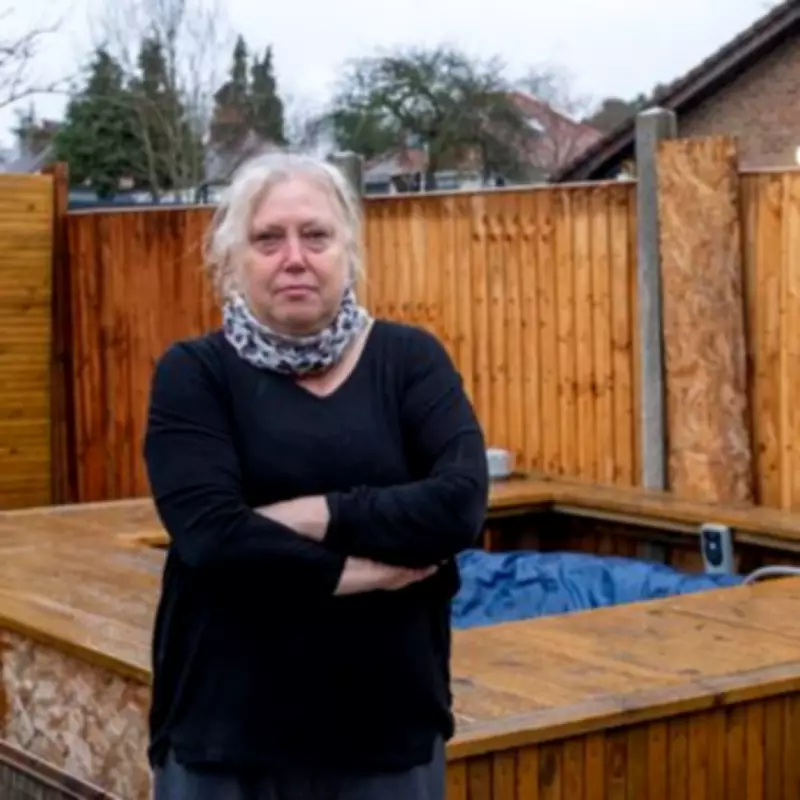
Rose Smith, 60, invested £12,500 and five months of hard work into transforming a previously derelict and overgrown plot at the end of her garden. Her vision was to create a beautiful, extended space featuring a decked hot tub area, perfectly timed for her milestone 60th birthday celebrations with family in July 2025. However, her dream was shattered when she returned home from work on September 22nd last year to a scene of devastation.
Allegations of Encroachment and Damage
Rose alleges her neighbour had forcibly annexed approximately 1.1 metres of her garden. She claims he ripped out the fence she had erected based on official Land Registry plans, sawed off a section of her decking at a slope, and removed five wooden planks from the hot tub surround. In its place, she says he installed his own fence further into her property, effectively redrawing the boundary. To compound the issue, she states he positioned two vehicles and a JCB dumper truck directly against the new fence line, with a teenager reportedly stationed to guard it.

"What began as my dream garden has turned into a living nightmare," Rose said. "I couldn't believe that someone could do such a thing to someone's property. He left all my hard work ruined." She estimates the damage at around £2,000.
A Complex Legal History Fuelling the Dispute
The roots of the conflict trace back to April 2024, when Rose first received a letter from the Land Registry. It notified her that a neighbour was attempting to claim the land behind her garden through adverse possession – a legal principle allowing someone to claim title to land they have occupied without permission for a long period. Rose, who had lived at the property for a decade, was the registered owner but was unaware the plot was hers until this point.
She immediately disputed the claim. Months later, the Land Registry reportedly rejected her neighbour's application. Emboldened by this and guided by the official boundary plan, Rose proceeded with her garden renovation, erecting a new fence precisely where the documents indicated.
Escalation and a Clash of Documents
Peace was brief. In August 2025, Rose says the neighbour, now aiming to sell the land, made a fresh claim via a solicitor. The physical encroachment followed in September. When challenged, the youth guarding the new fence reportedly told Rose "it's my land" and asserted it was his "legal right," brandishing an alternative boundary plan that conflicted with Rose's official title documents.
Rose reported the damage to the police but was informed it was a "civil matter" outside their jurisdiction. Her daughter and a friend later dismantled the neighbour's first fence, but by December 1st, another had appeared, this time encroaching even deeper onto Rose's land, she claims.
Seeking Resolution Through Official Channels
A professional boundary survey conducted last month has provided crucial support for Rose's position. The assessment validated that her Land Registry title plan is accurate and confirmed that the entire replacement fence erected by her neighbour sits on her land.
Armed with this evidence, Rose is now working closely with the Land Registry to examine the situation, including any potential easements, and determine her legal recourse to reclaim her property fully.
"I just wanted a garden where my grandchildren could play safely - instead, it's been stress, damage and months of worry," she lamented. The neighbour was approached for comment on multiple occasions but did not respond.
The case highlights the emotional and financial toll of boundary disputes, the limitations of police intervention in civil property matters, and the importance of clear, legally registered title documents for homeowners.