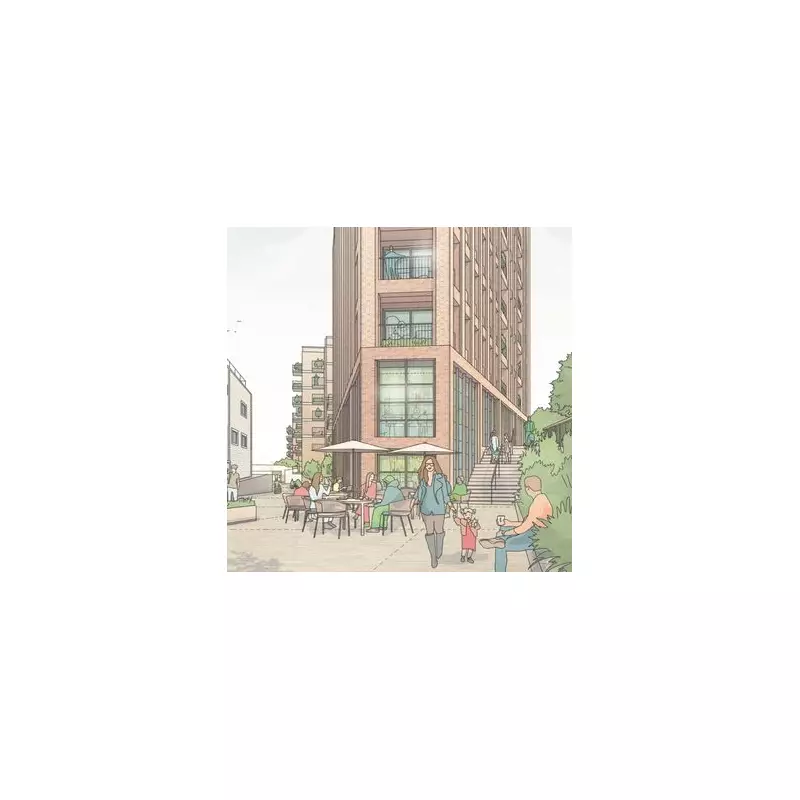
Barnet Council has decisively rejected a major proposal to construct close to 300 new homes on land adjacent to High Barnet Underground station. The scheme, which faced significant local opposition, was turned down primarily due to concerns over its excessive scale and height.
Details of the Rejected Development Plan
The application was submitted by a partnership between developer Barratt London and Places for London, the property arm of Transport for London. Their vision involved building five residential blocks, rising to a maximum of eleven storeys, on the station's current 160-space car park and adjoining storage areas.
The project promised 283 new homes alongside 567 square metres of commercial space. A key component was the provision of 40% affordable housing. Despite these offerings, the strategic planning committee voted overwhelmingly against the proposal during its meeting on Monday 8th December, with only one member in favour and eight opposed.

Local Opposition and Councillor Concerns
Local residents and councillors voiced strong objections during the lengthy committee discussion. Labour councillor for Barnet Vale, Sue Baker, reported an "overwhelming amount of negativity" from the community. A primary concern was the loss of the station car park, heavily used by elderly residents and individuals with disabilities or mobility issues.
Conservative councillor David Longstaff highlighted a direct conflict with local planning guidelines, noting the council's new Local Plan stipulates a maximum height of seven storeys for the site, a rule the eleven-storey proposal clearly breached. Reform UK councillor Mark Shooter criticised the plan as "too dense, too tall, too cramped and the wrong design in the wrong place," emphasising the need to preserve the area's cherished "village feel."
Developer Defence and Architectural Criticism
Representatives for the applicants, Martin Scholar of Barratt London and Reece Harris from Avison Young, defended the scheme. They argued the site was allocated for development within Barnet's Local Plan and aligned with Greater London Authority policy promoting dense housing near transport hubs. They described the current site as "unattractive" and "under-used," stating the new homes would be sold at around half the local average price to help first-time buyers.
However, this defence was countered by local groups. Simon Kaufman, speaking for The Barnet Society, dismissed the architectural design as a "run of the mill brick tower" that would be visually dominant and harm the area's character. Residents also deemed the proposed replacement of 177 parking spaces with just 17 for tube passengers and 9 Blue Badge bays insufficient.
The rejection marks a significant setback for the West London Partnership, which aims to deliver over 4,000 homes on underused land with good transport links. The decision underscores the ongoing tension in London between the urgent need for new housing and community concerns over preserving local character and infrastructure.