Temporary Accommodation 'Torture' for Neurodivergent Children in England
A groundbreaking report has revealed that temporary accommodation in England subjects neurodivergent children to conditions that amount to psychological torture and constitute a form of child cruelty. The research, conducted by King's College London through the all-party parliamentary group for households in temporary accommodation, highlights the particularly severe impact on children with special educational needs and disabilities.
Chronic Uncertainty and Restricted Space
Parents described how their neurodivergent children became withdrawn or hypervigilant due to chronic uncertainty, restricted space, lack of outdoor access, unsafe environments, and the removal of familiar support systems. The report states that the pace and frequency of moves between different temporary accommodation spaces creates overwhelming challenges for these children, resulting in what researchers describe as a semi-permanent state of meltdown.
Between April and June 2025, England recorded 172,420 children living in temporary accommodation – short-term housing provided by local councils for people experiencing homelessness. This can include hotels, hostels, bed and breakfast establishments, or private rentals. Although designed to be temporary, many families report living in such conditions for years, with respondents in the study averaging 4.5 years in temporary accommodation.

Personal Testimony: Agatha and Elizabeth's Experience
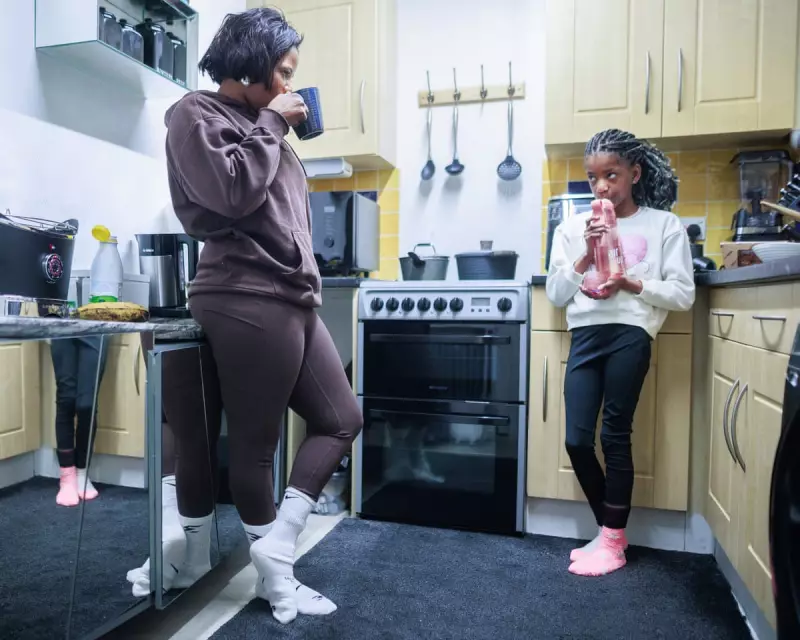
Agatha Phiri spent a year living in temporary accommodation in Oldham with her nine-year-old daughter Elizabeth, who has ADHD and suspected autism. They became homeless after leaving the asylum system and were placed in a tiny room in shared accommodation with only a kettle and microwave.
"She says noise makes her body feel pain and triggers her a lot. We had to experience that every single day for a whole year in that temporary accommodation," Phiri explained. At night, other residents with drug or alcohol issues would bang on their door and windows, while police would arrive with sirens blaring.
The constant noise had catastrophic effects on Elizabeth, who now suffers from severe anxiety and cannot use public transport or interact with others. "She wasn't like that before we lived there," said Phiri. "We'd just hold each other's hands in the middle of the night. This is a child who's going to school early in the morning, and we are up at 3am, and she can't go back to sleep because she's scared."
Broken Routines and Cramped Conditions
Neurodivergent children typically rely on routine, predictability, and safe environments, but temporary accommodation often involves sudden moves with disruption to schooling, therapy, and support networks. The report suggests this can place children in a state of emotional deprivation that becomes psychologically excruciating, comparable to solitary stressors used in coercive environments.
Phiri described how her daughter's routine was completely disrupted: "My daughter needs a routine. But it was messed up, we couldn't even get homework done because of the chaos." Cramped space presented another major issue – Elizabeth celebrated birthdays on the bed with no place to play, guests were not permitted, and they were far from her school and support networks.
"We were not allowed anyone at all. It was just her and me," said Phiri. "To be honest, it's not a life I would want anyone to live, including those who have children with no medical needs. I wouldn't want anyone with a child to experience that kind of life. It's horrible. Very horrible."
Political Response and Recommendations
Siobhain McDonagh, MP and chair of the APPG for households in temporary accommodation, stated that the report shows the horrifying reality for children at the sharp end of this crisis. "It is morally unjustifiable that these children are forced to endure conditions tantamount to prison," she declared.

Professor Philip Alston, former UN special rapporteur on extreme poverty and human rights, wrote in the foreword that the report is groundbreaking because it forces society to confront a neglected dimension of child rights. He noted that neurodivergent children have been largely absent from global and national discourse, and the report expands the human rights lens beyond traditional definitions of harm to include sensory environments that can inflict deep suffering.
The report makes several key recommendations:
- Incorporating the UN Convention on the Rights of the Child into UK law to force policymakers to consider children's rights when making housing and homelessness decisions
- Changing restrictive visitor rules in temporary accommodation that ban visitors, allowing respite and support for parents of neurodivergent children
- Ensuring neurodivergent children are not placed in mixed accommodation with shared facilities
- Preventing moves out of area or repeated relocations that disrupt stability
The number of people in temporary accommodation has soared in recent years as the housing crisis and cost of living pressures have pushed more families into precarious living situations. This report provides compelling evidence of the specific and severe harm caused to some of society's most vulnerable children.