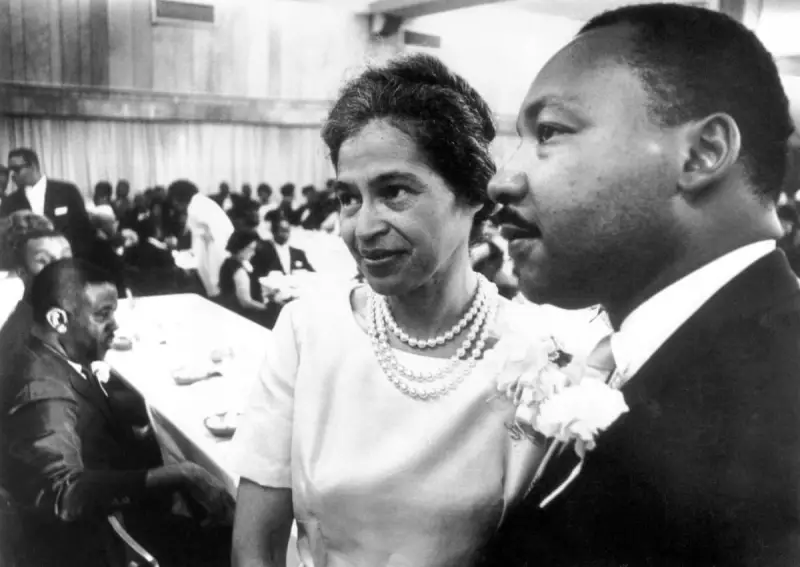
This Friday marks the 70th anniversary of the Montgomery bus boycott, a pivotal moment ignited by Rosa Parks' courageous refusal to give up her seat to a white passenger. While her act became a catalyst for the civil rights movement, it also forced her and her husband Raymond to flee relentless death threats.
In August 1957, they joined the Great Migration north, seeking refuge in Detroit. Yet, as author and professor Bernadette Atuahene details, they exchanged the overt racism of the Jim Crow South for a more insidious, systemic variety that was woven into the very fabric of American housing policy.
The Northern Illusion: Racism Hiding in Plain Sight
In Detroit, the Parks did not face segregated buses. The city offered access to some of the nation's most lucrative blue-collar jobs. By 1950, the median Black household income in Detroit was a robust $2,298, far exceeding the national Black median of $952.

However, this economic success was systematically thwarted when it came to securing quality housing. A web of racist policies – defined as any laws or processes that produce racial inequity – prevented Black families from translating earnings into stable homeownership and community wealth.
These policies included racial covenants, legal agreements that barred Black residents from certain neighbourhoods, confining them to overcrowded urban areas. The federal government's redlining practices then formally marked these Black neighbourhoods as high-risk, cutting them off from mortgages and investment.
The Mechanisms of Dispossession
The consequences were devastating and multi-layered. Real estate agents engaged in blockbusting, scaring white homeowners into selling cheaply by claiming Black arrivals would destroy property values, only to resell those homes to Black families at inflated prices.
Later, urban renewal programmes in the 1950s and 1960s demolished entire Black communities under the guise of eradicating blight. These projects destroyed not just buildings, but thriving businesses, cultural hubs, and the vital social networks that held communities together.
Displaced families, with nowhere else to go, were forced into other limited Black neighbourhoods, creating overcrowded conditions of trauma and "root shock" – a term describing the severe stress of losing one's emotional ecosystem – which often led to increased social strain.
A Vacant Symbol and the Modern-Day Plunder
Rosa and Raymond Parks eventually rented a home at 3201 Virginia Park Street, where they lived from 1961 to 1988. Today, that home stands vacant and is valued at less than $50,000, surrounded by empty lots and decay – a direct legacy of those decades of policy-driven disinvestment.
The injustice, however, did not end with history. Professor Atuahene's research reveals a contemporary crisis of property tax overvaluation in Detroit. In the wake of the 2008 foreclosure crisis, which hit majority-Black cities hardest, property values plummeted.
Struggling with bankruptcy, the city failed to adjust its assessments accordingly. An investigation by the Detroit News found that between 2009 and 2015, the city overtaxed homeowners by at least $600 million, in violation of the state constitution. The Parks' former home was overcharged by $2,058.
This is not an isolated Detroit problem. Nationwide studies indicate that, on average, Black and Hispanic homeowners pay 10% to 13% higher effective property tax rates than white owners for equivalent homes.
On this solemn anniversary, while we honour the bravery of civil rights icons like Rosa Parks, we must also expand our understanding of racism. It is not only found in burning crosses and segregated lunch counters, but in the racist policies that continue to operate in plain sight, systematically stripping wealth and stability from Black communities to this very day.