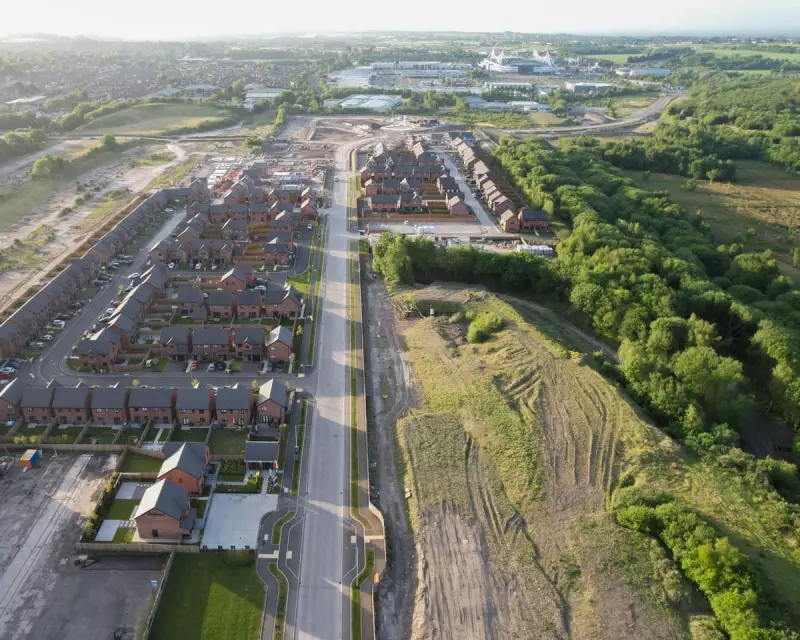
A powerful cross-party committee of MPs has delivered a stark challenge to the UK government, asserting that nature is not a blocker to housing growth. This finding directly contradicts claims frequently made by ministers who have portrayed environmental protections as an obstacle to development.
Challenging the 'Lazy Narrative'
The Environmental Audit Committee (EAC), in its newly published report on environmental sustainability and housing growth, took aim at what it labelled a 'lazy narrative' promoted by government ministers. This narrative, the report argues, wrongly scapegoats wildlife and environmental regulations for delays in housing delivery.
Labour MP Toby Perkins, who chairs the committee, stated unequivocally that nature is being used as a scapegoat. He emphasised that a healthy environment is not an inconvenience but is, in fact, essential for building resilient towns and neighbourhoods capable of withstanding future challenges like climate change.

The Real Barriers to Housebuilding
The report identifies a different set of problems hindering the government's ambitious target to build 1.5 million homes by the end of this parliament. According to the MPs, it is severe skills shortages in key areas that pose the greatest threat to this goal.
The inquiry heard compelling evidence that local planning authorities are critically under-resourced in ecological expertise. Staff at Natural England, the government's own environmental advisory body, are described as being 'stretched to their limits'. The report concludes that the specialised skills required to deliver the ecological aspects of planning reforms simply do not exist at the scale, quality, or capacity needed.
Concerns Over New Legislation and Conflicts of Interest
The committee's findings come at a critical time, as the government's Planning and Infrastructure Bill is in its final stages before becoming law. This legislation has sparked significant controversy, as critics argue it rolls back environmental protections.
A key concern is a provision that would allow developers to sidestep the need for detailed on-site environmental surveys and mitigation measures. Instead, they could pay into a central National Nature Recovery Fund, with improvements made elsewhere. Ecologists, environmental groups, and some MPs have fought to remove this clause, fearing it will lead to significant damage to local wildlife and rare habitats.
Despite these efforts, the Secretary of State for Housing, Steve Reed, instructed MPs to vote down the proposed changes this week, ensuring the controversial measure remained in the bill.
The EAC report raises a major red flag about this new system. It highlights a potential conflict of interest for Natural England, which is set to oversee the new fund financed by developers while simultaneously being expected to regulate their environmental conduct. The committee expressed deep concern that the legislation, as currently drafted, will cause the government to miss its legally binding target to halt the decline of nature by 2030 and reverse it by 2042.
Ultimately, the report sends a clear message: achieving housing growth and protecting the environment are not mutually exclusive goals, but failing to address the real issues of skills and resources will jeopardise both.