London's Affordable Housing Goal Faces Uncertainty as Mayor Khan Voices Hope Over Assurance
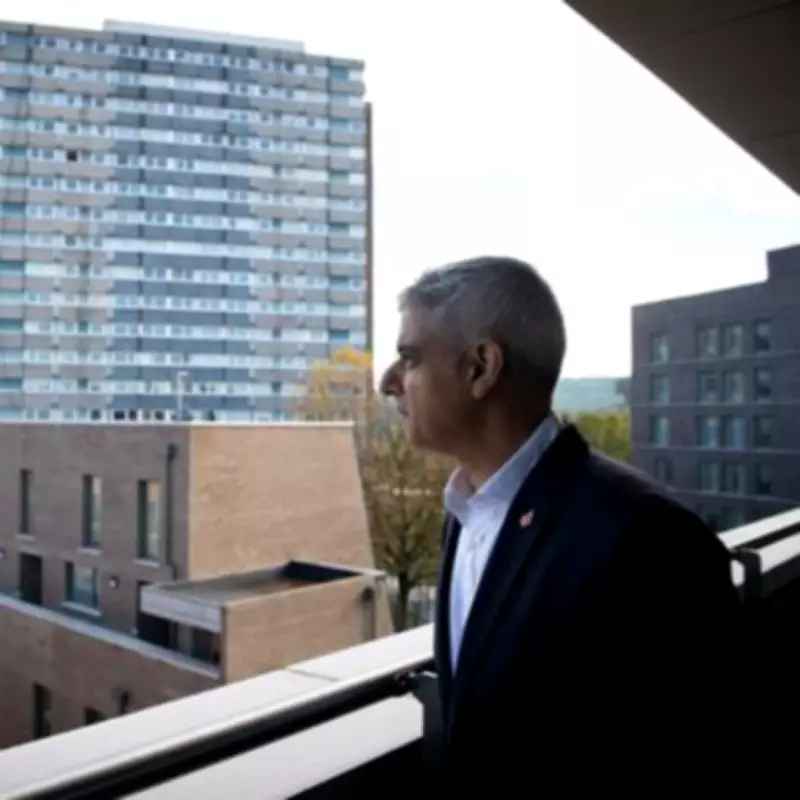
Mayor Sadiq Khan has significantly moderated expectations regarding the achievement of London's affordable housing targets, introducing a note of caution amidst ongoing economic pressures. During a recent Mayor's Question Time session, Sir Sadiq stated he was "hopeful" that the goal of 17,800 housing starts by March could be reached, but he refrained from making any firm commitments. This stance marks a departure from the more confident assertions made by his deputy, Tom Copley, who earlier expressed full anticipation that the target would be met.
Current Progress and the Looming Shortfall
Data from the Local Democracy Reporting Service reveals that only 7,878 homes have been initiated under the 2021-2026 Affordable Homes Programme as of December 2025. To meet the revised target, an additional 9,922 starts must be delivered between January and March 2026. This ambitious requirement follows two successive reductions in the original target, which was initially set at 35,000 homes before being scaled down to a range of 17,800 to 19,000.
Deputy Mayor Tom Copley had previously assured committees that, based on information from delivery partners, the Greater London Authority would achieve the new target range. However, Mayor Khan highlighted several external factors complicating efforts, including construction inflation, skill shortages, delays from the Building Safety Regulator, and fluctuating interest rates.

Economic and Regulatory Hurdles
In his remarks, Khan emphasized that while some elements are within the control of City Hall, others are influenced by broader macroeconomic conditions. He pointed to the government's provision of additional flexibility in grants and loans as a positive step to unlock stalled housing projects. Furthermore, Khan stressed the importance of accelerating the Building Safety Regulator's processes to ensure a more even distribution of housing starts in future programmes.
The Mayor referenced a "hockey stick" effect, where a sharp increase in housing starts typically occurs towards the end of a programme due to financial incentives for partners to meet deadlines. However, he acknowledged that achieving the current target would require breaking records in the final quarter, underscoring the significant challenge ahead.
Political Criticism and Broader Context
Reform UK Assembly Member Alex Wilson criticized Khan's cautious language, suggesting that "hopeful" represents a watering down of previous assurances and likening the situation to a "ski jump" rather than a hockey stick. Wilson argued that Londoners are bearing the cost of the Mayor's perceived failures in housing delivery.
Amid annual demands for 88,000 new homes in London, the government has implemented radical measures to boost housebuilding. These include a temporary reduction in affordability quotas for developers from 35 percent to 20 percent, aimed at stimulating construction activity. The Ministry for Housing, Communities and Local Government has been approached for comment on the current status of the affordable housing targets.
Khan concluded by refusing to speculate on the consequences of missing the target, stating, "I'm not somebody who talks in hypotheticals, so let's wait and see and cross that bridge when it comes to it." This cautious approach reflects the complex interplay of economic, regulatory, and political factors shaping London's affordable housing landscape.