Green Party Achieves Historic By-Election Breakthrough in Gorton and Denton
In a stunning political upset, the Green Party has won the Gorton and Denton parliamentary by-election, marking its first-ever gain in such a contest after 87 attempts. This victory, coming on the heels of Reform UK's success in Runcorn and Helsby in May 2025, signals a profound transformation in British politics, as parties outside the traditional Labour, Conservative, and Liberal Democrat trio secure seats.
A Landmark Result for the Greens
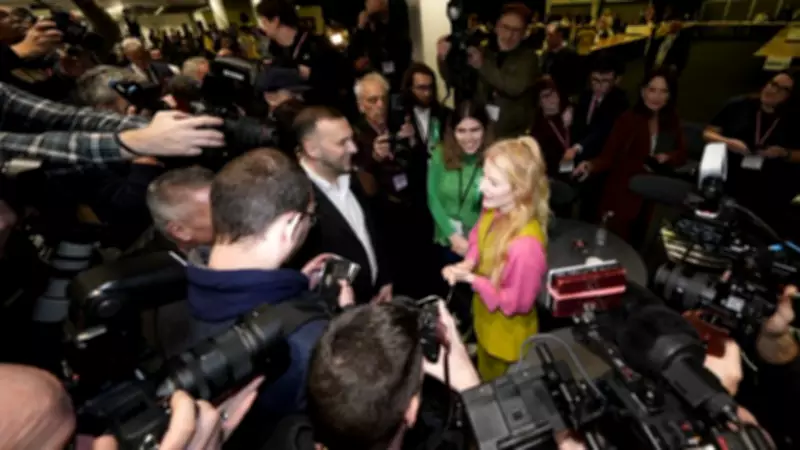
Green candidate Hannah Spencer captured 40.7% of the vote, a remarkable increase of 27.5 percentage points from the party's performance in the last general election. This achievement places her among only 18 candidates in the past century who have propelled their party from third place in a general election to first in a subsequent by-election. Under the leadership of Zack Polanski, the Greens have shifted further to the left, positioning themselves as a clear competitor to Labour in many regions across the country.
The result is particularly devastating for the Labour government, which plummeted from first to third place in what was previously its 38th safest seat. Labour's 36.7% majority from the general election completely evaporated, with the party suffering a 25.3 percentage point drop in vote share—ranking as the 17th worst result on this measure. The swing from Labour to the Greens was a massive 26.4%, a figure exceeded in only 10 other Labour defeats.

Strategic Factors and Broader Implications
Several key factors contributed to this outcome. Workers Party leader George Galloway's decision not to field a candidate, despite his party's 10.3% vote share in the 2024 contest, allowed the Greens to campaign more effectively, particularly on issues like the conflict in the Middle East. This strategic move highlights the evolving dynamics of multi-party politics, where alliances and tactical withdrawals can sway results.
Reform UK's candidate, Matt Goodwin, finished second with 28.7% of the vote, a 14.7 percentage point increase from the general election, underscoring the party's growing influence. Meanwhile, the Conservatives were squeezed in this three-way contest, polling only 1.9%—lower than their 2.3% result in Monklands West in 1994. Advance UK, seen as a potential rival to Reform, made its by-election debut with candidate Nick Buckley attracting just 154 votes.
Turnout and Historical Context
Turnout was notably high at 47.5%, just 0.3% below the 47.8% recorded in the general election. Such proximity to previous turnout levels is rare; the last instance where a greater proportion of the electorate voted than before was in 1987, when Rosie Barnes won Greenwich for the SDP. This elevated engagement likely reflects intense interest in the contest, driven by Labour's candidate selection, Reform's prior success, and the Greens' leftward shift.
This by-election result sets a new precedent, as it becomes only the second time that a party elected with a landslide Commons majority has lost its first two by-election defences—a distinction previously held by Harold Wilson's administration after the 1966 election. As the political landscape continues to fragment, this victory for the Greens underscores the emergence of a multi-party era in the UK, challenging long-standing electoral norms and reshaping future campaigns.