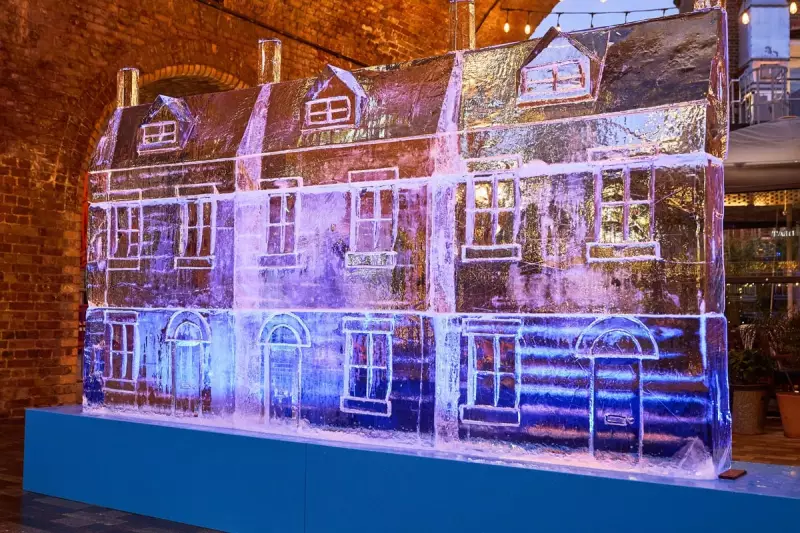
A striking ice sculpture depicting classic British terraced homes has been unveiled in London, creating a chilling visual metaphor for the millions of people trapped in fuel poverty across the UK.
The Frozen Reality of Rising Energy Bills
Displayed in London's Borough Yards, the three-metre wide and one-and-a-half metre tall installation was designed to capture the attention of passers-by. The sculpture symbolises households left literally 'frozen' by the harsh reality of rising energy costs, with many expected to feel the chill this winter despite any forecast changes to the energy price cap.
This powerful art piece forms part of a crucial campaign launched by Skipton Building Society, Age UK and National Energy Action to highlight the growing fuel poverty crisis facing British households.

Health Impacts and Human Cost
Sylvia Stoianova, programme director from the University of Bristol's National Child Mortality Database, spoke urgently about the devastating effects cold homes can have on both older people and children.
"We're seeing growing inequalities in people's ability to heat their homes – leaving both older people and the very young exposed to unsafe living conditions," she stated. "Ensuring warm, dry homes isn't just about comfort, it's a life-saving necessity."
Ms Stoianova highlighted that cold homes are directly linked to serious health issues in babies and children, including low birthweight, preterm birth, delayed development and increased hospital admissions. Shockingly, the report found that more than one in five child deaths could potentially be avoided if deprivation-related factors were properly addressed.
"Lack of heating can also lead to damp and mould, which trigger respiratory problems and worsen asthma outcomes," she added. "Evidence from child death reviews shows these environmental factors have directly contributed to children's ill health and, in some cases, their deaths."
Tragically, one child dies from asthma every month in England on average, with fuel poverty forcing families into impossible choices between warmth and other essential needs.
Older Generations Facing Winter Anxiety
The campaign's research reveals deep concerns among elderly citizens, with a survey of 1,500 adults aged 65 and over showing that 42 per cent are worried about the coming winter.
The cost of heating and energy bills topped their list of concerns at 86 per cent, followed by the overall cost of living (76 per cent) and homes not being warm enough (58 per cent). More than half (56 per cent) expect energy costs to put significant pressure on their finances, with 41 per cent saying this pressure is greater than last year.
Perhaps most alarmingly, 52 per cent of older people anticipate going consecutive days without leaving home during winter, with more than half stating it's simply too cold to venture outdoors.
Michaela Wright, group head of sustainability at Skipton Building Society, which is encouraging donations to the campaign online and in branches, said: "No one should have to choose between staying warm and affording life's essentials. Yet our research shows this is the reality for far too many people."
She confirmed that the charity partners will receive part of Skipton's 1 per cent profit before tax as a charitable donation, plus a further £50,000 split between them as part of this campaign.
Practical Support and National Response
The research conducted by OnePoll revealed that 74 per cent of people fear energy bills will continue to rise in the coming years, with the same proportion hoping to see more support introduced to help older people keep their homes warm.
Despite this concern, 63 per cent said they are unaware of any formal support available to help them manage during the colder months.

To combat the cold, the survey found that 70 per cent will pile on extra layers to keep warm, while 45 per cent plan to use blankets, hot water bottles or electric throws as cheaper alternatives to heating. Nearly a third (30 per cent) will go to bed earlier to stay warm, and 23 per cent will confine themselves to a single heated room.
Adam Scorer, chief executive of National Energy Action, emphasised that "today's price cap announcement means bills are still £500 higher than pre-crisis levels for a typical household."
Paul Farmer, CEO at Age UK, added the stark reality that "around 1.1 million homes with a person aged 60 or over live in fuel poverty," describing the campaign as "shining a light on this crisis hiding in plain sight."
The ice sculpture serves as a frozen testament to the urgent need for action as Britain faces another winter where staying warm remains a lifeline rather than a luxury for millions.