Four Additional London New Town Proposals Rejected by Government Taskforce
The government has revealed that four additional London sites were considered for New Town status but ultimately rejected, leaving only Thamesmead and Enfield as the capital's representatives in the national program. This disclosure came during a London Assembly Planning and Regeneration Committee hearing, where officials explained the rigorous selection criteria that narrowed down applications from across the UK.
Selection Criteria Focused on Viability and Scale
Sowmya Parthasarathy, Director of consultancy Arup and a member of the advisory panel on New Towns, detailed the evaluation process that led to the rejection of four London proposals. "We received six applications from London out of 100 nationwide," she stated. "The chosen sites needed to demonstrate single land ownership control, existing or potential transport links, value for money, and momentum for planning approval within this parliamentary term."
The rejected London sites were deemed too regeneration-focused rather than representing true urban extensions. Ms. Parthasarathy emphasized that the taskforce specifically sought locations where housing could be developed within a new construct, allowing for the creation of distinct community identities. Affordable housing provision of at least 40 percent was another critical factor in the assessment.

Thamesmead and Enfield as Pioneering Models
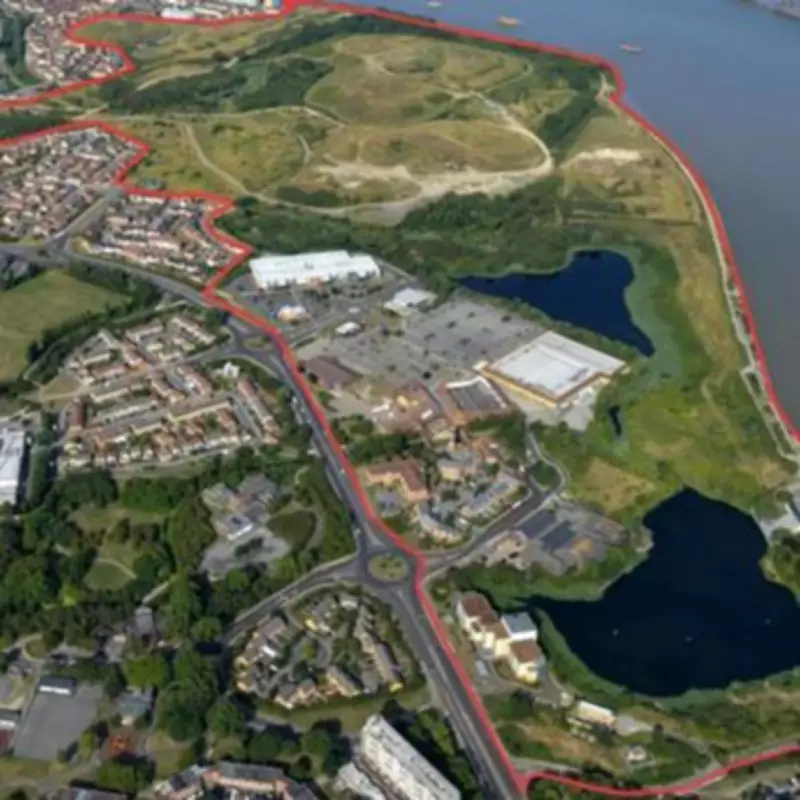
The two successful London proposals - Thamesmead Waterfront and Crews Hill in Enfield - could potentially deliver up to 15,000 and 25,000 homes respectively, totaling approximately 40,000 new residences once fully developed. These urban extension projects represent a departure from traditional standalone New Towns like Milton Keynes, adapting the concept to London's unique spatial constraints.
"We had to expand the definition to include urban extensions," Ms. Parthasarathy explained. "The London ones are urban extensions or densifications that can deliver a minimum of 10,000 units. This represents a definition fit for today's housing challenges."
Future Opportunities for Rejected Sites
Despite the current rejections, officials stressed that the door remains open for future development of the four unsuccessful London locations. "If Enfield and Thamesmead can show the way on how to build at pace with good identity and affordability, then those principles could be taken to those other sites," Ms. Parthasarathy affirmed. She noted that of all candidates, these two demonstrated the strongest potential to establish replicable models.
Deputy Mayor for Housing Tom Copley echoed this forward-looking perspective, asserting that the current wave of New Towns should not represent the "end of the story" for London. With the government demanding 88,000 new homes annually in the capital, further New Towns could provide one pathway toward meeting these ambitious targets.
Infrastructure as Development Catalyst
The recent government approval of DLR extension to Thamesmead has provided crucial momentum for that project. Kate Greenway, Project Director for Thamesmead Waterfront, highlighted this infrastructure commitment as transformative: "Thamesmead Waterfront itself was part of the original masterplan but the transport infrastructure promised was never delivered. Now we have that certainty around the DLR extension, we feel confident in bringing forward that vision."
This emphasis on infrastructure-first development reflects lessons learned from previous projects, where housing preceded necessary transport connections, limiting community growth and accessibility.
Broader National Context and London's Role
The twelve sites selected nationwide represent the government's strategy to build 1.5 million homes before the next election, reviving the New Town concept that proved successful in previous decades. London's two successful proposals, while differing from traditional New Towns in their urban extension nature, maintain alignment with core principles of planned community development.

Mr. Copley acknowledged that "there are probably a number of other sites that are of the scale and have the potential to be New Towns in future," though he declined to identify specific locations. His comments suggest that while the immediate focus remains on launching the Thamesmead and Enfield projects, London's housing strategy may incorporate additional New Town proposals in coming years.
The London Assembly's ongoing investigation into New Towns continues to examine how these developments can address the capital's chronic housing shortage while creating sustainable, well-connected communities with strong local identities.