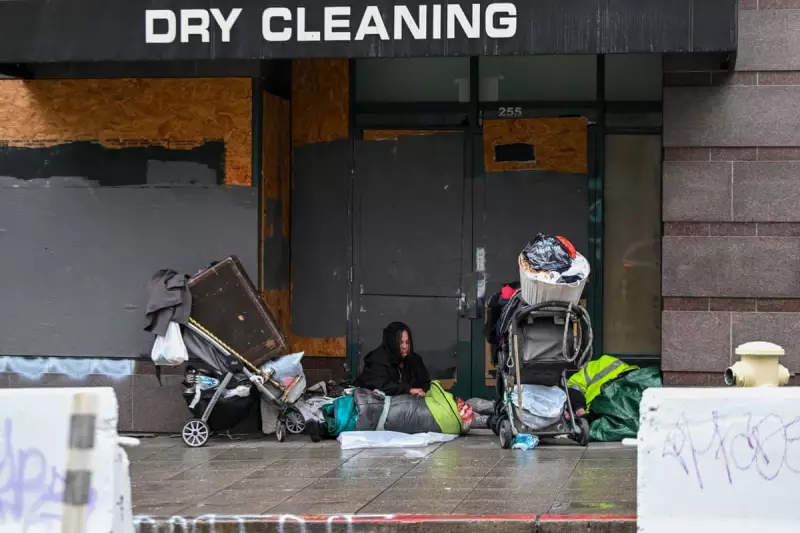
Startling new figures have exposed a dramatic surge in poverty across California's San Francisco Bay Area, with nearly one in three residents now struggling to afford basic necessities.
The region's poverty rate jumped sharply from 12.2% to 16.3% during 2023, according to a comprehensive analysis by anti-poverty organisation Tipping Point Community. This translates to approximately 1.02 million residents across six counties living in poverty by year's end.
The Deepening Crisis
An additional 12.5% of the population – roughly 790,000 people – were found to be teetering on the brink of poverty. This means about 30% of Bay Area inhabitants face significant financial hardship, unable to reliably cover essential expenses.

The report highlights a growing chasm between earnings and living costs. While incomes rose by 34% between 2016 and 2023, the cost of living skyrocketed by 46% during the same period. The situation worsened notably between 2021 and 2023, with incomes increasing 10% against an 18% surge in living costs.
Grocery prices alone saw a punishing 17% increase from 2021 to 2023, placing enormous pressure on household budgets.
Work No Longer Guarantees Security
Perhaps most alarming is the revelation that employment offers diminishing protection against poverty. The report states that half of all people living in poverty in the Bay Area belong to families with at least one full-time, year-round worker.
In total, more than one million residents remain in or near poverty despite having a full-time earner in their household.
The poverty threshold for the region is defined as an annual income of $28,081 for a single adult and $52,715 for a family of four. The near-poverty benchmark stands at $42,122 for one adult and $79,073 for a family of four.
Stark Racial Disparities and Statewide Context
While poverty rates increased across all racial demographics, the impact was profoundly unequal. White residents experienced a rise from 9.3% to 10.6%, whereas Black residents saw a dramatic jump from 15.8% to 22.1%.
Latino residents faced an increase from 20.3% to 26%, and Asian residents saw their poverty rate climb from 9.6% to 14.1%.
This troubling trend reflects California's overall situation. The state now shares the dubious distinction of having the highest poverty rate in the United States alongside Louisiana, with 17.7% of Californians – about 7 million people – unable to afford basic needs according to the California Budget and Policy Center.
Meanwhile, extreme wealth concentration continues unabated. California hosts more billionaire residents than any other state. Recent research from San Jose State University indicates that just nine households in Silicon Valley control 15% of the area's wealth, while a mere 0.1% of residents hold 71% of total wealth.
This data represents a significant reversal of previous progress. Between 2011 and 2021, the Bay Area had successfully reduced its poverty rate from 18.7% to 10.8%. The current 16.3% rate returns the region to levels last seen in 2016, standing approximately 2% higher than pre-pandemic figures.