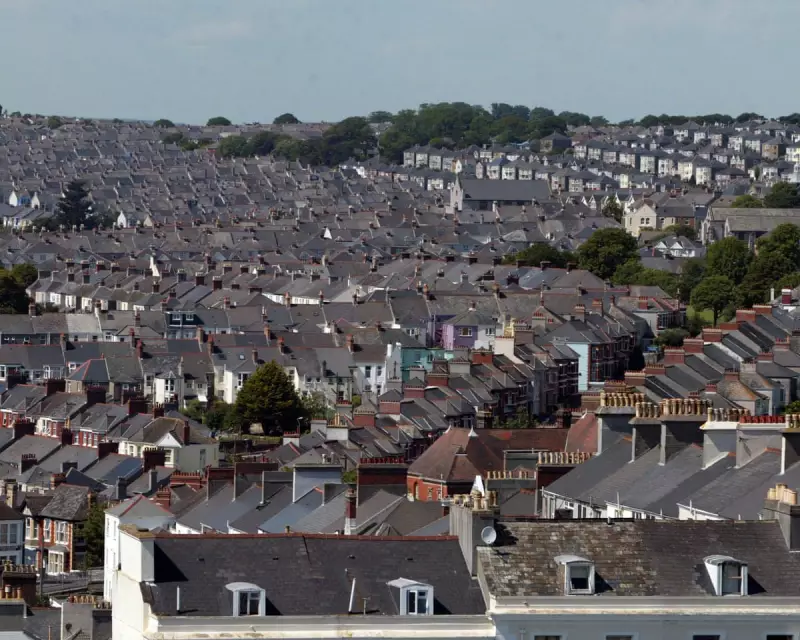
Plymouth has emerged as the UK's top property hotspot for 2025, recording the nation's most dramatic increase in average house prices, according to new data. While the central London market grappled with weak demand, the Devon city saw a remarkable surge, fuelled by significant investment and improved amenities.
Regional Hotspots Outperform as London Stalls
Research from Lloyds Banking Group reveals that the average property price in Plymouth jumped by 12.6% over the course of the year. This dramatic rise pushes the typical home value in the city to £278,808. The growth was not isolated, with Stafford and Wigan also enjoying double-digit price increases.
In stark contrast, London was the only UK region where prices effectively stalled. The capital saw average values dip by a marginal 0.1% to £574,514, though it remains the most expensive place to buy in the country. Across the UK, the average annual increase stood at 3.7%, with Northern Ireland leading regional growth at 5.8%, followed by Scotland and the north-west.
Amanda Bryden, Head of Mortgages at Lloyds, stated the figures highlight how localised the housing market has become. "We’ve seen significant change in property values, with some areas rising sharply while others have cooled," she said.
Investment and Lifestyle Drive Plymouth's Appeal
Property experts point to a wave of investment and development as key drivers behind Plymouth's ascent. Nigel Bishop of buying agency Recoco Property Search highlighted the transformative impact of projects like the Royal William Yard, which delivered new homes. "The city’s improved retail, sporting, culinary and general lifestyle amenities also position Plymouth as an attractive option for house hunters of all ages," he explained. This rising demand has created a more competitive market, inevitably pushing prices upward.
Supporting this view, separate research from Confused.com found Plymouth ranked third in the UK for best community and scored highest for overall life satisfaction at 7.8 out of 10. Hull also entered Lloyds' top ten for growth for the first time, with a 6.5% rise, buoyed by its recent designation as a National Geographic "best of the world" destination for 2026.
Prime London Market Shows Tentative Signs of Stabilisation
Separate analysis from Savills indicates that the decline in values at the top end of the market has slowed since the budget. Changes to taxation, particularly concerning non-domiciled residents and higher stamp duty on second homes, had initially dampened demand but were ultimately "better than feared".
In the final quarter of 2025, values in prime central London fell by 0.9%, an improvement on the 1.8% decline in the previous quarter. Prices in prime outer London dipped by just 0.2%. Despite this moderation, prices in London's most exclusive postcodes have lost a quarter of their value since their 2014 peak.
Frances McDonald, Director of Research at Savills, noted a modest improvement in confidence among prime buyers since the budget, especially in the £2m-plus market. "Agents, particularly in outer prime London neighbourhoods, are reporting a pickup in viewings and exchanges," she said. However, she cautioned that demand in the most expensive central areas remains thin following the end of the non-dom tax regime.
Looking ahead, McDonald suggested that while much of the budget's impact was already anticipated by the market, "it will take some time for the market to fully absorb the changes, with moderate falls expected to continue in the new year."