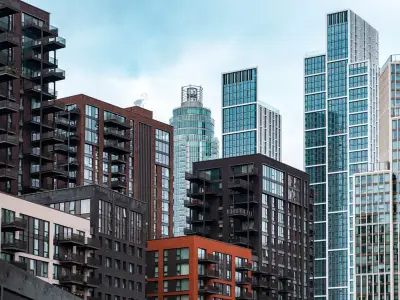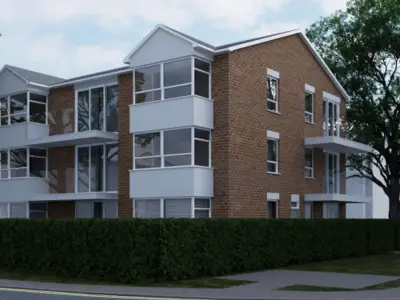
In a dramatic shift for the UK property market, areas in Greater Manchester have surpassed London to record the strongest real-term house price growth over the past two decades. New analysis from estate agent Savills reveals a nationwide picture of soaring nominal prices but stark regional disparities when inflation is factored in.
The New Property Growth Leaders
While London has long been synonymous with property booms, the data shows that the constituencies of Blackley and Middleton South in Greater Manchester have taken the top spot. Since 2005, these areas have seen an impressive 71% inflation-adjusted increase in average house prices, with properties now commanding close to £219,000.
This performance outstrips even prime central London locations. Kensington and Bayswater, for instance, achieved a 67% real growth over the same period, but the overall London market has cooled significantly. In fact, 44 of London's 75 parliamentary constituencies have seen inflation-adjusted price falls in the last ten years.
Economic Realities and Shifting Affordability
The Savills report underscores a critical national trend: although nominal house prices have nearly doubled, rising by 95% nationwide over twenty years, the real increase after inflation dwindles to under 9%. Lucian Cook, head of residential research at Savills, points to stagnant wages as a key factor capping buyer affordability.
"The areas that have seen the strongest real house price growth over the past 20 years are dominated by London locations, which experienced robust growth up until 2015," Cook stated. "However, growth has reached an affordability ceiling over the past decade, with average incomes unable to keep pace."
He explains that Blackley and Middleton South were uniquely positioned for growth. Having experienced lower-than-average price growth in the two decades to 2015, they were perfectly placed to capitalise on the UK entering the second half of its housing market cycle and the specific resurgence of Manchester.
A Broader Regional Resurgence
The analysis highlights a broader relocation trend benefiting regional urban centres. Other parts of Greater Manchester, such as Gorton and Denton, have also emerged as hotspots post-2015, recording a 49% real-term rise with average values around £234,000.
Factors driving this shift include urban regeneration projects and prices that remain comparatively affordable next to London, attracting buyers seeking better value and more space. This contrasts sharply with other regions, where many areas have faced stagnant or declining property values after inflation.
Significant real-term falls have affected extensive areas in the North East, Yorkshire and the Humber, Wales, and some Scottish constituencies. Blackpool South was particularly hard-hit, with values dropping by 25%, while Aberdeen South's 18% decline is closely tied to challenges in the local oil industry.
Future Market Forecast
Looking ahead, Savills predicts that the average UK house price could grow by around £80,000 between 2025 and 2030. The strongest increases are anticipated across northern England, Wales, and Scotland, with regions like Yorkshire and The Humber, North East England, the North West, Wales, and Scotland potentially seeing rises exceeding 27% over the five-year period.
Conversely, London and the South East are forecast to experience more subdued price growth, with estimates suggesting increases of less than 20% by 2030. This is expected to further narrow the price gap between the North West and the UK average, reducing the differential to approximately 15%, a notable decline from nearly 30% in 2020.
London prices, while still above average, are expected to see their premium fall to about 33%, down from 70% in 2017, signalling a continued rebalancing of the UK's property landscape.