London's property landscape is fracturing into a stark 'two-speed' market, with house prices now falling in roughly half of the capital's boroughs. The most expensive areas are leading the decline, according to the latest official data, creating a sharp divide with more affordable outer districts.
Prime Boroughs Bear the Brunt of the Downturn
The Office for National Statistics (ONS) reported that the average house price in London for October was £547,000, marking a 2.4 per cent annual fall. This contrasts with a 1.7 per cent price increase seen across the UK as a whole. The data reveals a year-on-year contraction in 18 of London's 33 boroughs.
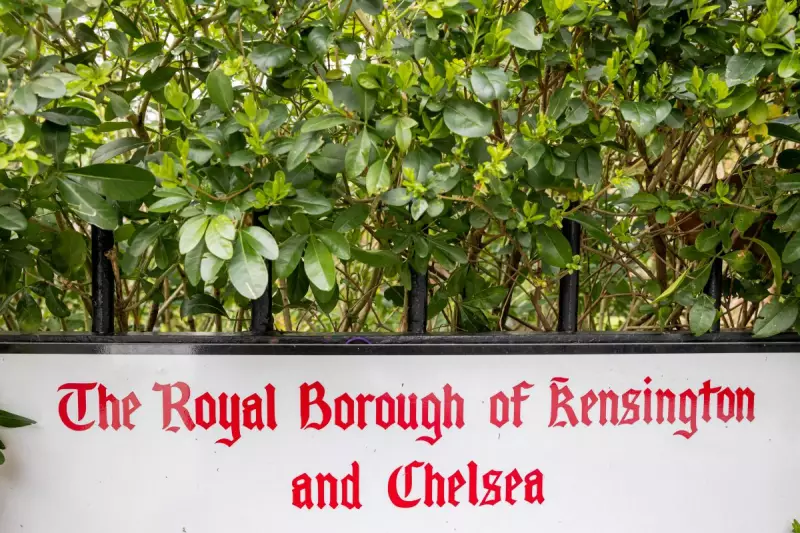
The capital's most prestigious postcodes have registered some of the most severe drops. The City of London saw prices plummet by 18 per cent, while Kensington and Chelsea experienced a 16.5 per cent contraction. The City of Westminster recorded similar significant declines.
Affordable Areas Defy the Trend
In a clear demonstration of the market split, several more affordable boroughs continued to see robust growth. Prices in Havering, which includes Romford, rose by a strong 5.3 per cent. Areas like Barking and Dagenham, Bromley, and Lewisham also saw prices expand at a solid pace. In boroughs such as Waltham Forest and Lewisham, average house prices reached all-time highs this autumn.
Tom Bill, head of UK residential research at Knight Frank, described London as a "two-speed market" to the Financial Times. He noted that prime areas have been hit by tax changes and are "more susceptible and sensitive to political risk." In Kensington and Chelsea, the average price has dropped to £1.19 million, its lowest level in over a decade and down from a peak of £1.6 million.
Policy and Politics Shape the Market
The recent Autumn Budget delivered by Chancellor Rachel Reeves introduced a significant new factor. The government greenlit a "high-value council tax surcharge" on properties valued above £2 million. This 'mansion tax' will start at £2,500 for homes worth between £2m and £2.5m, rising to £7,500 for properties valued at £5m or more. The policy is expected to raise an estimated £400 million in 2029-30.
Marc von Grundherr, director of Benham and Reeves, commented back in April that the new Labour government had already had a "significant impact on prime London property values." This follows a period where price growth in prime central London has stalled since the mid-2010s, exacerbated by changing mortgage regulations and soaring values.
Richard Donnell, executive director at Zoopla, highlighted a longer-term shift, telling the FT that since the Brexit vote, London house prices have "gone nowhere." He described the referendum as a "boom-bust sea change moment for London as a place to do business, as a global city." Tom Bill added that on the international stage, "London’s perhaps lost some of its appeal" post-Brexit.
Looking ahead, the divergence is set to continue with minimal overall movement. Research from Rightmove suggests London house prices will rise by just over one per cent in 2026, compared to a two to three per cent average increase predicted for the UK.