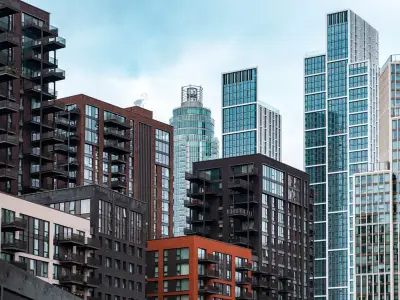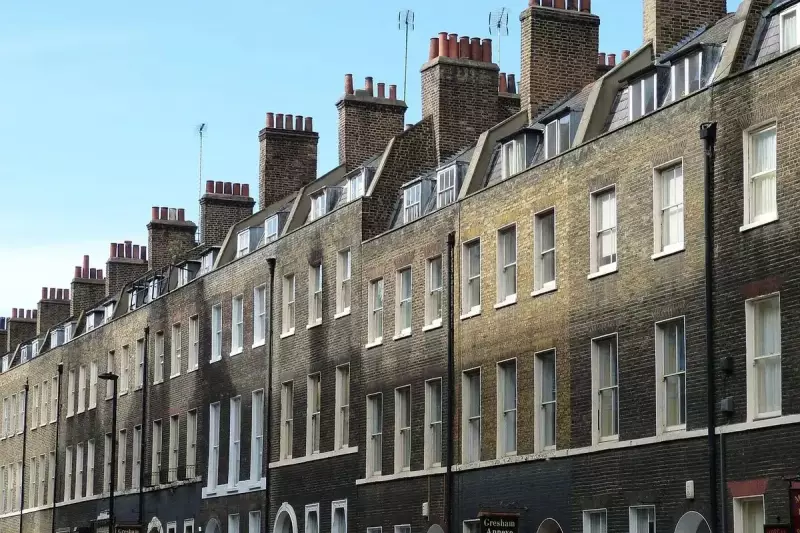
House prices in and around London have suffered significant declines this year, with commuter towns in the capital's 'stockbroker belt' experiencing some of the steepest drops. New data reveals a stark regional divide, as the south falls behind stronger growth in northern England.
South East Towns See Sharpest Declines
According to figures from Lloyds Bank, the West Sussex town of Crawley saw an 8.9 per cent drop in house prices, equating to a fall of £36,317. High Wycombe was not far behind, with values decreasing by 7.4 per cent or £34,994. Meanwhile, the popular coastal city of Brighton, a hub for London commuters, recorded a 4.8 per cent fall, with average prices tumbling by around £20,000.
These figures underscore a broader trend of underperformance in the capital and its surrounding regions. Official government data shows the London market has suffered in particular, with prices falling 2.4 per cent year-on-year to an average of £547,000. A combination of rising unaffordability, increased supply, and specific tax policies has created a challenging environment.
Factors Weighing on the Capital's Market
Amanda Bryden, head of mortgages at Lloyds, noted that the South East "dominates the list of towns where the value of homes fell or grew most slowly in the last year." Several key issues have contributed to this slump:
- Elevated mortgage rates and buyer uncertainty following the April stamp duty increase.
- Tax clampdowns on landlords and overseas buyers, which have rocked prime central London boroughs like Kensington and Chelsea.
- The impending introduction of a 'mansion tax' announced in Labour's November Budget, which will see properties valued over £2m face higher council tax charges from April 2028.
This has shifted power to buyers, who are increasingly able to negotiate prices down as sellers struggle to secure deals.
Northern Regions and Affordability Drive Growth
In contrast to the south's struggles, other parts of the UK saw robust price growth. Plymouth and Stafford topped the national list, reporting impressive increases of 12.6 per cent and 12 per cent respectively. Other northern towns and cities, including Wigan, Wakefield, Liverpool, and Hull, also reported rising prices.
Even within the weaker South East, some areas bucked the trend. The Surrey commuter town of Woking, for instance, shrugged off its region's lacklustre performance with prices up 8.1 per cent. On average, property valuations across the entire UK rose by 3.7 per cent, or roughly £13,000.
"If you're open to exploring, you might find places where your money goes further," advised Bryden. "Northern regions and Scotland are still generally more affordable than the south of England." This affordability continues to attract buyers and push prices higher outside of the capital's immediate orbit.