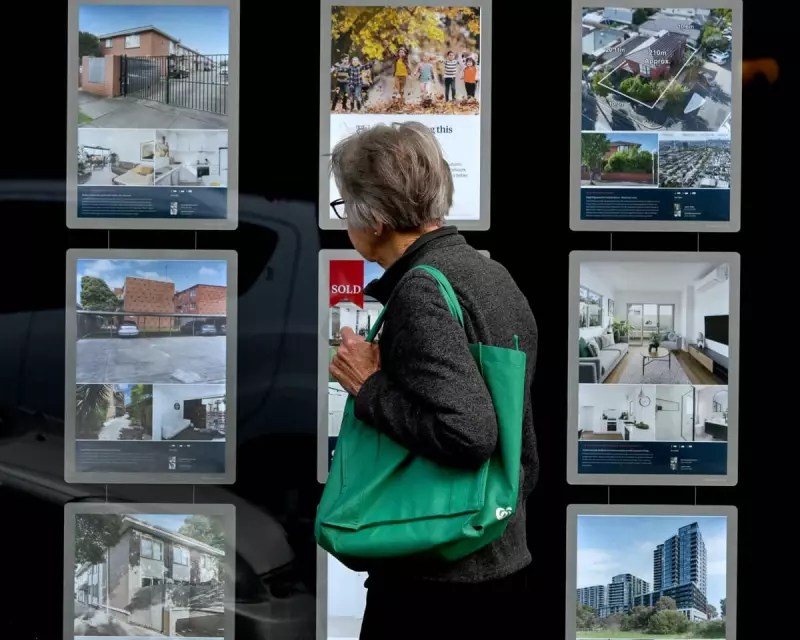
In a landmark move for Australia's property sector, the Victorian government has announced it will introduce nation-first legislation compelling real estate agents to publicly disclose a property's reserve price well in advance of its sale.
A New Era of Transparency for Home Buyers
The Allan government confirmed on Thursday that the major reform will be presented to parliament next year. Under the proposed laws, agents must publish the owner's reserve price at least seven days before an auction or a fixed-date sale. Failure to comply within this timeframe will result in the agent being unable to proceed with the auction or sale altogether.
This decisive action targets the unethical practice of underquoting, an industry tactic where agents deliberately advertise a property for less than its estimated selling price or the owner's genuine asking price. The strategy is designed to attract a larger pool of potential buyers and artificially stimulate competition.
The Problem of Underquoting and Its Impact
Victoria's Consumer Affairs Minister, Nick Staikos, stated the government's clear objective is to create a fairer housing market. "Underquoting isn't fair and it's young Victorians and families paying the price," he emphasised.
The prevalence of this issue was highlighted by a Guardian Australia analysis of property sales data from the previous year. The analysis, which defined underquoting as a final sale price exceeding the pre-sale guide by more than 10%, found the problem was most acute in Sydney, where it affected 20% of sales, and Perth at 18%. The mismatch was shown to be worse for houses than for townhouses or apartments and is far more likely to occur when a property is sold at auction rather than by private treaty.
Stricter Guidelines and Hefty Penalties
These new laws build upon stricter guidelines introduced by the Victorian government earlier this month. Those guidelines mandate that agents must use the most appropriate comparable local properties when determining a home's price guide, taking into account factors like the dwelling's age and any significant renovations.
Consumer Affairs Victoria now has the power to request evidence from agents showing how they selected their three most comparable properties, with penalties applying for non-compliance.
The consequences for underquoting are already significant. In Victoria, agents risk fines of over $11,000 for each breach, or penalties exceeding $38,000 under the Estate Agents Act. In New South Wales, where similar rules on price guides were recently announced, agents can be fined up to $22,000 and lose their commission and fees from the sale of an underquoted property.
Despite these existing regulations, Graham Cooke, head of consumer research at Finder, has previously noted that the rules often fail to prevent underquoting from occurring, suggesting a need for the more robust measures now being proposed in Victoria.