Former South Korean President Yoon Suk Yeol Receives Life Sentence for Leading Insurrection
A South Korean court delivered a landmark verdict on Thursday, sentencing former President Yoon Suk Yeol to life imprisonment with labor for his role in leading an insurrection in December 2024. This decision marks the first time an elected head of state in South Korea's democratic era has received the maximum custodial sentence, following a trial that centered on allegations of a grave threat to constitutional order.
Prosecutors' Case and Legal Framework
Prosecutors had aggressively pursued the death penalty, arguing that Yoon committed what they termed "a grave destruction of constitutional order" by mobilizing troops to surround parliament and attempting to arrest political opponents during a six-hour crisis. Under South Korean law, the charge of leading an insurrection carries three possible sentences: death, life imprisonment with labor, or life imprisonment without labor, making this verdict a severe but not ultimate punishment.
The charges stemmed from events on the night of December 3, 2024, when prosecutors asserted that Yoon attempted to use military force to paralyze the legislature, arrest political opponents, and seize control of the national election commission. Yoon maintained his innocence throughout the trial, characterizing the investigation as a "political conspiracy" and claiming he declared martial law to alert citizens to what he described as an unconstitutional parliamentary dictatorship by the then-opposition Democratic party.

Defense Arguments and Immediate Aftermath
Yoon alleged election fraud without providing concrete evidence and claimed the opposition had paralyzed his government through budget cuts and impeachment proceedings. His legal team argued that there was no intent to disrupt constitutional order, stating, "There was no intent to disrupt constitutional order, and there was no riot." They contended that Yoon deployed minimal, largely unarmed troops with no intention to suppress parliament.
However, within hours of the martial law declaration, 190 lawmakers broke through military and police cordons to pass an emergency resolution lifting martial law. Parliament impeached Yoon within 11 days, and the constitutional court removed him from office four months later, setting the stage for this historic trial.
Related Rulings and Historical Context
The verdict, announced 14 months after the insurrection, follows a series of related rulings that formally established the events of December 3 constituted an insurrection. In January, former Prime Minister Han Duck-soo was given a 23-year prison sentence in a ruling that described the martial law attempt as a "self-coup" by elected power, more dangerous than traditional uprisings. This sentence far exceeded prosecutors' 15-year demand, indicating judicial willingness to impose severe penalties.
On February 12, former Interior Minister Lee Sang-min was jailed for seven years for his role in the insurrection, including relaying Yoon's orders to cut power and water to media outlets. Legal experts noted that these rulings created a sentencing environment that made the most severe punishment more likely in Yoon's case, reflecting the court's stance on preserving democratic norms.
Historically, every South Korean president who has served a prison sentence has ultimately been pardoned, including former President Park Geun-hye, who was initially sentenced to a combined 32 years for corruption in 2018 before her term was reduced and later wiped out by a presidential pardon in 2021. In 1996, military dictators Chun Doo-hwan and Roh Tae-woo received death and 22-and-a-half-year sentences respectively for their roles in a 1979 coup and subsequent massacre in Gwangju, though those were later reduced on appeal, and both men were eventually pardoned.
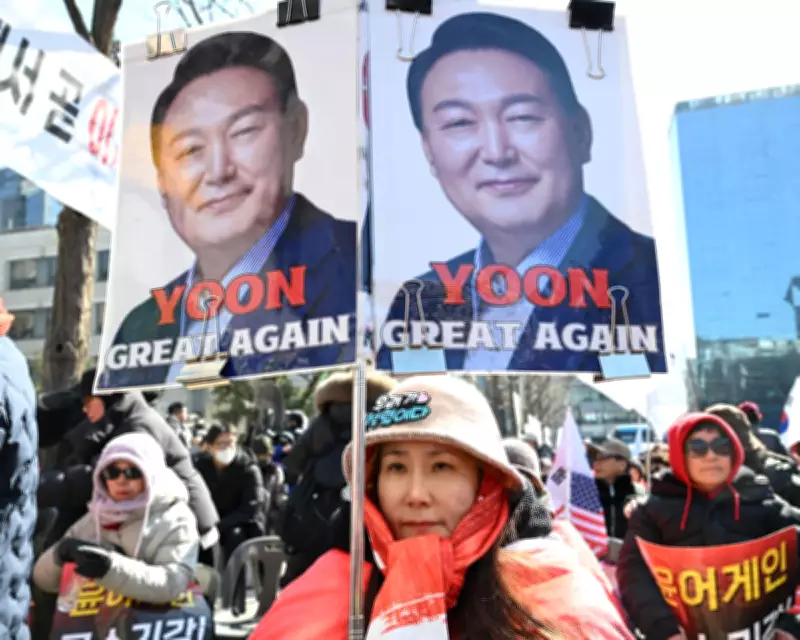
This case represents the most serious threat to South Korea's democracy in decades, with crowds gathering outside the court as they awaited the verdict, underscoring the national significance of the trial. The outcome reinforces the judiciary's commitment to upholding constitutional order and sets a precedent for accountability in the highest echelons of power.