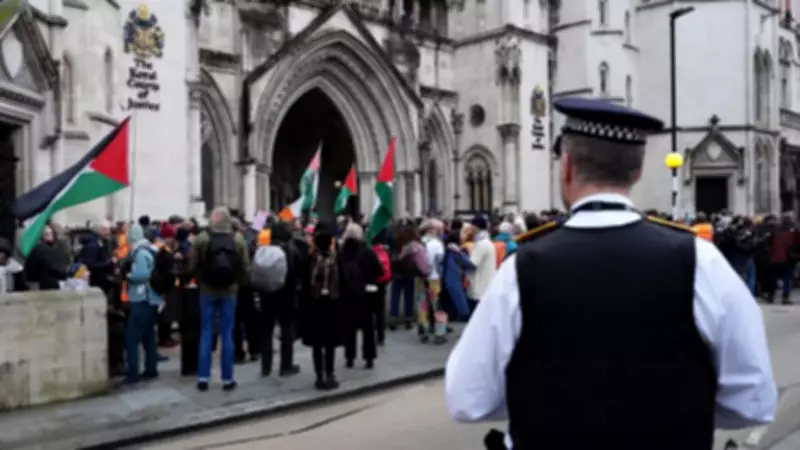
High Court Delivers Blow to Government's Terror Designation of Palestine Action
In a significant legal development, the co-founder of Palestine Action has successfully challenged the group's controversial designation as a terrorist organization on two separate grounds. The High Court ruling represents a notable setback for the government's counter-terrorism strategy, though the ban will temporarily remain in effect as Home Secretary Yvette Cooper has announced plans to appeal the decision to the Court of Appeal.
Unprecedented Legal Battle Over Protest Group's Status
The legal challenge was initiated by Huda Ammori following former Home Secretary Yvette Cooper's decision to proscribe Palestine Action in July 2025. This designation placed the activist group on the same legal footing as internationally recognized terrorist organizations such as ISIS and al Qaeda, carrying severe penalties including up to fourteen years imprisonment for membership or support activities.
The implications of this classification were far-reaching, extending even to seemingly minor expressions of solidarity. Individuals wearing clothing or carrying signage bearing the group's name faced potential six-month prison sentences under the sweeping anti-terror legislation.

Defense Arguments Compare Group to Historical Movements
During a comprehensive three-day hearing at the Royal Courts of Justice, Ms. Ammori's legal team presented arguments characterizing the ban as unprecedented in British legal history. Lead counsel Raza Husain KC drew direct parallels between Palestine Action and historical protest movements, notably comparing the group's activities to those of the suffragettes who employed civil disobedience tactics during their campaign for women's voting rights.
The defense highlighted the diverse backgrounds of those affected by the ban, noting that among the 2,787 individuals arrested since the proscription took effect were "priests, teachers, pensioners, retired British Army officers" and even an "81-year-old former magistrate." These statistics were provided by the Defend Our Juries campaign group, which has organized sustained protests against what they characterize as an overly broad application of anti-terror laws.
Cultural Figures Join Legal Challenge
The case attracted support from prominent cultural figures, most notably acclaimed author Sally Rooney. The Normal People writer submitted written evidence supporting the legal challenge, expressing concerns about potential self-censorship in her creative work. Rooney revealed she had received warnings that she risked committing a terror offense after publicly stating her intention to donate earnings to Palestine Action, potentially impacting her ability to publish future books in the United Kingdom.
Government Maintains Position on National Security Grounds
Representing the Home Office, Sir James Eadie KC defended the proscription as striking a "fair balance between interference with the rights of the individuals affected and the interests of the community." The government's position maintains that the ban has not prevented lawful protest against Israel's actions in Gaza or expressions of support for Palestinian rights more broadly.
"While it has at all times been open to supporters of Palestine Action to protest against its proscription without breaking the law," Sir James argued, "certain individuals have instead repeatedly sought to flout Palestine Action's proscription." This statement underscores the government's contention that the ban specifically targets the organization's methods rather than its political positions.
Immediate and Future Implications
The High Court's decision represents a partial victory for civil liberties advocates who have raised concerns about the expanding scope of anti-terror legislation in the United Kingdom. However, the practical effect remains limited pending the government's appeal, meaning Palestine Action continues to be officially designated as a terrorist organization for the immediate future.

This case highlights ongoing tensions between national security concerns and freedom of expression in contemporary British politics, with significant implications for how protest movements are classified and regulated under counter-terrorism frameworks. The forthcoming Court of Appeal proceedings will likely establish important precedents regarding the boundaries of legitimate political activism versus activities deemed threatening to national security.