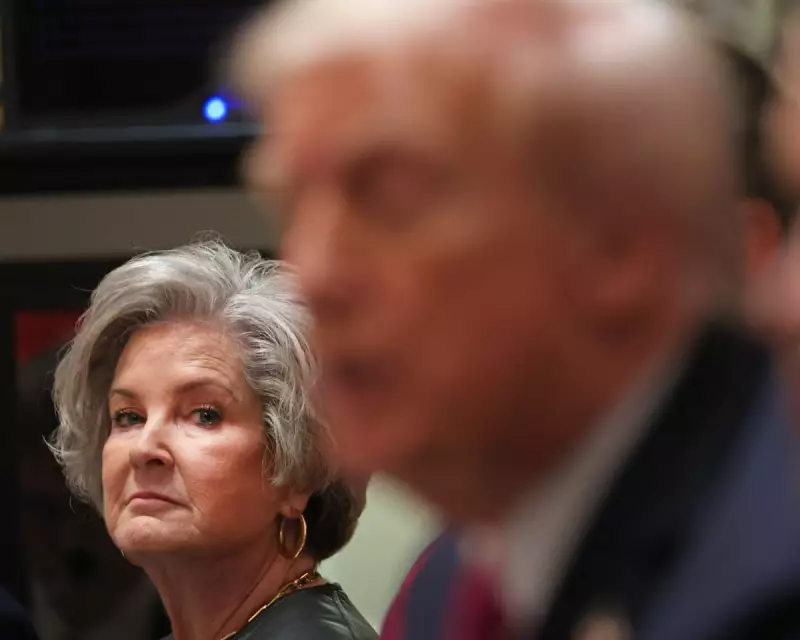
In an extraordinary breach of White House protocol, Donald Trump's Chief of Staff, Susie Wiles, has delivered a series of strikingly candid assessments of the administration and its key figures in interviews with Vanity Fair magazine. The revelations, published on Tuesday, offer a rare and unfiltered glimpse into the inner workings of Trump's second term, prompting a fierce backlash from Wiles herself, who has since dismissed the piece as a "hit piece."
Unvarnished Views from the West Wing
Over the course of eleven interviews conducted by author Chris Whipple during Trump's first year back in office, Wiles—the first woman to hold the chief of staff role—did not hold back. She maintained a notably low profile for much of the term but used these conversations to offer opinions that aides typically reserve for post-retirement memoirs.
Her commentary ranged across the administration's most powerful players. She described Vice-President JD Vance as having been "a conspiracy theorist for a decade" and suggested his conversion to the Maga cause was "sort of political." On tech billionaire Elon Musk, who was tasked with leading government efficiency efforts, Wiles was blunt, calling him "a complete solo actor … an odd, odd duck." She expressed being "initially aghast" at his decision to gut the United States Agency for International Development (USAID) by shutting it down and firing staff.

Wiles also labelled Health Secretary Robert F Kennedy Jr as "quirky Bobby," while using her praise for him to explain her strategy with hardliners: "He pushes the envelope – some would say too far. But I say in order to get back to the middle, you have to push it too far."
Assessing the President: 'An Alcoholic's Personality'
Perhaps the most personal assessment was reserved for the president himself. Wiles described the teetotal Trump as having "an alcoholic's personality," a trait she said she recognised from her father, the famed sports broadcaster Pat Summerall. She elaborated that high-functioning alcoholics have personalities that become exaggerated, adding, "And so I’m a little bit of an expert in big personalities."
She also shed light on Trump's much-discussed focus on retribution against political enemies. Early in the term, Wiles claimed there was a "loose agreement that the score settling will end before the first 90 days are over." However, by August 2025, her tone shifted, arguing Trump was not on a "retribution tour" but was instead motivated by a principle of preventing others from suffering his fate.
Policy Disputes and International Stances
The interviews revealed significant internal friction over key policies. Wiles called the April rollout of the "Liberation Day" tariffs "so much thinking out loud," admitting the move had been "more painful than I expected." She disclosed asking Vance to tell Trump to avoid discussing tariffs until the team reached unity.
On foreign affairs, Wiles stated that Trump's policy of striking boats allegedly linked to drug cartels was ultimately about pressuring Venezuelan leader Nicolás Maduro, saying the president "wants to keep on blowing boats up until Venezuelan president Nicolás Maduro cries uncle."
She also corrected the record on a persistent false narrative, stating unequivocally that "the president was wrong" about claims that Bill Clinton visited Jeffrey Epstein's island, asserting there is no evidence. In a pointed critique, she said Attorney General Pam Bondi "whiffed" on handling the Epstein case, particularly in managing public expectations about a non-existent client list.
Fallout and Denials
Following the article's publication, Wiles issued a forceful statement condemning the Vanity Fair story as "a disingenuously framed hit piece on me and the finest president, White House staff, and cabinet in history." She accused the magazine of omitting context and selectively quoting her to craft a negative narrative. A number of cabinet officials and aides publicly defended her.

Notably, however, Wiles has not denied the accuracy of any specific quotes or details presented in the extensive profile. The interviews stand as one of the most revealing insider accounts of Trump's tumultuous return to power, laying bare the personalities, conflicts, and controversial strategies defining his administration.