Vance's Whirlwind Visit to Budapest Fails to Guarantee Orbán's Election Success
US Vice-President JD Vance's high-profile trip to Budapest this week, aimed at bolstering Hungarian Prime Minister Viktor Orbán's re-election campaign, has thrust American politics into the heart of a fiercely contested election. However, despite the fanfare, most polls indicate that Orbán could lose his 16-year grip on power, as Hungarians grapple with economic stagnation, deteriorating public services, and rampant corruption.
Vance's Direct Intervention in Hungarian Politics
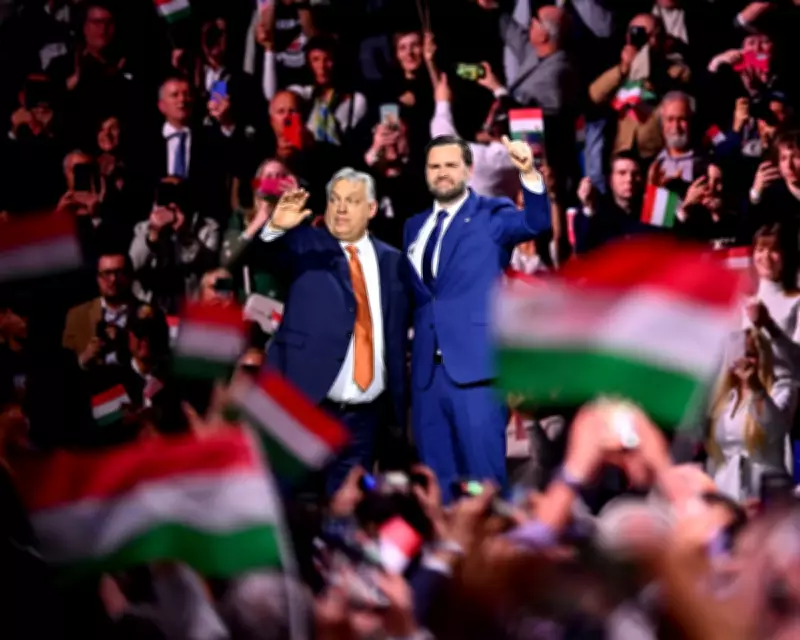
Upon landing in Budapest, Vance immediately waded into the heated campaign, breaking with the long-standing convention that keeps most foreign politicians from actively participating in another country's elections. He praised Orbán and criticized what he called the "shared threat from within" of far-left ideology in universities, media, and entertainment. Vance's sharpest criticism was reserved for the European Union, accusing it of foreign interference, even as he stressed his intent to "help" Orbán in the upcoming vote.
At a pre-election rally, Vance dialed up former US President Donald Trump, who told the cheering crowd via speakerphone, "I love Hungary and I love that Viktor," describing Orbán as a "fantastic man." Trump added, "He's kept your country good. And let me tell you, I like him a lot but if I didn't think he did a good job, I wouldn't be making a call like this." Meanwhile, Trump's eldest son was in Bosnia's Serb Republic, supporting its ousted pro-Russian leader and criticizing the EU as "a disaster."
Orbán's Unprecedented Challenge from Péter Magyar
Orbán faces a formidable opponent in Péter Magyar, a former top member of Orbán's Fidesz party, who has capitalized on public discontent. The opposition Tisza party has surged in polls by highlighting issues such as a neglected public health system, wages that rank as the third lowest in the EU, and systemic corruption that is the worst in the bloc. Notably, Vance's rally speeches made no mention of these grievances or the scandals dogging Orbán, including allegations of Russian interference in the election.
The campaign has become highly polarizing, with Orbán framing the war in Ukraine as Hungary's greatest threat and touting his personal relationships with world leaders as key to maintaining peace. In contrast, Magyar has urged voters to focus on domestic concerns. Analysts doubt that Vance's visit will significantly shift the election outcome. Mujtaba Rahman, managing director for Europe at Eurasia Group, noted on social media that most of Hungary's 7.6 million voters have already decided, and few undecided voters are likely to be swayed by the "razzmatazz" of Vance's visit.
Potential Backlash and Strategic Missteps
Political analyst Márton Bene from the TK Institute for Political Science in Budapest pointed out that Trump's popularity in Hungary is questionable, and Vance is even less known, limiting the visit's impact. However, Bene suggested that Vance's accusations of EU interference could provide Orbán with narrative tools to question the election result if he loses. More critically, Vance's statement that the US administration would work with any elected Hungarian government may have undermined Orbán's campaign claim that only his personal connections can effectively represent Hungarian interests.
Magyar quickly seized on this, posting on social media that a Tisza government would regard the US as a key partner. This response cast doubt on Orbán's central argument, potentially doing more harm than good for his campaign. As the election approaches, the clash of narratives continues, with Vance's visit highlighting the deep divisions in Hungarian politics and the uncertain future of Orbán's long-standing rule.