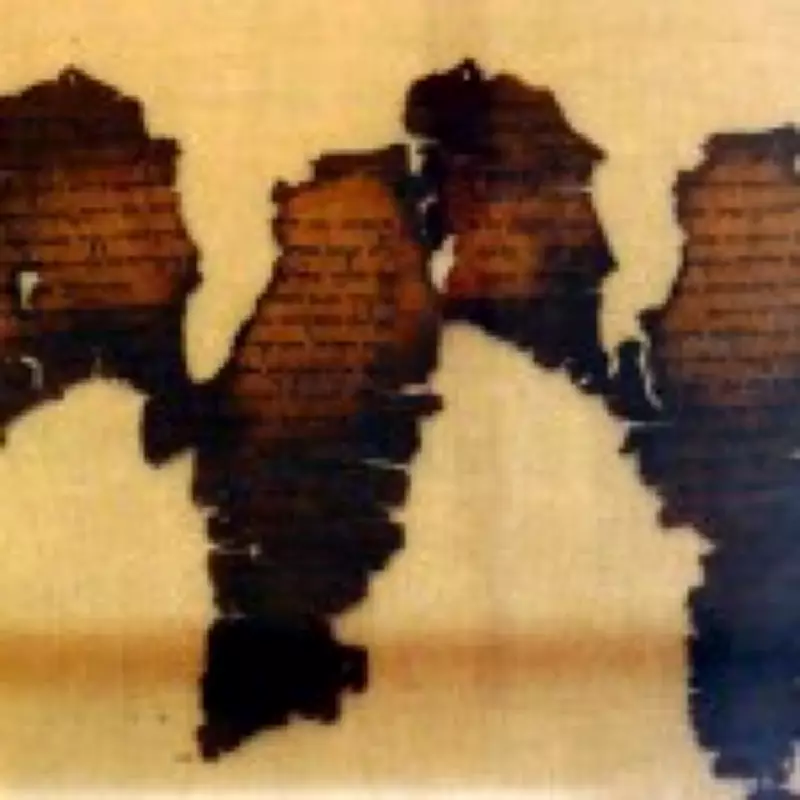
The world's most famous Bible fragments are heading back into the spotlight, with a fresh rotation of the Dead Sea Scrolls going on public display in the United States. This exhibition offers a rare chance to see texts that have shaped religious history up close and personal. At the Museum of the Bible in Washington DC, the updated exhibition opens next month and runs through September, swapping in new material to keep the centuries-old discovery feeling current.
Historical Significance of the Dead Sea Scrolls
While the display is new, the scrolls themselves are anything but, having first been uncovered in 1947 in caves in the Judaean Desert near the Dead Sea, where they had been hidden for nearly 2,000 years. What emerged from those caves almost eight decades ago has fundamentally changed how scholars understand the history of the Bible. Before this discovery, the oldest known Hebrew manuscripts dated to around 1000 AD, leaving a vast stretch of time between the earliest writings and the copies historians could study. The Dead Sea Scrolls shifted that timeline by more than a millennium, offering a far clearer picture of how biblical texts existed in the centuries before and during the time of Jesus. This is why they are still regarded as one of the most important archaeological finds ever made.
Bobby Duke, the museum's chief curatorial officer, explains: 'Before the Dead Sea Scrolls were discovered, our best Hebrew manuscripts were from about 1000 A.D. These all date back from the second century BC to the first century AD, so it shaves off 1,000 years of manuscript transmission.' In total, around 1,000 manuscripts have been identified, although most survive only as tiny fragments that have been painstakingly pieced together over time, often from scraps found scattered across different caves. They were written on a range of materials including parchment made from animal skin, papyrus, and even thin sheets of metal, while the text appears in Hebrew, Aramaic, Greek, and Nabataean.
New Fragments on Display
The latest rotation replaces earlier fragments from Psalms, Numbers, and Lamentations with a different set of texts, giving returning visitors something new to take in without changing the overall story the exhibition is trying to tell. Among the key pieces is a rare portion of the Book of Isaiah, copied around the first century AD and written in ancient Hebrew on leather, preserving sections from several chapters of one of the Bible's most influential works. Visitors can also see portions of the Book of Tobit, an ancient Jewish text focused on faith, healing, and divine guidance, which has long been included in the Apocrypha. Fragments of phylacteries, small scrolls once worn during prayer, are also part of the display, offering a more personal glimpse into how scripture was used in everyday religious practice.
Contextualizing the Scrolls
The exhibition is not just about placing rare objects behind glass; curators are keen to build a clearer sense of the world these texts came from so they do not feel detached from their original context. Risa Levitt, executive director of the Bible Lands Museum, said that understanding the setting is key to understanding the scrolls themselves. 'We want the public to understand place, geography and historical context so that by the time you get to the scrolls themselves, you are able to understand them a little better,' she said. That approach carries through into the wider exhibition, which includes a number of physical artefacts tied to ancient Jerusalem to help anchor the texts in a real-world setting.
One of the standout pieces of the new collections is a large paving stone from the first-century Pilgrim's Road, once used by worshippers travelling from the Pool of Siloam to the temple, giving visitors something they can literally stand on. There is also the Magdala Stone, an ornately carved platform thought to have supported Torah scrolls in a synagogue linked to Mary Magdalene's hometown near the Sea of Galilee, with one side featuring a detailed carving of a menorah. For anyone curious about how the Bible has been passed down through the centuries, this is a rare chance to see the evidence up close rather than just read about it.
The museum has previously faced scrutiny after earlier fragments in its collection were found to be forgeries, although the Dead Sea Scrolls themselves remain one of the most significant archaeological discoveries ever made.