Humanity has crossed a remarkable threshold, with the United Nations announcing that more than four-fifths of the global population now reside in major urban settlements. This seismic shift marks a dramatic acceleration in city living, transforming our species into a predominantly urban one within a single lifetime.
The Staggering Pace of Global Urbanisation
The scale of this population transfer has been laid bare by a new, standardised UN measurement system, replacing the previously inconsistent national criteria. The current urbanisation rate stands at over 80%, a staggering leap from the mere 55% reported in 2018 and just 30% back in 1950. This reveals the breathtaking speed of this global transformation.
London made history in the early 19th century by becoming the first city to reach one million inhabitants. Today, that milestone seems almost quaint, with nearly 500 cities having surpassed it. The epicentre of this urban explosion has firmly shifted to Asia, which now hosts nine of the world's ten largest megacities.

Jakarta: A Case Study in Urban Strain
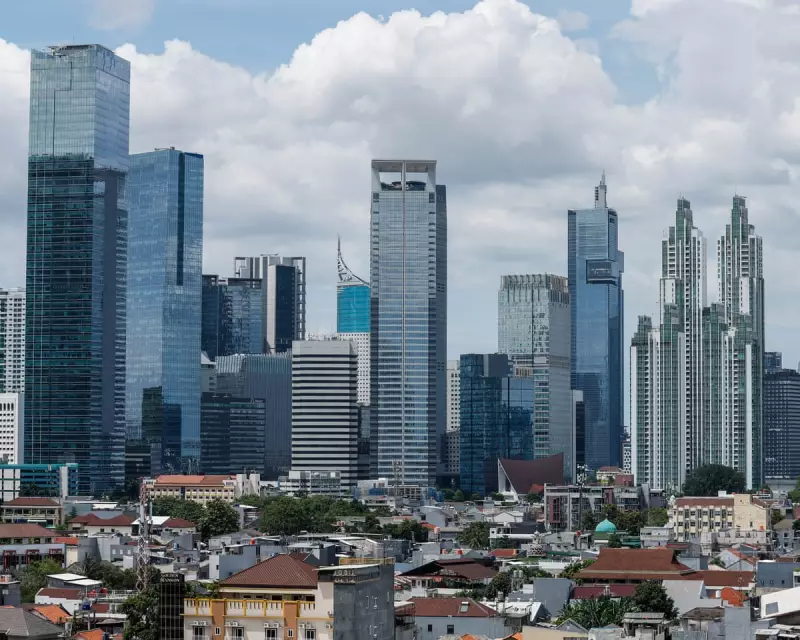
The Indonesian capital, Jakarta, has just claimed the title of the world's most populous urban area, with approximately 42 million residents, overtaking Tokyo. Its journey exemplifies both the drivers and consequences of breakneck urban expansion. Since 1950, Jakarta's population has swelled almost thirty-fold, creating immense pressure on the city's infrastructure and environment.
The city now grapples with severe, interconnected crises. It is frequently choked by debilitating traffic congestion and dangerous pollution levels. Regular, devastating flooding is compounded by the alarming fact that the city is sinking rapidly due to the massive over-extraction of groundwater.
In a radical attempt to address these challenges, the Indonesian government is constructing a new administrative capital, Nusantara, on the island of Borneo, over 1,000 kilometres away. However, this ambitious project is already reported to be behind schedule, facing funding shortages and struggling to attract prospective inhabitants, echoing the troubled history of many purpose-built capital cities.
The Dual Nature of Urban Growth
As the late urban theorist Mike Davis highlighted, urbanisation is not solely driven by the magnetic pull of city opportunity. He pointed to powerful 'push' factors, including waves of migration triggered by rural desperation. This was often a consequence of agricultural deregulation and harsh fiscal policies enforced by international bodies like the IMF and World Bank.
Davis also noted the phenomenon where "rural people no longer migrate to the city; it migrates to them", as relentless urban sprawl envelops their ancestral lands. This highlights that urban growth is often a complex, unplanned process rather than a neatly orchestrated one.
The economic benefits of cities are undeniable. They are powerhouses of productivity, creativity, and diversity. To illustrate their economic might, New York City's gross product reached a colossal $1.8 trillion last year, a figure that eclipses the entire GDP of major nations like Turkey or Saudi Arabia. This economic clout is increasingly translating into stronger political and even diplomatic influence for city governments.
Yet, this prosperity exists alongside profound challenges, mirroring the struggles of 19th-century London. Monstrous inequality, severely overcrowded housing, and substandard infrastructure are common features of rapidly growing urban centres. Dense living conditions and highly mobile populations can accelerate the spread of infectious diseases, creating new public health vulnerabilities.
The Environmental and Social Cost
The environmental impact of this urban spread is equally significant. Most of the land urbanised over the past 55 years was previously used for agriculture, raising serious concerns about long-term food security and environmental degradation.
Furthermore, the exodus to cities often leaves rural areas depleted, with older populations left behind and services dwindling. This underscores the urgent need for improved urban-rural links to prevent the entrenchment of regional deprivation.

Climate change introduces another layer of risk, with urban dwellers disproportionately exposed to heatwaves and rising sea levels. As UN Secretary-General António Guterres argued, sustainable and equitable urbanisation is fundamentally intertwined with the fight against climate change. While cities generate a massive share of global emissions, their density also presents an opportunity to foster more efficient resource use.
Humans are, in effect, a new urban species, still learning to adapt to the dense environments we have created. The story of 21st-century urbanisation is one of immense opportunity existing side-by-side with significant threat, demanding thoughtful intervention and global cooperation to ensure cities become engines of sustainable human flourishing.