Trump's Pivot from Peace Prize to War Prize Ambitions
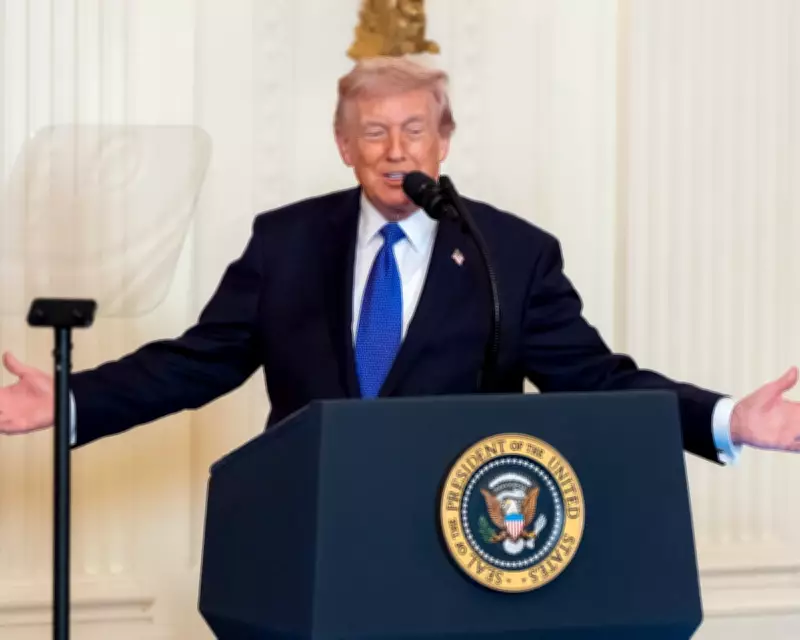
Following his failure to secure the Nobel Peace Prize, former US President Donald Trump has dramatically shifted his focus toward military engagement, with recent actions in Iran being interpreted by observers as a bid for what some sarcastically term a "Nobel prize for war." This strategic redirection comes after Trump expressed disappointment at being overlooked for the peace award, with critics suggesting his motivations are driven by personal whims rather than geopolitical strategy.
The Middle East Escalation and Its Consequences
Trump's decision to authorize military strikes against Iran has plunged the Middle East into renewed conflict, characterized by a lack of clear strategic objectives beyond regime change. The bombing campaign, which Trump claims is a response to Iran's alleged 47-year "one-way war" against the United States, has resulted in significant instability. Analysts note that the elimination of key Iranian leadership figures has left a power vacuum with no obvious US-friendly successors, potentially leading to years of sectarian violence and regional destabilization.
Trump's approach has been described as impulsive, with the former president reportedly moving on to new interests once boredom sets in, leaving others to manage the resulting chaos. This pattern has raised concerns about the sustainability of US foreign policy under his influence and the long-term implications for global security.

Keir Starmer's Diplomatic Tightrope Walk
UK Prime Minister Keir Starmer faces mounting pressure as he navigates the complexities of the Iran conflict. Initially, Starmer chose not to join the US and Israeli military strikes, a decision that appeared measured and grounded in international law. However, following an Iranian attack on a Cyprus airbase, Starmer announced that British military bases would be made available to the US for defensive operations against Iranian missile sites.
Political Backlash and Exhaustion
Starmer's attempts at balanced diplomacy have drawn criticism from both the left and right of the political spectrum. Members of Parliament have accused him of betrayal and weakness, despite his efforts to explain the decisions as a two-part response to evolving circumstances. The Prime Minister appeared visibly exhausted during his Commons statement, having spent the weekend receiving real-time updates from the conflict zone.
Starmer emphasized his commitment to avoiding the mistakes of past UK military interventions in Iraq, Afghanistan, and Libya, stressing that British troops should not be placed in morally ambiguous positions. He maintained that there was no secret plan for aggressive warfare, though he acknowledged the possibility of future escalation.
Political Reactions and Controversies
The debate in Parliament revealed deep divisions and controversial statements from various political figures. Kemi Badenoch, in particular, delivered a series of inflammatory remarks, suggesting that Starmer's reluctance to join full-scale military action was influenced by Muslim voting blocs—a claim that ignores the sectarian differences between British Sunni Muslims and Iran's Shia theocracy.
Badenoch further argued that the Commons should not be allowed to vote on war decisions, fearing potential opposition. Meanwhile, other MPs, including Diane Abbott, John McDonnell, Edward Leigh, and Ed Davey, urged caution and highlighted the lessons from previous military failures. Nigel Farage's absence from the debate was noted, with critics pointing to his inconsistent stance on military interventions based on personal alliances rather than principle.
Public Sentiment and International Law
Public opinion in both the US and UK appears largely opposed to military escalation in Iran, reflecting wariness of prolonged foreign engagements. Starmer's emphasis on international law and defensive posturing represents an attempt to align UK policy with legal and ethical standards, though this has done little to quell political opposition. The situation remains fluid, with the potential for further developments as Trump's unpredictable approach to foreign policy continues to shape global dynamics.