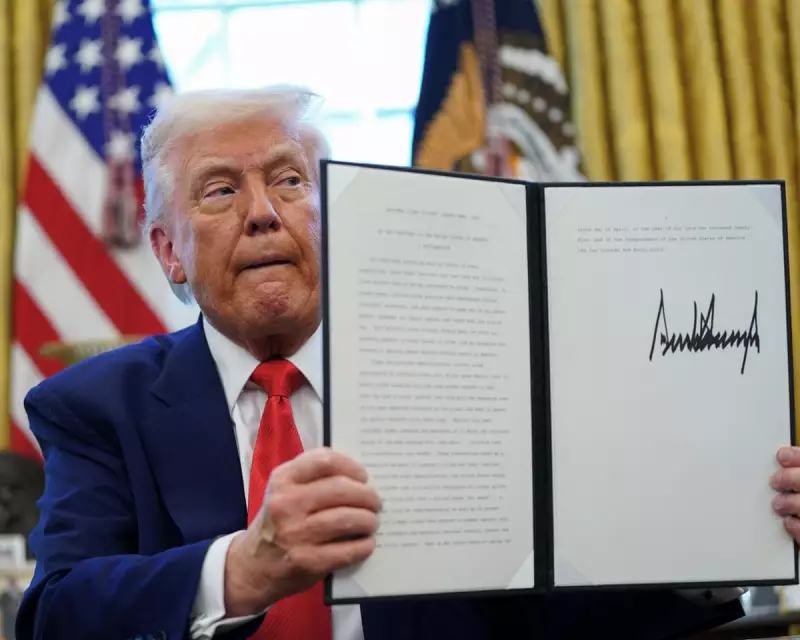
Since his return to the White House, Donald Trump has embarked on a distinctive path of presidential proclamations, signing numerous official declarations that reflect his administration's political priorities and ideological stance.
A Shift in Commemorative Focus
In a notable departure from previous administrations, the Trump government has decided against commemorating World Aids Day for the first time since 1988. A State Department spokesperson, Tommy Pigott, defended this decision to the New York Times by stating that 'an awareness day is not a strategy'.
This stance appears selective, given that President Trump has simultaneously authorised multiple awareness periods covering topics aligned with his political agenda. These proclamations range from ideological statements to economic policies and historical commemorations.

Key Presidential Proclamations
Anti-communism Week was established for 2-8 November, described as a 'solemn remembrance of the devastation caused by one of history's most destructive ideologies'. The timing coincided with the election of democratic socialist Zohran Mamdani as New York City mayor, whom Trump characterised as a 'communist lunatic'.
In October, Trump rebranded National Energy Awareness Month as National Energy Dominance Month, shifting focus from energy efficiency to maximising domestic production of fossil fuels and critical minerals. The proclamation framed energy prices as a 'national energy emergency' and committed to policies ensuring 'maximum production, maximum prosperity, and maximum power'.
The administration has maintained several traditional observances while adding its distinctive interpretation. Columbus Day saw Trump reaffirming commitment to the holiday, directly countering the trend toward Indigenous Peoples' Day and vowing to reclaim Columbus's 'extraordinary legacy' from 'left-wing arsonists'.
Historical and Policy-focused Observances
Trump has continued annual traditions like Leif Erikson Day on 9 October, honouring the Norse explorer, while introducing new historical commemorations. He became the first president to mark the 418th anniversary of the first landing and the raising of Cape Henry Cross, describing it as when 'the seeds of America's destiny were sown'.
In preparation for the nation's 250th anniversary, Trump declared 17 June as a day of remembrance for the Battle of Bunker Hill, honouring the 'courage, determination, and selflessness' of the patriots involved.
The president's Victory Day for the Second World War proclamation on 8 May puzzled historians, as this date marks Nazi Germany's surrender while US troops continued fighting in the Pacific until Japan's surrender on 2 September.
Policy-focused observances include National Manufacturing Day on 3 October, where Trump promoted his tariff policies and rejection of the 'Green New Scam agenda', and Made in America Week from 20-26 July, aligning with his America First vision.
Selective Health Commemorations
While bypassing World Aids Day, Trump has maintained other health-related observances. He established Overdose Prevention Week from 31 August to 6 September, connecting it to his immigration and border policies and efforts to classify fentanyl-related compounds as Schedule I drugs.
Cancer Control Month continues to be observed, focusing on honouring survivors and pursuing 'groundbreaking medical advancement'.
The administration has also marked the 101st anniversary of United States Border Patrol on 28 May, honouring those who 'dedicate their careers to defending our borders'.
Other maintained observances include National Mental Health Awareness Month, World Autism Awareness Day, and the National Days of Remembrance for victims of the Holocaust.
This pattern of proclamations reveals an administration using official commemorations to advance specific policy positions and ideological stances, while selectively discontinuing traditions that don't align with its strategic priorities.