
As the US war in Iran continues with no end in sight, President Donald Trump's approval rating has plummeted to an all-time low of 32%, according to a Quinnipiac University Poll released late last month. The poll also found that 58% disapprove of his performance, and six in 10 Americans oppose the US military action in Iran. With the November midterm elections approaching, Republicans are quietly panicking that Trump's unpopularity could cost them control of the House of Representatives and even put the Senate in jeopardy.
War and Economic Pressures Weigh on Voters
Trump campaigned on promises to lower prices and keep the US out of foreign entanglements, but the opposite has occurred. Voters are suffering a cost-of-living crisis, exacerbated by Trump's sweeping tariffs. According to government figures, buying food to eat at home has become 33% more expensive in US cities since the beginning of 2019. Gas prices are at a record high for this time of year, partly due to the war in Iran, which is costing taxpayers an estimated $1bn a day.
The administration's entanglement has strengthened Iran's resolve and provided it with global leverage, specifically over the Strait of Hormuz, critics argue. They see it as a betrayal of the noninterventionist posture that fueled Trump's rise. Kurt Bardella, a political commentator and former congressional aide, said: "What we're watching right now is the complete unraveling of everything that Donald Trump, Maga and Republicans said they were about. They were against endless conflicts in the Middle East and they started a conflict in the Middle East without an exit strategy."
Trump's Focus on Monuments and Renovations
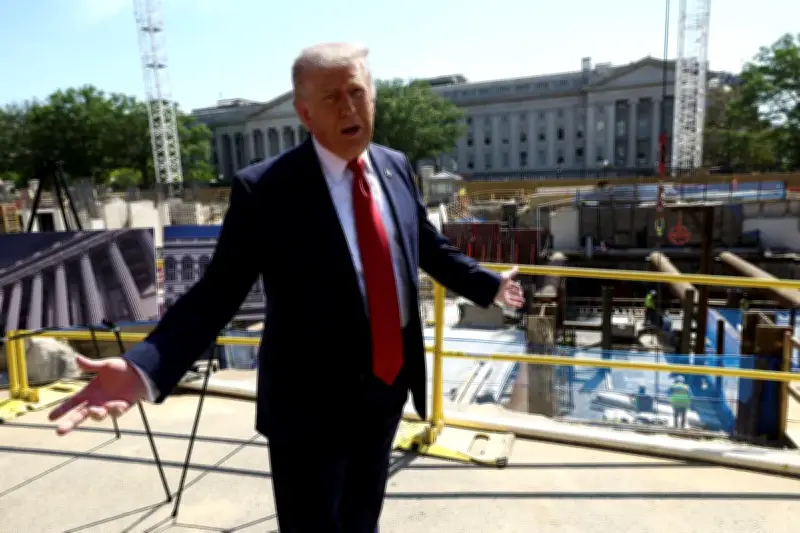
Despite the crises, Trump has invested much time in construction projects across Washington, including a White House ballroom and helipad, a triumphal arch, and a makeover of the Lincoln Memorial reflecting pool. According to Regime Change: Inside the Imperial Presidency of Donald Trump by New York Times journalists Maggie Haberman and Jonathan Swan, the president has been seen with a tube of super glue trying to stick golden decorations to the marble fireplace in the Oval Office.
Haberman estimates that Trump devotes 70% of his mental space to renovation projects and "monuments to self." She told Axios's Behind the Curtain video series that during a March visit, Trump showed her pictures of maple trees, saying: "I am choosing maple trees for the White House. I am good at picking trees." This preoccupation with aesthetics over governance has alarmed even his allies.
Republican Fears and Historical Parallels
Past presidents like George W. Bush in 2006 and Barack Obama in 2010 faced challenging midterms, but they worked with their parties to stem losses. Rick Wilson, co-founder of the Lincoln Project, said: "It's nightmarish to think what that would have been if Barack Obama had been saying, 'I'm going to build a basketball arena at the White House,' or George Bush had said, 'I'm gonna build a golf course.' Instead, you've got a very different visual from this White House, and that visual is 'we don't care about anything else except for the ballroom and the arch.'"
The sense of malaise deepened when White House press secretary Karoline Leavitt, the youngest ever to serve in that role, announced she will step down at the end of the month. The official reason is to spend more time with her young family, but the timing is unfortunate for an administration struggling to manage crises.
Trump's Financial Gains Amid Political Decline
Trump's cloud does have a golden lining: he made an estimated $2.2bn during the first year of his second term, thanks to cryptocurrency holdings, foreign interests, and his Truth Social business. Charlie Sykes, a conservative author and broadcaster, said: "He hasn't lowered the cost of living, he hasn't made America more respected, he hasn't won the war, but he has succeeded in making himself a billionaire many times over by abusing his office."
As the midterms approach, the Republican party faces a stark choice: distance themselves from Trump's unpopular policies or risk losing Congress. The coming months will test whether Trump's political instincts can reverse the trend, but current polls suggest a difficult road ahead for the GOP.




