Trump's Marathon State of the Union Address Sparks Outrage and Walkouts
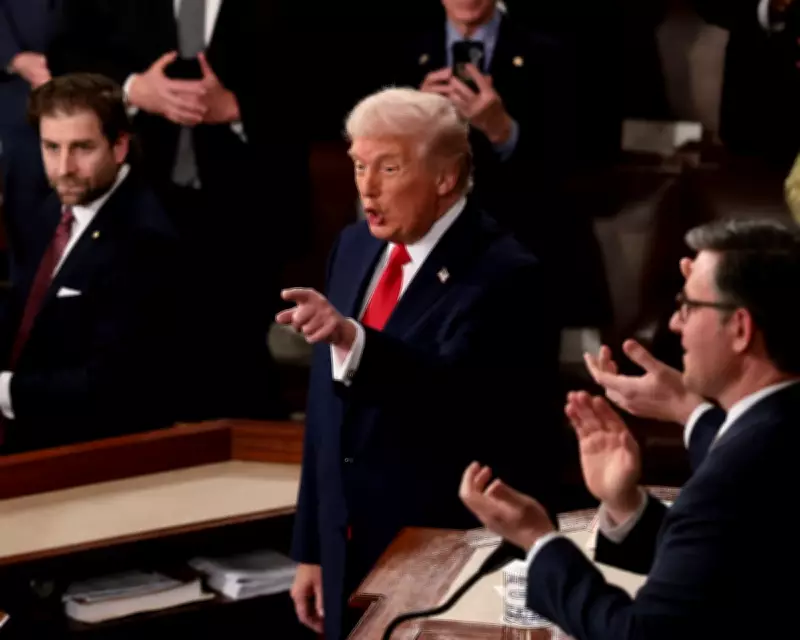
Donald Trump delivered the longest State of the Union address in American history on Tuesday, a 107-minute speech that was immediately overshadowed by racial controversies and Democratic protests. The event, held in the US House chamber in Washington DC, saw the president entering like a monarch, with Republicans lining up for selfies and adulation, while Democrats prepared for confrontation.
Racial Tensions Explode Early
Before Trump even began speaking, Democratic representative Al Green of Texas held up a handwritten sign reading "Black people aren't apes!" - a direct reference to Trump's recent sharing of a racist video depicting Barack and Michelle Obama. Republicans immediately moved to tear the sign away, leading to Green being escorted out for the second consecutive year amid acrimonious exchanges and attempts to start "USA!" chants.
The incident set the tone for a night where race would become the central fault line. Trump's speech began with his familiar optimistic pitch about America being "back - bigger, better, richer and stronger than ever before," but quickly descended into what critics described as xenophobic rants and divisive rhetoric.

Democratic Resistance and Fact-Checking
Throughout the address, Democrats employed various forms of resistance. While Republicans stood and cheered ritualistically, most Democrats remained seated, with some rolling their eyes, shaking their heads, or studying their phones. The most vocal opposition came from representatives Ilhan Omar of Minnesota and Rashida Tlaib of Michigan, who essentially served as real-time fact-checkers for the chamber.
When Trump announced a "war on fraud" led by Vice-President JD Vance and cited a Minnesota social services scam he estimated at $19 billion, Omar and Tlaib shouted "That's a lie!" and "You're a liar!" Their interruptions continued throughout the speech, with Tlaib demanding Trump "release the Epstein files!" when he claimed to care about protecting America's youth.
Xenophobic Rhetoric and Walkouts
Trump's most controversial moment came during what observers described as a xenophobic rant about "Somali pirates who ransacked Minnesota," suggesting that "importing these cultures through unrestricted immigration" brings problems to America. Omar, who is Somali-born, shook her head throughout this section.
The president challenged Democrats to stand if they agreed that "the first duty of the American government is to protect American citizens, not illegal aliens." When Democrats remained seated, Trump retorted: "You should be ashamed of yourself, not standing up."
This prompted Omar to shout with piercing clarity: "You have killed Americans!" four times in succession, referencing the deaths of Renee Good and Alex Pretti during a Minneapolis operation that went unmentioned in Trump's speech.
An Inconsequential Marathon
Despite its record length, the speech offered little substantive policy and failed to address the economic concerns of Americans struggling with bills and making ends meet. Trump focused instead on familiar themes: tariffs, crime, election integrity, and transgender issues, while attacking Democrats as "crazy" and claiming they are "destroying our country."
The address concluded with multiple Democratic walkouts, including Omar and Tlaib, while Green's seat remained empty save for a handwritten cardboard sign that simply said "Al Green." A Washington Post-ABC News-Ipsos poll showed Trump entering the speech with a 39% approval rating - lower than any past president delivering his first State of the Union - and the 107-minute performance did nothing to improve those numbers.
What began as a royal procession ended as what many observers described as one of the most inconsequential State of the Union addresses in modern history, notable more for its controversies and duration than for any meaningful policy proposals or unifying message.